KURU Footwear launched the KURU GURU campaign in the United States in 2025 via Little Big Engine, introducing a humorous brand character to champion foot pain

KURU Footwear Bets on the KURU GURU to Redefine Foot Pain Relief
KURU Footwear launched the KURU GURU campaign in the United States in mid-February 2025, introducing a comedic recurring brand character designed to communicate the brand's patented heel-pain relief technology to a younger generation of active consumers experiencing foot discomfort. Produced by agency Little Big Engine, the campaign spans five out-of-home executions and a suite of films in 60-, 30-, and 15-second formats distributed across online advertising, connected television, YouTube, Hulu, the KURU website, and text messaging, with no announced end date — positioning it as an indefinite brand platform rather than a finite flight.
KURU Footwear was founded in 2008 with a stated mission to free the world from foot pain, anchoring its entire product philosophy in the belief that health starts with the heel. The brand's proprietary KURUSOLE technology — a heel-hugging design protected by patent — forms the core of its competitive claim to be the Healthiest Shoes on Earth, expressed through the registered tagline Heel Better™, which the brand introduced on August 31, 2023, according to reporting by musebyclios.com. The KURU GURU campaign represents a creative expansion of that existing positioning, adding humor, character, and cultural ambition to what had previously been a more functional brand story. In the United States, where footwear competes across a landscape of nearly 900 shoe brands, according to Marcomm News, standing out requires more than product differentiation alone — it demands a memorable creative vehicle, and the KURU GURU is designed to serve precisely that purpose.
KURU Footwear operates in one of the most competitive retail categories in the United States. The global footwear market is valued at approximately 495.46 billion dollars with a projected compound annual growth rate of 7.04 percent through 2034, according to Fortune Business Insights, while Grand View Research places the figure at 476.8 billion dollars with a 4.5 percent CAGR for the period 2026 to 2033. Within the US market, that scale translates to intense shelf and screen competition, with established performance and wellness footwear brands including Hoka and Brooks occupying significant mindshare among active consumers seeking relief from physical discomfort during movement. KURU's strategic challenge is not product credibility — its patented KURUSOLE technology provides a defensible point of difference — but awareness and cultural relevance among younger audiences who may not yet associate the brand with their foot pain experience.
Little Big Engine's strategic response was to bypass conventional health and wellness advertising conventions in favor of comedic character work. Preston Van Dyke, Chief Marketing Officer at KURU Footwear, described the KURU GURU character as fun, honest, and irreverent, according to Marcomm News. That combination is deliberate: humor lowers the perceived barrier of a health-adjacent product claim, while the recurring character format creates the kind of brand salience that single-execution campaigns rarely sustain. Patrick Maravilla, Executive Creative Director and Founder of Little Big Engine, noted that KURU's positioning as fashionable athletic foot-pain relief places it in a category of its own, as reported by Marcomm News — a framing that the KURU GURU campaign is engineered to make viscerally understood rather than merely stated. By committing to an indefinite campaign run with no scheduled conclusion, KURU and Little Big Engine signal an intent to build the character into a long-term brand asset rather than a seasonal promotional moment.
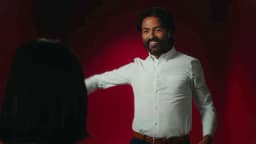
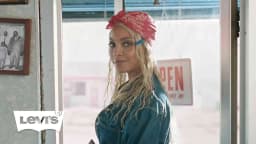
The creative execution of the KURU GURU campaign centers on a single fictional persona: a woman so thoroughly transformed by the foot pain relief delivered by KURU Footwear that she becomes a self-appointed, comedically zealous evangelist for the brand. The character is conceived as a vehicle for authentic enthusiasm rendered absurd — a tonal register that sits between the testimonial tradition of health product advertising and the kind of character comedy that generates organic social sharing. Patrick Maravilla, Executive Creative Director and Founder of Little Big Engine, described the development of the KURU GURU as one of those rare opportunities in advertising in which a creative team gets to build a brand character that is simultaneously fun, honest, and irreverent, according to Marcomm News.
The campaign's media architecture supports that character with genuine scale. Five distinct out-of-home executions extend the KURU GURU into physical environments across the United States, while films produced in 60-, 30-, and 15-second edits provide format flexibility across connected television platforms including Hulu, YouTube pre-roll, online video advertising, the KURU website, and text messaging distribution, as reported by Marcomm News. The decision to build across that range of formats — from immersive long-form to brief interruptive units — reflects a deliberate effort to meet consumers at multiple points of intent and attention. Bret Rasmussen serves as CEO of KURU Footwear, and under his leadership the brand has embraced this character-led creative direction as a foundational shift in how KURU presents itself to US consumers, according to Marcomm News. Production credits for the KURU GURU campaign beyond the agency and client leadership named above are not publicly documented in available sources.
No verified performance data for the KURU GURU campaign is publicly available. No campaign-specific sales lift, revenue growth, return on investment, market-share change, or brand-tracking figures have been disclosed by KURU Footwear or Little Big Engine in any publicly accessible source as of the date of this analysis. The campaign launched in the United States in mid-February 2025 and was publicly reported on March 3, 2025, according to Marcomm News, meaning its run at the time of writing represents an early window that may precede formal results reporting.
Structurally, the KURU GURU campaign demonstrates several characteristics associated with effective long-term brand building. The commitment to an indefinite campaign duration rather than a fixed media flight creates conditions for character recognition to compound over time. The multi-format deployment — spanning connected television on Hulu, YouTube, out-of-home placements, and text messaging — reflects a distribution strategy capable of reaching US consumers across the funnel from awareness through consideration. The humorous character-led approach addresses a real strategic gap: health and comfort footwear advertising in the United States has historically skewed functional and testimonial-heavy, and KURU's decision to lead with comedy and personality rather than clinical claims represents a meaningful creative departure. No awards attributable to the KURU GURU campaign have been recorded at Cannes Lions, the Effies, The One Show, D&AD, the Clios, the Webby Awards, or WARC Awards as of this writing. The Clapboard Score for this campaign is 61 out of 100, reflecting creative ambition and strategic coherence tempered by the absence of verified performance outcomes and limited public documentation of production craft at the execution level.
The KURU GURU is a 2025 brand campaign by KURU Footwear, created by agency Little Big Engine and launched in the United States in mid-February 2025. It introduces a comedic recurring character — a woman zealously devoted to KURU after experiencing its foot pain relief — across connected television, YouTube, Hulu, out-of-home, and text messaging, according to Marcomm News.
Little Big Engine created the KURU GURU campaign for KURU Footwear. Patrick Maravilla, Executive Creative Director and Founder of Little Big Engine, led the creative development. Preston Van Dyke serves as KURU's Chief Marketing Officer and Bret Rasmussen is the brand's CEO, according to Marcomm News reporting from March 3, 2025.
The KURU GURU campaign runs across the United States through five out-of-home executions and films in 60-, 30-, and 15-second formats. Distribution channels include online advertising, connected television, YouTube, Hulu, the KURU Footwear website, and text messaging, with no announced end date, as reported by Marcomm News.
KURU Footwear differentiates itself through its patented KURUSOLE heel-hugging technology, which the brand claims makes its shoes the Healthiest Shoes on Earth. Unlike performance-focused competitors such as Hoka and Brooks, KURU positions itself specifically around foot pain relief, describing its products as fashionable athletic foot-pain relief, according to Marcomm News.
No awards attributable to the KURU GURU campaign have been recorded at Cannes Lions, the Effies, The One Show, D&AD, the Clios, the Webby Awards, or WARC Awards as of this writing. Little Big Engine holds separate recognition including a Gold at The Drum Awards and awards from the American Advertising Federation, not attributed to this specific campaign.
The KURU GURU campaign by KURU Footwear receives a Clapboard Score of 61 out of 100. The score reflects genuine creative ambition in its character-led humorous approach and strategic coherence in its multi-format US media deployment, offset by the absence of publicly verified performance metrics and limited documented production craft at the execution level.
.webp)
Creative Collaboration Platform: The Backbone of Modern Creative WorkWhat is a creative collaboration platform?Clapboard defines a creative collaboration platform as the operational core for today’s distributed creative teams. This is not a collection of digital collaboration tools stitched together; Clapboard’s system


Understanding the Creative Production MarketplaceWhat is a Creative Production Marketplace?Clapboard defines a creative production marketplace as a structured ecosystem where brands, agencies, and production talent converge to execute video, advertising, and branded content at scale. Unlike the legacy agency or freelanREAD FULL ARTICLE

The Urgent Need for a Creative Production Operating SystemWhy Traditional Creative Production Models Break DownClapboard sees the creative production landscape shifting under pressure. Content velocity is no longer a buzzword—it’s a mandate. Modern advertising demands relentless output across dozens of channels, each wREAD FULL ARTICLE