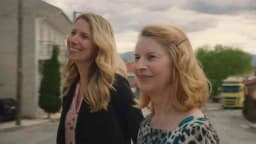
Kraft's 2019 Mother's Day Away campaign, created by Leo Burnett Chicago, reimbursed US mothers up to $100 for babysitting so they could take real time for

Kraft Pays for Babysitting So Moms Can Have Mother's Day to Themselves
Kraft's 2019 Mother's Day Away campaign offered mothers across the United States a reimbursement of up to $100 for babysitting expenses, enabling them to spend Mother's Day doing exactly what they wanted — alone — funded directly by the brand.
The campaign launched in the United States on May 7, 2019, as reported by CNN, and was created by Leo Burnett Chicago for Kraft. Its mechanic was deliberate and direct: mothers could submit a claim for babysitting reimbursement, with Kraft allocating a total promotional budget of $50,000 for the offer, according to the official campaign terms. The reimbursement was capped at $100 per person or household, with one request permitted per person, email address, or household address. The offer ran through May 19, 2019, at 11:59 p.m. Eastern Time, or until funds were exhausted — whichever came first, per the official promotion terms.
The campaign centred on a single film asset, placing it squarely in narrative advertising territory and making it one of the more editorially focused entries among top Mother's Day ads from that year. In the United States, where Mother's Day carries significant commercial weight, Kraft and Leo Burnett chose to step outside conventional gifting narratives and position the brand as an enabler of genuine maternal autonomy. Chief Creative Officer Britt Nolan and Executive Creative Director Jordan Doucette shaped a campaign that acknowledged the unglamorous realities of motherhood — tantrums, sleepless nights, picky eaters — rather than idealising the role. The Clapboard Score for Kraft Mother's Day Away stands at 61 out of 100, reflecting a campaign with a clear cultural hook and an honest emotional register, tempered by the inherent limitations of a short promotional window and a modest total budget.
Kraft identified a genuine tension at the centre of Mother's Day in the United States. The holiday is culturally framed as a celebration of mothers, yet mothers themselves frequently spend it serving others — cooking, supervising children, and managing family logistics. Leo Burnett Chicago built the entire strategic rationale around resolving that tension, not with a product feature, but with a tangible act of relief.
Kraft marketing chief Sergio Eleuterio framed the promotion explicitly around the difficulties of motherhood — tantrums, sleepless nights, picky eaters — as reported by CNN on May 7, 2019. That framing positioned Kraft not as a food brand celebrating moms in the abstract, but as a brand that understood the specific, exhausting texture of the role. In the competitive United States Food and Drink category, where brands including Campbell Soup Company and General Mills have also pursued emotional storytelling around family occasions, Kraft's decision to move from sentiment to subsidy gave the campaign a functional distinctiveness that pure narrative advertising rarely achieves on its own.
The United States packaged food market is substantial and fiercely contested. Kraft Heinz generated approximately $25 billion in total net revenue in 2019, according to filings with the US Securities and Exchange Commission, making brand differentiation at the campaign level a persistent strategic priority. By attaching a real financial offer — babysitting reimbursement — to an emotional message, Leo Burnett gave Kraft a mechanism that invited genuine earned media coverage rather than relying solely on paid placement. The campaign's structural bet was that a $50,000 promotional pool, per official terms, could generate awareness and goodwill disproportionate to its cost, provided the insight was sharp enough to travel on its own.
Kraft Mother's Day Away was executed as a single film, produced by Tessa Films and directed by Aemilia Scott. The production team included executive producer Lisa Masseur, producer Holli McGinley, and director of photography Drew Wehde, as documented in campaign credits published on Ads of the World and ReelChicago.
Scott's direction leaned into understatement. Rather than constructing a sweeping emotional montage — the default register for Mother's Day advertising in the United States — the film grounded itself in the recognisable, low-key frustrations that define daily life with children. The creative leadership team at Leo Burnett Chicago, which included Chief Creative Officer Britt Nolan alongside Jordan Doucette as Executive Creative Director and creative directors Meg Farquhar and Ryan Stotts, made a deliberate choice to honour the campaign's insight with restraint rather than spectacle. Pete Lefebvre served as copywriter and creative director, with Efrain Bahena as strategist and Megan Collins as account director, per credits documented by ReelChicago and Ads of the World.
The single-asset approach concentrated the campaign's entire creative argument into one film, which carried both a narrative burden and a formal discipline. In a category where Food and Drink brands routinely produce multi-format, multi-market content suites, Kraft and Leo Burnett elected to say one thing clearly rather than many things broadly. That discipline is visible in how the film functions: it does not demonstrate a product, it demonstrates an understanding of an audience. The quote attributed to Jordan Doucette in ReelChicago on May 8, 2019 — that the campaign offered moms across the country the chance to have what they secretly really want, specifically time for themselves — serves as both the campaign's strategic brief and its creative brief, collapsed into a single sentence.
No verified third-party performance data for Kraft Mother's Day Away — including claim redemption rates, earned media impressions, or brand lift figures — is publicly available at the time of writing. What can be assessed is the campaign's structural effectiveness and the known parameters of its execution.
The promotion carried a defined ceiling: $50,000 in total reimbursements, per official campaign terms, with individual claims capped at $100. That ceiling meant a maximum of 500 households could be directly served by the financial offer. The campaign's broader impact, therefore, was always contingent on how far the film and the underlying idea could travel beyond the redemption mechanic itself. CNN's coverage on May 7, 2019 — the day the promotion officially launched — indicates the campaign achieved meaningful mainstream press pickup at launch, which is structurally significant for a promotional concept anchored to a short, fixed window closing May 19, 2019.
In the United States, where Mother's Day is one of the most commercially active annual occasions across the Food and Drink sector, earned media coverage from a national outlet like CNN functions as amplification that a $50,000 promotional fund alone could not purchase. The campaign's honesty of tone — acknowledging the labour of motherhood rather than romanticising it — gave journalists a genuine angle. Campaigns that achieve press coverage by being genuinely true to an insight, rather than by announcing a large media buy, tend to demonstrate stronger narrative coherence. Kraft Mother's Day Away earns its Clapboard Score of 61 out of 100 on that basis: a clear, credible idea, executed with appropriate restraint, operating within structural constraints that limited its scale.
Kraft's Mother's Day Away campaign launched in the United States in May 2019, created by Leo Burnett Chicago. It offered US mothers up to $100 reimbursement for babysitting expenses so they could spend Mother's Day doing something for themselves. The total promotional fund was capped at $50,000, per official campaign terms.
Leo Burnett Chicago created the campaign for Kraft. Chief Creative Officer Britt Nolan and Executive Creative Director Jordan Doucette led the creative team. The film was directed by Aemilia Scott and produced by Tessa Films, with Drew Wehde as director of photography, as documented on ReelChicago and Ads of the World.
Mothers in the United States could submit a claim for babysitting reimbursement of up to $100 per person or household. Only one request was permitted per person, email address, or household address. The offer ran through May 19, 2019, or until the $50,000 total promotional fund was exhausted, per official terms.
Leo Burnett Chicago built the campaign around the tension between how Mother's Day is framed culturally and how mothers actually experience it. Rather than idealising motherhood, the strategy acknowledged its real difficulties — tantrums, sleepless nights, picky eaters — and positioned Kraft as a brand offering genuine, practical relief rather than sentiment.
Kraft Mother's Day Away stands out among 2019 US Mother's Day advertising for combining a tangible financial offer with honest emotional storytelling. Clapboard rates it 61 out of 100, reflecting a credible, well-crafted idea operating within modest promotional constraints. CNN covered the launch on May 7, 2019, signalling notable earned media traction.
Kraft marketing chief Sergio Eleuterio framed the promotion around the genuine difficulties of motherhood, as reported by CNN. Jordan Doucette stated in ReelChicago on May 8, 2019, that the campaign gave moms across the country the chance to have what they secretly really want: time for themselves.
.webp)
Creative Collaboration Platform: The Backbone of Modern Creative WorkWhat is a creative collaboration platform?Clapboard defines a creative collaboration platform as the operational core for today’s distributed creative teams. This is not a collection of digital collaboration tools stitched together; Clapboard’s system


Understanding the Creative Production MarketplaceWhat is a Creative Production Marketplace?Clapboard defines a creative production marketplace as a structured ecosystem where brands, agencies, and production talent converge to execute video, advertising, and branded content at scale. Unlike the legacy agency or freelanREAD FULL ARTICLE

The Urgent Need for a Creative Production Operating SystemWhy Traditional Creative Production Models Break DownClapboard sees the creative production landscape shifting under pressure. Content velocity is no longer a buzzword—it’s a mandate. Modern advertising demands relentless output across dozens of channels, each wREAD FULL ARTICLE