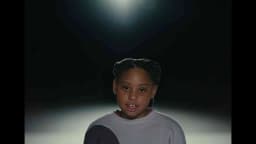
Kotex's 'Progress Feels Like' campaign, created by Capital A in 2024, uses original global research and documentary film to challenge the pace of women's

Kotex Progress Feels Like Turns Research Into a Global Women's Movement
Kotex's 'Progress Feels Like' is a 2024 global documentary film campaign created by Capital A, launched in the United States in late February and aligned with International Women's Day on March 8, 2024, using original consumer research and first-person testimony to challenge the widely assumed momentum of gender progress and invite women worldwide to define what progress actually feels like in their daily lives.
The campaign arrives as the next phase of Kotex's longstanding She Can Initiative, extending the brand's focus beyond period stigma and menstrual education toward a broader reckoning with women's social, political, and cultural standing. Its strategic foundation is the Kotex Global Consumer Insights Study, conducted in September 2023 and fielded across 3,500 women in the United States, South Africa, Turkey, Saudi Arabia, China, and Brazil. That research produced a headline finding that is both the campaign's creative anchor and its call to action: nearly 60% of women globally believe the speed of women's progress is either stagnant or moving slowly, and approximately half of the women surveyed indicated the world has become a more uncomfortable place for them than ever before.
Produced for Kimberly-Clark's Kotex brand and directed by Jaci Judelson of Rakish, as reported by LBBonline, the campaign delivered its film across every continent and in nine languages, making it one of the most geographically ambitious personal care campaigns of the year. In the United States, where the brand holds established equity in the feminine hygiene category, the timing ahead of International Women's Day gave the work an immediate cultural hook. The hashtag #ProgressFeelsLike serves as both the campaign's primary social mechanism and its open invitation: women are encouraged to share their own definition of progress, turning a brand campaign into a participatory public conversation. Kotex's Clapboard Score for this campaign is 63 out of 100, reflecting competent execution of a significant insight within a crowded category of purpose-driven personal care advertising.
Kotex builds its 2024 campaign strategy on a documented consumer truth rather than an assumed aspiration. The Kotex Global Consumer Insights Study, conducted September 2023 and cited across campaign materials by Capital A as reported by LBBonline, establishes that women's own perception of progress is measurably more pessimistic than mainstream gender-equality narratives suggest. That gap between institutional messaging and lived experience is the precise territory the campaign claims.
AJ Hassan, Chief Creative Officer and founder of Capital A, identified the strategic origin of the work in a client brief insight that, as reported by capitalacreative.com, stated plainly that 'progress is no longer a given.' Hassan articulated the campaign's ambition as a desire to 'capture and make visible the reality of what it feels like for women both intimately, and collectively,' beginning from an analysis of headlines rather than category convention. That approach positions Kotex not as a brand selling optimism but as one willing to surface discomfort, a meaningful distinction in the United States personal care market where competitors including Procter and Gamble's Always and Edgewell's Carefree have historically leaned into aspirational empowerment framing.
The feminine hygiene market context reinforces the strategic stakes. According to Grand View Research, the global feminine hygiene market was valued at approximately 31.5 billion US dollars in 2024, with an estimated compound annual growth rate of 7.7% projected through 2030. According to GlobalData, the market reached approximately 36.5 billion US dollars in 2024 and is forecast to reach approximately 43.3 billion US dollars by 2029. In the United States specifically, the personal care segment is highly competitive, making brand differentiation through cultural relevance a measurable commercial priority rather than a discretionary investment. By anchoring #ProgressFeelsLike in original research spanning six countries and grounding it in the lived experience of 3,500 women, Kotex and Capital A construct a strategy that is resistant to dismissal as performative, at least at the level of intent.
Jaci Judelson of Rakish directs 'Progress Feels Like,' bringing a documentary sensibility to material that could easily have become an advertisement dressed as a social statement. As reported by LBBonline, the creative execution originated with an analysis of news headlines about women's lives globally, using that editorial landscape as the emotional and contextual staging ground before introducing the voices of real women. The structural decision to move from institutional language to personal testimony gives the film an argumentative logic: the world says one thing, and women's experience says another.
AJ Hassan of Capital A described the approach, as reported by capitalacreative.com, as an effort to make the reality of women's progress visible 'both intimately, and collectively.' That dual register — the personal and the systemic — is reflected in the film's construction, which shifts between close observational moments and the cumulative weight of pattern. The documentary form is not incidental; it signals that the brand is presenting evidence rather than assertion, which is a structurally different contract with the viewer than conventional advertising.
Music supervision was handled by Molly Salas, partner at Halo Music and Sound, who joined the project during post-production when script and footage existed but the edit remained incomplete, as reported by nomadedit.com. That detail speaks to the production's organic development: the campaign was shaped as much in the edit and sound design phase as in pre-production, a workflow consistent with documentary filmmaking. The campaign was distributed across nine languages and every continent, requiring localisation at the level of both language and cultural resonance. In the United States, the film launched in the days immediately preceding International Women's Day on March 8, 2024, as reported by mediapost.com, maximising the calendar's earned media potential without subordinating the campaign's substance to the occasion.
Kotex's 'Progress Feels Like' campaign carries a Clapboard Score of 63 out of 100, placing it in competent but not exceptional territory for purpose-driven personal care advertising in the United States. No independently verified performance data covering reach, engagement, or sales lift for this specific campaign is publicly available at the time of publication on Clapboard.
What the available record does confirm, as reported by LBBonline and shots.net, is that the campaign achieved meaningful trade press visibility in the weeks surrounding its March 2024 launch and that its International Women's Day timing positioned it within a competitive editorial window alongside work from numerous other brands. The campaign's classification across the Public Interest and Personal Accessories categories, as documented by Clapboard, reflects its dual ambition: commercial brand-building and social statement-making.
Structurally, the campaign's effectiveness rests on several durable decisions. The use of original proprietary research — the Kotex Global Consumer Insights Study spanning 3,500 respondents across six countries including the United States — gives the brand a data asset no competitor can replicate, as that research belongs to Kimberly-Clark. The documentary film format, the nine-language rollout reported by LBBonline, and the open hashtag mechanic all create conditions for sustained organic engagement beyond the paid media window. The She Can Initiative lineage, which according to capitalacreative.com extends back through campaigns including the 2021 Menstruation Machines collaboration, provides cumulative brand equity that a single-year campaign cannot generate on its own. The 63 Clapboard Score reflects a gap between strong strategic architecture and the measurable cultural impact required to make a campaign of this scope genuinely resonant at scale.
Kotex's 'Progress Feels Like' is a 2024 documentary film campaign created by Capital A and launched in the United States ahead of International Women's Day on March 8. It extends the Kotex She Can Initiative, using original research from 3,500 women across six countries to challenge the assumed pace of women's global progress and invite public participation through the hashtag #ProgressFeelsLike.
The campaign is grounded in the Kotex Global Consumer Insights Study, conducted in September 2023. The study surveyed 3,500 women across the United States, South Africa, Turkey, Saudi Arabia, China, and Brazil. Its headline finding, cited across campaign materials and reported by LBBonline, is that nearly 60% of women globally believe women's progress is stagnant or moving slowly.
Jaci Judelson of production company Rakish directed 'Progress Feels Like,' as reported by LBBonline. The creative strategy was led by AJ Hassan, Chief Creative Officer and founder of Capital A, while music supervision was handled by Molly Salas, partner at Halo Music and Sound, who joined the project during post-production, as reported by nomadedit.com.
Kotex explicitly presented 'Progress Feels Like' as the next phase of its She Can Initiative, according to campaign materials cited by capitalacreative.com. The initiative previously addressed period stigma and menstrual education, including the 2021 Menstruation Machines campaign. The 2024 work broadens that scope to encompass women's wider social, political, and cultural progress in the United States and globally.
The campaign reached every continent and was distributed in nine languages, as reported by LBBonline. Its research base spanned six countries including the United States, South Africa, Turkey, Saudi Arabia, China, and Brazil. In the United States, it launched in late February 2024, with the primary campaign moment aligned to International Women's Day on March 8, 2024.
Kotex's 'Progress Feels Like' holds a Clapboard Score of 63 out of 100. That score reflects competent strategic architecture — including original global research, documentary craft, and a nine-language rollout — alongside a gap between the campaign's structural ambition and the independently verified cultural or commercial impact required to rank among the strongest purpose-driven personal care campaigns of 2024.
.webp)
Creative Collaboration Platform: The Backbone of Modern Creative WorkWhat is a creative collaboration platform?Clapboard defines a creative collaboration platform as the operational core for today’s distributed creative teams. This is not a collection of digital collaboration tools stitched together; Clapboard’s system


Understanding the Creative Production MarketplaceWhat is a Creative Production Marketplace?Clapboard defines a creative production marketplace as a structured ecosystem where brands, agencies, and production talent converge to execute video, advertising, and branded content at scale. Unlike the legacy agency or freelanREAD FULL ARTICLE

The Urgent Need for a Creative Production Operating SystemWhy Traditional Creative Production Models Break DownClapboard sees the creative production landscape shifting under pressure. Content velocity is no longer a buzzword—it’s a mandate. Modern advertising demands relentless output across dozens of channels, each wREAD FULL ARTICLE