ING France Reframes Banking as a Human Adventure in 2018
ING France launched 'Making Of, The Infernal Planet, The Temple Of Crocodiles' in January 2018, a three-part film campaign created by Paris agency Rosapark that dramatises ordinary banking frustrations — losing a card, making a hasty financial decision — as cinematic adventures, anchored by the tagline 'The bank invested in me.'
The campaign marks ING Direct France's deliberate pivot away from technology-led messaging toward a communication platform centred on human, responsive customer service. Rather than promoting a product feature or interest rate, the work positions ING's advisers and service teams as genuine protagonists in the financial lives of their customers. The three films — titled 'The Infernal Planet', 'The Temple Of Crocodiles', and their accompanying 'Making Of' — each treat a recognisable banking problem as the premise for an escalating, genre-inflected narrative, then reveal the resolution through ING's customer service team. The 'Making Of' film extends the conceit by pulling back the curtain on the fictional productions themselves, adding a self-aware layer that reinforces the campaign's playful intelligence.
In France, where retail banking competition intensified sharply during 2018 as digital challengers accelerated customer acquisition, ING Direct's strategic choice to lead with warmth and wit rather than rate comparison represented a meaningful creative departure. The campaign was produced in France for the French market and published in January 2018, comprising three media assets across the film medium. It was created for ING by Rosapark, the Paris-based independent agency, and directed by Nalle Sjöblad through BIRTH Paris, as reported by Little Black Book Online.
ING Direct France entered 2018 with approximately one million customers in the French market, according to reporting cited by Adnews Galitt and moneyvox.fr. That figure, while significant for a digital-first challenger bank, underscored the scale of the opportunity still ahead in a market dominated by established retail networks. The strategic brief for Rosapark centred on repositioning ING not as a cheaper or faster alternative to traditional banks, but as a bank genuinely committed to its customers' outcomes — a distinction the tagline 'The bank invested in me' was designed to make tangible.
The French retail banking landscape in 2018 presented a specific tension. Established players such as BNP Paribas and Crédit Agricole retained deep customer trust through branch presence and heritage, while mobile-first challengers including Boursorama and N26 competed aggressively on price and convenience. ING Direct's response was to claim territory that neither camp owned cleanly: emotional investment. KPMG identified strong fintech investment momentum in 2018 across payments and business-to-business services, creating an environment in which consumers were increasingly aware of the breadth of their banking options. Against that backdrop, a campaign emphasising human relationship over algorithmic efficiency carried genuine strategic logic.
Globally, ING reported approximately 38.4 million total customers at the end of 2018, according to ING's own annual reporting, with its primary customer base growing by 1.1 million, or 9.9 percent, to reach 12.5 million during that year, also per ING's annual report. The French campaign's 'The bank invested in me' platform aligned directly with the group's wider ambition to deepen primary banking relationships rather than accumulate low-engagement accounts.
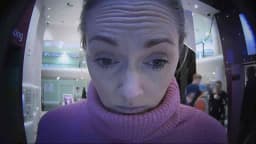
The creative execution of 'Making Of, The Infernal Planet, The Temple Of Crocodiles' rests on a single disciplined conceit: treat the mundane as myth. Each film begins in the register of genre cinema — adventure, discovery, peril — before grounding its drama in a recognisable banking problem that ING's customer service resolves with speed and empathy. The approach functions as a social experiment in audience expectation, using cinematic language to elevate moments that conventional banking advertising renders invisible or abstract.
Direction was handled by Nalle Sjöblad through BIRTH Paris, as reported by Little Black Book Online. Sjöblad's handling of the material gives each film a visual confidence that earns the comedic payoff: the gap between epic staging and domestic banking reality is the joke, but it only lands if the epic staging is committed and credible. The production deploys location shooting, deliberate pacing, and genre-appropriate sound design to sustain the fiction long enough for the reveal to resonate.
Agency credits documented by adRuby identify Jean-Patrick Chiquiar, Gilles Fichteberg, Jean-François Sacco, Sacha Lacroix, Soraya Cottin, and Caroline Planty among the Rosapark personnel attached to the work. The 'Making Of' film adds a reflexive dimension that is relatively unusual in financial services advertising in France: it acknowledges its own artifice, inviting the audience to appreciate the construction of the campaign rather than simply receive its message. This meta-layer functions as both creative flourish and strategic signal — a bank confident enough to show its working is implicitly claiming transparency as a brand value. The three-film structure distributes the creative idea across distinct tonal registers while maintaining a unified campaign identity.
No verified performance data for 'Making Of, The Infernal Planet, The Temple Of Crocodiles' is publicly available. The campaign does not appear in documented finalist or winner lists for Cannes Lions, the Effie Awards, D&AD, The One Show, the Clio Awards, the Webby Awards, or WARC award programmes. No campaign-attributed sales lift, market-share movement, or independently measured effectiveness metric has been identified in publicly accessible sources.
Structural analysis of the campaign's design, however, points to several elements of likely effectiveness. The three-film format increases exposure opportunity and narrative variation without requiring audiences to encounter identical creative repeatedly — a meaningful advantage in a media environment where saturation fatigue is an acute risk. The 'Making Of' asset in particular extends earned engagement by offering a different mode of consumption: behind-the-scenes content that rewards existing fans of the main films while functioning as a standalone entry point for new audiences.
ING Direct France described 2018 as its best year, with accounts approaching break-even, as reported by mediapost.com and relationclientmag.fr. ING also reported a 13 percent increase in the number of customers using ING as their primary bank in 2018, per ING's own published figures. While neither result can be directly attributed to this campaign in the absence of controlled measurement, the brand's performance trajectory during the period in which the campaign ran is consistent with communication that deepened customer relationship quality rather than merely driving acquisition volume. Clapboard rates this campaign 53 out of 100, reflecting creative ambition that outpaces documented impact — a pattern common in challenger-bank advertising that prioritises brand-building over measurable short-term conversion.
ING France's 2018 campaign is a three-part film series created by Rosapark that dramatises everyday banking problems as cinematic adventures. Directed by Nalle Sjöblad through BIRTH Paris and published in January 2018, the work positions ING's customer service teams as genuinely invested in resolving customers' financial challenges under the tagline 'The bank invested in me.'
Rosapark, the Paris-based independent agency, created the campaign for ING France. Direction was handled by Nalle Sjöblad through BIRTH Paris, as reported by Little Black Book Online. Agency personnel documented by adRuby include Jean-Patrick Chiquiar, Gilles Fichteberg, Jean-François Sacco, Sacha Lacroix, Soraya Cottin, and Caroline Planty.
ING Direct France repositioned around human, responsive customer service in 2018, moving away from technology-led messaging. The 'The bank invested in me' tagline distinguished ING from both heritage players like BNP Paribas and digital challengers like Boursorama, claiming emotional investment as the brand's primary competitive differentiator in the French market.
No documented awards have been identified for this campaign. It does not appear in publicly available finalist or winner records for Cannes Lions, D&AD, the Effie Awards, the Clio Awards, The One Show, or the Webby Awards. Clapboard rates the campaign 53 out of 100, reflecting creative ambition ahead of documented recognition.
ING Direct France had approximately one million customers in 2018, according to adnews.galitt.com and moneyvox.fr. Globally, ING reported roughly 38.4 million total customers at the end of that year, per ING's annual report, with primary banking customers growing by 9.9 percent to 12.5 million during the same period.
The 'Making Of' film openly acknowledges its own construction, inviting audiences to appreciate the campaign's artifice rather than simply receive its message. This reflexive approach is rare in French financial services advertising and functions as an implicit brand transparency signal, extending earned engagement beyond the two main narrative films in the series.
.webp)
Creative Collaboration Platform: The Backbone of Modern Creative WorkWhat is a creative collaboration platform?Clapboard defines a creative collaboration platform as the operational core for today’s distributed creative teams. This is not a collection of digital collaboration tools stitched together; Clapboard’s system


Understanding the Creative Production MarketplaceWhat is a Creative Production Marketplace?Clapboard defines a creative production marketplace as a structured ecosystem where brands, agencies, and production talent converge to execute video, advertising, and branded content at scale. Unlike the legacy agency or freelanREAD FULL ARTICLE

The Urgent Need for a Creative Production Operating SystemWhy Traditional Creative Production Models Break DownClapboard sees the creative production landscape shifting under pressure. Content velocity is no longer a buzzword—it’s a mandate. Modern advertising demands relentless output across dozens of channels, each wREAD FULL ARTICLE