Hyundai Turns an AS Roma Fan Comment Into a Live Experiential Moment
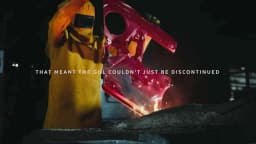
Hyundai's 'Even I Could Have Scored That Goal' is a 2019 experiential campaign created by Milan-based agency Fab / La Fabbrica Creativa that transforms a real AS Roma fan's social-media comment into a live branded activation, challenging the fan to replicate Cengiz Ünder's goal on the pitch where it was originally scored.
The campaign takes its name from a phrase as old as football itself. When AS Roma published video content celebrating a goal by Turkish winger Cengiz Ünder, a fan responded with the familiar armchair verdict: even I could have scored that. Hyundai, serving as AS Roma's main global partner at the time, seized on that comment as a creative premise, according to adsoftheworld.com. The brand invited that fan to step off the sofa and onto the pitch, staging a live test of the claim in what became a compact but sharply conceived piece of experiential storytelling.
Published on April 1, 2019, the campaign operates in the Italian market, where Hyundai Motor Company Italy had established football as a recurring communications platform, per Touchpoint News. The activation centres on the Stadio Olimpico in Rome, lending the execution an immediate sense of place and sporting credibility. The single-asset campaign distils a universal fan experience — the certainty that the professional made something look easier than it was — into a narrative that positions Hyundai alongside the passion and identity that club football commands in Italy. The Kona Electric appears within this context as a brand presence rather than a product demonstration, associating the automotive marque with spontaneity, accessibility, and the human scale of sporting life. The campaign earned a Clapboard Score of 63/100, reflecting competent creative thinking applied to a well-defined cultural insight, with structural limitations in reach and asset volume tempering its overall impact.
Hyundai's approach to European football sponsorship centres on supporters rather than stadiums. According to Hyundai News, the brand's football strategy is explicitly designed to position supporters as central figures, using emotional connection rather than logo exposure as the primary currency of partnership value. This philosophy shapes the 2019 campaign directly: the creative idea begins and ends with a fan's voice, not with a product feature.
The competitive context for this approach matters. In the global automotive industry in 2019, Hyundai ranked sixth by brand with approximately 4.279 million vehicles sold and a global market share of approximately 5.05%, according to scribd.com. Toyota led the market with approximately 10.24% share and Volkswagen held approximately 7.59%, according to scribd.com, illustrating the scale gap Hyundai faced against the segment's dominant players. In an environment where both global light-vehicle sales declined approximately 8% year over year and global vehicle production fell approximately 14% by mid-2019, according to scribd.com, emotional brand-building through cultural properties like football represented a strategic alternative to price-led volume activity.
Hyundai held a four-year sponsorship agreement with AS Roma ahead of the 2018/19 season, as well as a four-year arrangement with Chelsea FC and three-year agreements with Atlético de Madrid and Hertha BSC, per hyundai.news. This portfolio approach established football as a pan-European communications platform. In Italy specifically, where AS Roma commands a deeply tribal supporter base, the decision to build an experiential campaign around a single fan comment demonstrates how Nielsen's long-documented principle — that authentic fan engagement outperforms passive sponsorship visibility, per nielsen.com — was being applied at a granular, social-native level by 2019.
Fab / La Fabbrica Creativa directed the creative execution with a team that brought both advertising and film production discipline to what is, structurally, a single short-form asset. Creative director Valerio Le Moli and copywriter Massimo Paternoster shaped the narrative premise, with art director Giulio Frittaion responsible for the visual identity of the piece, according to campaign credits documented on adsoftheworld.com. Director Francesco Imperato handled the shoot, with director of photography Flavio Toffoli providing the cinematographic approach. Executive producer Valter Buccino and producer Matilde Castagna oversaw the production logistics, per the same source.
The Italian campaign title — 'Lo facevo pure io' — carries a cadence and cultural specificity that the English translation approximates but does not fully replicate. It is the kind of phrase that needs no explanation to an Italian football audience, and that linguistic precision reflects a campaign built for a domestic market rather than a global template. The Stadio Olimpico setting is not incidental: filming a fan attempting to replicate a professional goal in the actual arena where the original goal was scored collapses the distance between fantasy and reality in a way that a generic pitch or training ground could not achieve.
The narrative arc follows a structure familiar from experiential documentary formats — real person, real challenge, real outcome — but the creative intelligence lies in the sourcing of the protagonist. Rather than casting an actor or selecting a fan through a competition mechanic, the campaign takes its subject directly from the social-media record, per The Drum. That origin gives the film an authenticity that scripted executions in the automotive industry frequently pursue but rarely achieve. The Kona Electric is present as a contextual element, consistent with Hyundai's broader tendency in this period to embed product within lifestyle and cultural narratives rather than foreground it as the primary subject.
No verified performance data for 'Even I Could Have Scored That Goal' is publicly available in terms of reach, earned media value, or campaign-attributed commercial outcomes. The activation produced a single media asset, a structural constraint that limits the campaign's potential for sustained distribution and audience accumulation across the paid, owned, and earned media ecosystem.
What the campaign demonstrates structurally is the viability of social listening as a creative starting point in the automotive industry. By converting an organic fan comment into the generative idea for a branded experiential film, Fab / La Fabbrica Creativa and Hyundai produced content with an inherent credibility advantage over constructed narratives. The AS Roma audience, already primed by their relationship with the club and with Cengiz Ünder as a player, represents a pre-qualified attentive community — a meaningful asset even when formal reach metrics are unavailable.
The Clapboard Score of 63/100 reflects this balance. The campaign demonstrates genuine cultural fluency and a well-executed creative mechanic, but its single-asset footprint and the absence of documented amplification strategy limit the score relative to campaigns that pair sharp creative thinking with measurable distribution infrastructure. In the context of 2019's contracting global automotive market, as reported by scribd.com, the campaign's investment in emotional brand equity over direct response represents a defensible but inherently harder-to-quantify strategic choice. For Hyundai in Italy, where the brand's football partnerships served as a primary vehicle for consumer connection, the activation functioned as proof-of-concept for fan-centric experiential thinking — even if its documented footprint remains modest.
'Even I Could Have Scored That Goal' is a 2019 experiential campaign by Hyundai and Fab / La Fabbrica Creativa. It took a real AS Roma fan's social-media comment about Cengiz Ünder's goal and turned it into a live activation, challenging the fan to replicate the goal at the Stadio Olimpico.
Fab / La Fabbrica Creativa, a Milan-based agency, created the campaign. The creative team included creative director Valerio Le Moli, copywriter Massimo Paternoster, art director Giulio Frittaion, and director Francesco Imperato, according to credits documented on adsoftheworld.com.
Cengiz Ünder's goal for AS Roma was the trigger for the campaign. A fan's social-media comment claiming he could have scored the same goal became the creative premise. The activation challenged that fan to prove his claim, with Ünder's original goal serving as the benchmark, per adsoftheworld.com.
Hyundai served as AS Roma's main global partner. According to hyundai.news, Hyundai held a four-year sponsorship agreement with AS Roma ahead of the 2018/19 season, part of a broader European football portfolio that also included Chelsea FC, Atlético de Madrid, and Hertha BSC.
The campaign received a Clapboard Score of 63 out of 100. The score reflects strong cultural insight and a credible creative mechanic grounded in real fan behaviour, moderated by the campaign's single-asset format and the absence of publicly documented amplification or verified performance outcomes.
The activation was filmed at the Stadio Olimpico in Rome, Italy. Shooting at the venue where Cengiz Ünder originally scored was a deliberate creative decision, collapsing the distance between the fan's boast and professional reality by placing the challenge in the exact same sporting context.
.webp)
Creative Collaboration Platform: The Backbone of Modern Creative WorkWhat is a creative collaboration platform?Clapboard defines a creative collaboration platform as the operational core for today’s distributed creative teams. This is not a collection of digital collaboration tools stitched together; Clapboard’s system


Understanding the Creative Production MarketplaceWhat is a Creative Production Marketplace?Clapboard defines a creative production marketplace as a structured ecosystem where brands, agencies, and production talent converge to execute video, advertising, and branded content at scale. Unlike the legacy agency or freelanREAD FULL ARTICLE

The Urgent Need for a Creative Production Operating SystemWhy Traditional Creative Production Models Break DownClapboard sees the creative production landscape shifting under pressure. Content velocity is no longer a buzzword—it’s a mandate. Modern advertising demands relentless output across dozens of channels, each wREAD FULL ARTICLE