Hope's 2019 'Off-road' film, created by Martpet Comunicação in Recife, Brazil, uses an emotional reveal structure to argue that nothing is more precise than

Hope and Martpet Comunicação Reframe Eye Care as an Off-Road Adventure
Hope's 2019 'Off-road' film is a Brazilian healthcare campaign created by Martpet Comunicação, Recife, that uses an emotional narrative reveal to argue that precision of vision is a person's most essential asset, running in Recife cinemas and on Hope's social media channels in March 2019.
Hope is a Brazilian health and eye-care brand operating in a domestic market where preventive health communication has grown increasingly competitive. The campaign, documented on adsoftheworld.com and reported by Revistapronews Com Br, was published in March 2019 and consists of a single film asset. Its premise is disarmingly simple: a protagonist navigates what the viewer is initially invited to imagine as an off-road physical challenge, only for the reveal to reframe the entire sequence as an exercise in visual precision. The strategic line anchoring the work — nothing is more precise than vision — fuses an adventure metaphor with an eye-care message in a way that distinguishes it from more clinical approaches to health advertising in Brazil.
In Brazil, the campaign reached audiences through two distinct touchpoints. Cinema placements ran at Shopping Riomar and Shopping Plaza in Recife, while simultaneous distribution across Hope's owned social-media channels extended reach beyond the northeast Brazilian city. Martpet Comunicação, a Recife-based agency, produced the work in collaboration with production company Rox Studio, based in Natal, and audio studio Onomatopoeia Ideias Sonoras. The campaign earned a Clapboard Score of 57 out of 100, reflecting competent narrative craft within a modest single-market release footprint.
Hope's 'Off-road' campaign targets a consumer insight that is well established in Brazilian preventive healthcare communication: most people engage with eye-care messaging only when a problem is already present, not before it arises.
Martpet Comunicação's strategic response was to sidestep clinical framing entirely and instead position vision as a performance capability — something that enhances lived experience rather than something that requires clinical management. By anchoring the film in an off-road adventure metaphor, the agency connected eye-health to a category of aspiration familiar from automotive and outdoor lifestyle advertising. This is a deliberate tonal choice that separates Hope's work from competitors in the Brazilian optical and eye-care sector, where brands such as Óticas Carol and GrandVision-affiliated networks have historically leaned on promotional pricing and product-range messaging rather than emotional brand narrative.
In Brazil, the broader healthcare advertising environment in 2019 was shaped by regulatory standards set by CONAR, the national advertising self-regulatory body, which governs health claims in film and print. Martpet Comunicação navigated those constraints by keeping the film's message aspirational rather than clinical, as reported by revistapronews.com.br. The choice of cinema placement in Recife — specifically at Shopping Riomar and Shopping Plaza — reflects a media strategy calibrated to reach a middle-class urban audience with demonstrated leisure spending, the demographic most likely to act on preventive health messaging. Distribution across Hope's social channels extended that reach without requiring a national media budget, keeping the campaign regionally focused while allowing organic amplification.
Diego Curvêlo directed 'Off-road' for Hope, functioning simultaneously as creative director alongside Edison Martins, a dual role that gave the film a unified creative vision from concept through to camera.
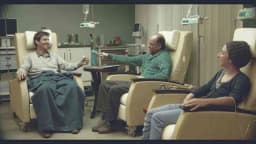
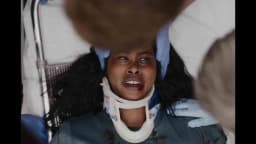
The film's structure depends entirely on the integrity of its reveal. Viewers are invited to construct one interpretation of the protagonist's experience — physical navigation of a demanding off-road environment — and the film withholds the visual clarification that would resolve that reading until the final moments. This deferred reveal is a technique that places significant demand on performance, pacing, and sound design, each of which must sustain ambiguity without losing audience engagement. Rox Studio, the Natal-based production company credited on the project according to adsoftheworld.com, provided the production infrastructure for the shoot. Audio studio Onomatopoeia Ideias Sonoras handled the sound design and audio treatment, a credit that signals the production team's awareness of how much narrative work the audio track carries in a film built around withheld visual information.
The decision to shoot with sufficient production quality for cinema exhibition, rather than defaulting to a social-first vertical format, indicates a deliberate choice to lead with the big-screen experience at Shopping Riomar and Shopping Plaza in Recife before extending the asset to Hope's social-media channels. In the context of a Recife-based agency working with a regional healthcare client in Brazil, that production ambition — engaging both Rox Studio in Natal and a dedicated sound studio — reflects a commitment to craft that is visible in the finished film's tonal coherence, even within the constraints of a single-asset campaign.
No verified performance data for Hope's 'Off-road' campaign is publicly available, and neither Hope nor Martpet Comunicação has published view counts, recall scores, or conversion figures connected to the March 2019 release.
Structural analysis of the campaign nonetheless identifies several characteristics that influence its likely effectiveness. The reveal-based narrative format is empirically associated with higher completion rates in short-form cinema and social film, because the withheld resolution creates a reason to watch to the end — a meaningful advantage in the Brazilian social-media environment where scroll behaviour limits passive viewing. The dual-channel deployment, pairing cinema at Shopping Riomar and Shopping Plaza in Recife with Hope's owned social platforms, created two distinct audience engagements with the same asset: a captive, high-attention cinema context and a self-selected social context where the film would reach existing brand followers.
The campaign's regional focus in Brazil, centred on Recife rather than the larger São Paulo or Rio de Janeiro markets, concentrates impact in a geography where Martpet Comunicação maintains established agency relationships and local media knowledge. That focus limits raw reach but increases contextual relevance. The Clapboard Score of 57 out of 100 reflects a campaign that executes its central narrative idea with competence and genuine creative intent, while operating at a scale — one film asset, one regional market — that constrains its overall creative ambition and industry impact. The score positions 'Off-road' as a creditable regional healthcare film rather than a benchmark campaign for the category in Brazil.
Hope's 'Off-road' is a 2019 Brazilian healthcare film created by Martpet Comunicação in Recife. The single-asset campaign uses an emotional reveal structure to deliver the message that nothing is more precise than vision, running in Recife cinemas and across Hope's social-media channels in March 2019, as documented on adsoftheworld.com.
Diego Curvêlo directed the Hope 'Off-road' film. Curvêlo also served as creative director alongside Edison Martins, according to adsoftheworld.com and revistapronews.com.br. Production was handled by Rox Studio in Natal, Brazil, with audio by Onomatopoeia Ideias Sonoras, giving the film a coherent creative voice from concept through final sound.
Hope's 'Off-road' campaign ran in cinemas at Shopping Riomar and Shopping Plaza in Recife, Brazil, and simultaneously on Hope's owned social-media channels. The Recife-focused media strategy, reported by revistapronews.com.br, reflects Martpet Comunicação's regional expertise and a deliberate choice to lead with a high-attention cinema experience before extending to social platforms.
Hope's 'Off-road' withholds visual resolution to sustain audience engagement. Viewers initially interpret the protagonist's experience as a physical off-road challenge, then the reveal reframes it as a demonstration of visual precision. The strategic line — nothing is more precise than vision — connects eye-care prevention to aspiration rather than clinical need, as reported by revistapronews.com.br.
Hope's 'Off-road' campaign received a Clapboard Score of 57 out of 100. The score reflects competent narrative craft and genuine creative intent in executing the reveal structure, while acknowledging the campaign's limited scale as a single-film, single-regional-market release in Recife, Brazil, which constrains its broader industry impact and benchmark status within Brazilian healthcare advertising.
Hope's 'Off-road' positions vision as a performance capability rather than a clinical concern, separating it from competitors such as Óticas Carol and GrandVision-affiliated networks that have historically prioritised promotional pricing messaging. Martpet Comunicação's adventure metaphor and cinema-first deployment give the film an aspirational tone uncommon in Brazilian eye-care advertising of the period.
.webp)
Creative Collaboration Platform: The Backbone of Modern Creative WorkWhat is a creative collaboration platform?Clapboard defines a creative collaboration platform as the operational core for today’s distributed creative teams. This is not a collection of digital collaboration tools stitched together; Clapboard’s system


Understanding the Creative Production MarketplaceWhat is a Creative Production Marketplace?Clapboard defines a creative production marketplace as a structured ecosystem where brands, agencies, and production talent converge to execute video, advertising, and branded content at scale. Unlike the legacy agency or freelanREAD FULL ARTICLE

The Urgent Need for a Creative Production Operating SystemWhy Traditional Creative Production Models Break DownClapboard sees the creative production landscape shifting under pressure. Content velocity is no longer a buzzword—it’s a mandate. Modern advertising demands relentless output across dozens of channels, each wREAD FULL ARTICLE