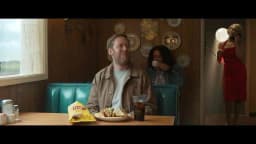
Heineken's 2017 The Cities Project: +POOL campaign championed a proposed floating, water-filtering pool for New York City through a documentary short narrated

Heineken Backs the World's First Floating Water-Filtering Pool in New York
Heineken's The Cities Project: +POOL is a 2017 experiential campaign produced for the United States market that uses a documentary short film to champion a proposed floating, water-filtering swimming pool for New York City, positioning the brand as an active supporter of urban civic innovation.
Heineken formally sponsored +POOL on April 22, 2017, as reported by Untapped New York, marking the moment The Cities Project extended its urban platform into one of its most ambitious activations to date. The campaign centred on a documentary short and virtual-reality film titled Floating an Idea: The +POOL Story, directed by Bianca Giaever, produced by m ss ng p eces, and narrated by Neil Patrick Harris. The film presented +POOL as the world's first floating, water-filtering pool, a structure conceived to change how New Yorkers and people beyond the city interact with the rivers around them.
The campaign arrived in August 2017 and operated across experiential and film media, containing one primary media asset released publicly through that cycle. Beyond the film itself, Heineken supported a petition asking New Yorkers to demonstrate public demand for the pool, turning passive viewers into civic participants. Quinn Kilbury, Senior Director of Marketing at Heineken, articulated the objective plainly, stating to Untapped New York in August 2017: "Heineken's primary purpose is to drive awareness. We want people to demand that they get +POOL. The more you talk about it, and the more you get it out into the public conversation, the less crazy it sounds." In the United States, where experiential marketing had become a primary arena for premium beer brands seeking cultural relevance, the campaign's architecture — documentary craft combined with petition mechanics — gave Heineken a tangible civic role rather than a sponsorship badge. The Cities Project: +POOL carries a Clapboard Score of 71 out of 100, reflecting strong strategic intent and creative ambition tempered by limited measurable public outcome data at the time of archiving.
Heineken entered The Cities Project: +POOL from a position of deliberate brand evolution. The Cities initiative began in 2014, according to records at clapboard.com, using city-themed limited-edition bottles and urban experiential activations to reposition Heineken from a badge-driven lager toward a brand with genuine metropolitan identity. The +POOL sponsorship represented the platform's most structurally ambitious expression, replacing aesthetic urbanism with direct civic investment in New York.
The strategic context in the United States beer market in 2017 was one of pressure and consolidation. Anheuser-Busch InBev held a dominant position with approximately 26.8% global beer market share that year, according to Run Unl Pt, leaving premium international imports including Heineken competing intensely for share of both shelf and cultural conversation. Competitors such as Anheuser-Busch InBev, through brands like Budweiser, and Molson Coors pursued large-scale sports sponsorships and mainstream entertainment partnerships as their primary cultural levers. Heineken's decision to back an infrastructural civic project — a water-filtering pool proposed for the Hudson or East River — constituted a deliberate differentiation from that playbook, trading broadcast reach for depth of association with urban progress and design thinking.
Archie Lee Coates IV, co-founder of +POOL and PlayLab, described Heineken's engagement in an interview published by ARPA Journal in May 2018, noting that the brand's repeated response during development was: "What do you need to do, and how can we get behind it?" That posture — facilitative rather than directive — aligned with a broader shift in premium alcohol marketing in the United States toward purpose-led narratives that could earn editorial and social coverage rather than purchase it. The petition mechanic operationalised that intent, converting brand exposure into a measurable signal of public will around a genuinely unbuilt civic project in New York.
Bianca Giaever directed the documentary short Floating an Idea: The +POOL Story, with production handled by m ss ng p eces and narration provided by Neil Patrick Harris. The creative decision to work in documentary form rather than conventional advertising was deliberate. The film treated +POOL not as a brand backdrop but as the subject itself, tracing the project's origins, the engineering logic of water filtration through pool walls, and the civic aspiration of returning New York's rivers to public use as swimmable spaces.
The virtual-reality component of the campaign extended the film's spatial ambition, placing viewers inside the conceptual experience of the pool before it existed physically. In 2017, VR as a storytelling medium for branded content was still sufficiently novel in the United States to generate editorial attention independent of the underlying brand, giving the campaign a dual-channel presence: the documentary for long-form engagement and the VR experience for immersive demonstration. The combination allowed the campaign to live credibly in both cultural journalism and technology coverage, expanding its effective reach beyond paid media.
Neil Patrick Harris's narration brought a recognisably American civic voice to a project rooted in New York City identity, grounding what could have read as speculative architecture in something warmer and more accessible. Archie Lee Coates IV, speaking to ARPA Journal in May 2018, observed that the commercial reality of the partnership was understood by all parties, noting: "The reality is they will sell beer because of this," while affirming that the project's integrity remained intact. The production approach — documentary realism, VR immersion, and a credible public figure narrating — gave The Cities Project: +POOL a craft foundation more typical of editorial filmmaking than alcohol advertising, which was precisely the strategic intent.
No independently verified campaign performance metrics for The Cities Project: +POOL — such as film views, petition signatures, earned media reach, or sales lift — are publicly available in the sources reviewed for this analysis. No entries for this campaign were found across Cannes Lions, Effies, One Show, D&AD, Clios, Webby Awards, or WARC effectiveness databases at the time of archiving, as confirmed by clapboard.com records.
Structural analysis of the campaign's effectiveness indicators is nonetheless instructive. The decision to anchor the campaign to a real, documentable civic project in New York — rather than a fictional or purely branded narrative — gave earned media a legitimate hook independent of Heineken's involvement. Coverage in outlets including Untapped New York, as cited in this analysis, and subsequent academic and design-press engagement documented by ARPA Journal in 2018 suggests the campaign continued generating relevant cultural conversation well beyond its August 2017 release window. That longevity is a meaningful indicator for an experiential campaign whose primary objective, as stated by Quinn Kilbury to Untapped New York, was awareness generation and normalisation of the +POOL concept within public discourse.
The Clapboard Score of 71 out of 100 reflects a campaign that demonstrates genuine strategic coherence — a clear brand role, a credible creative vehicle, and a real civic project as its subject — while acknowledging the absence of verifiable outcome data and the inherent difficulty of attributing civic progress to a single brand activation within the broader +POOL fundraising and approval timeline in New York.
Heineken's The Cities Project: +POOL is a 2017 United States experiential campaign supporting a proposed floating, water-filtering swimming pool for New York City. It centred on a documentary short film titled Floating an Idea: The +POOL Story, directed by Bianca Giaever, narrated by Neil Patrick Harris, and produced by m ss ng p eces, alongside a virtual-reality component and a public petition.
Heineken sponsored +POOL on April 22, 2017, according to Untapped New York. The sponsorship sat within The Cities Project, Heineken's urban innovation platform active since 2014. The brand's stated goal was to drive public awareness and demand for the pool concept in New York, as explained by Senior Director of Marketing Quinn Kilbury.
Bianca Giaever directed the documentary short Floating an Idea: The +POOL Story for Heineken's The Cities Project campaign. Production was handled by m ss ng p eces, and Neil Patrick Harris provided narration. The film presented +POOL as the world's first floating, water-filtering pool proposed for New York City's rivers.
+POOL is a proposed floating swimming pool designed to filter river water through its walls, making New York City's rivers swimmable. Co-founded by Archie Lee Coates IV of PlayLab, the project uses the pool's structure itself as a filtration system. Heineken's 2017 campaign helped bring the concept into mainstream public conversation across the United States.
No awards for The Cities Project: +POOL are publicly documented across Cannes Lions, Effies, One Show, D&AD, Clios, Webby Awards, or WARC databases, according to clapboard.com records. The campaign received a Clapboard Score of 71 out of 100, reflecting strong strategic coherence and creative craft alongside limited verified performance data.
The Cities Project: +POOL extended a platform Heineken launched in 2014 positioning the brand as a supporter of urban life and civic innovation in the United States and globally. It marked a shift from earlier campaigns such as Legends, a global initiative launched in 2011 by Wieden and Kennedy Amsterdam that won the 2013 Cannes Lions Creative Effectiveness Grand Prix.
.webp)
Creative Collaboration Platform: The Backbone of Modern Creative WorkWhat is a creative collaboration platform?Clapboard defines a creative collaboration platform as the operational core for today’s distributed creative teams. This is not a collection of digital collaboration tools stitched together; Clapboard’s system


Understanding the Creative Production MarketplaceWhat is a Creative Production Marketplace?Clapboard defines a creative production marketplace as a structured ecosystem where brands, agencies, and production talent converge to execute video, advertising, and branded content at scale. Unlike the legacy agency or freelanREAD FULL ARTICLE

The Urgent Need for a Creative Production Operating SystemWhy Traditional Creative Production Models Break DownClapboard sees the creative production landscape shifting under pressure. Content velocity is no longer a buzzword—it’s a mandate. Modern advertising demands relentless output across dozens of channels, each wREAD FULL ARTICLE