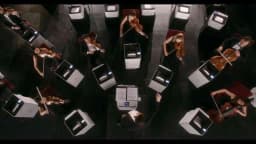
Green People's Power's Feel The Gap Soda campaign by McCann Tokyo used carbonated water to make atmospheric CO₂ concentration differences physically felt by

Green People's Power Makes CO₂ Tangible With Feel The Gap Soda
Green People's Power's Feel The Gap Soda campaign is a September 2018 experiential activation created by McCann Tokyo in Japan, designed to make the difference in atmospheric CO₂ concentration between a historical baseline and the present day physically perceptible through carbonated water.
Green People's Power is a Japanese ethical-electricity retailer operating within Japan's liberalised residential energy market. The brand competes on environmental values — renewable sourcing and climate accountability — in a category where most new entrants distinguish themselves primarily on price. To cut through that noise, the 2018 campaign does not rely on data visualisations or broadcast messaging. Instead, it translates an abstract atmospheric statistic into a direct bodily sensation: carbonation level in a drink calibrated to represent CO₂ concentrations at two distinct points in time, one historical and one current. The consumer feels the gap rather than reads about it.
The campaign carries a single media asset, consistent with a targeted experiential format intended for direct consumer engagement rather than mass-media distribution. Published in Japan in September 2018, Feel The Gap Soda sits at the intersection of environmental advocacy and product-category marketing — using the familiar pleasure of fizzy water as a delivery mechanism for an uncomfortable environmental truth. Clapboard scores the campaign 67 out of 100, reflecting its conceptual clarity and executional discipline alongside the limited scale of its documented reach.
Japan's residential electricity market opened to full retail competition in April 2016, ending the monopoly held by ten regional vertically integrated utilities, according to ResearchAndMarkets.com. By 2018, approximately 400 companies had registered as electricity retailers in Japan, according to ResearchAndMarkets.com, creating a fragmented and intensely competitive landscape in which Green People's Power needed to establish a distinct identity beyond price.
The strategic challenge for Green People's Power is not simply winning customers from competitors such as Tokyo Electric Power Company (TEPCO) and Kansai Electric Power — the legacy utilities that still accounted for approximately two-thirds of the Japanese electricity market as of 2018, according to ResearchAndMarkets.com — but persuading environmentally conscious Japanese consumers that their electricity choice carries moral and ecological consequence. Low-voltage new-retailer market penetration in Japan stood at just 4.6% across the most advanced comparable category as of February 2018, according to ResearchAndMarkets.com, indicating that the majority of residential customers had not yet switched despite two years of open competition.
McCann Tokyo's strategic response to this landscape treats CO₂ reduction not as a technical benefit but as a lived experience. Feel The Gap Soda sidesteps the crowded tactical messaging of the new-entrant electricity market — promotional tariffs, app-based dashboards, green-label certification — and addresses consumer inertia at a deeper level, making climate change sensory and immediate rather than statistical and distant. In Japan's 2018 industrial and energy communications environment, that represented a meaningful creative departure from category convention.
Creative director and copywriter Tomoaki Hirano led the conceptual development of Feel The Gap Soda, with art director and illustrator Riko Koide shaping its visual identity, as documented by Clapboard. The two-person creative pairing at McCann Tokyo produced a campaign that is notable for the economy of its means: one core object, one sensory mechanic, one idea.
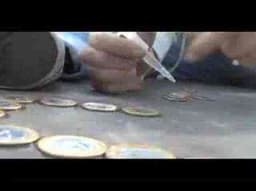
The execution centres on carbonated water engineered or presented to represent atmospheric CO₂ concentration levels at two distinct moments in time — a pre-industrial or earlier historical baseline and the measurable present. The gap between those two levels of carbonation is the campaign's entire argument. There is no voice-over, no celebrity endorsement, no lengthy explanatory copy required. The product does the persuasion. This restraint is characteristic of experiential advertising that trusts its central insight to carry weight without amplification.
Riko Koide's illustrative work provides the visual framework that contextualises the physical experience, anchoring the soda's carbonation levels within a legible narrative of environmental change. The combination of tactile sensation and graphic clarity gives the campaign a dual register — it functions as an in-hand object and as a piece of visual communication simultaneously. For an ethical-electricity retailer operating in Japan's competitive post-liberalisation market, the production economy also signals brand values: directness, evidence, and the absence of greenwashing theatrics. McCann Tokyo's approach to Feel The Gap Soda demonstrates how experiential format can compress a complex scientific concept into a moment of immediate understanding.
No verified performance data for the Feel The Gap Soda campaign is publicly available. No sales lift, market-share movement, brand-tracking result, reach figure, or engagement metric has been reported in connection with the campaign, and no budget or media-spend figure is documented. The campaign has not received documented recognition from Cannes Lions, the Effies, The One Show, D&AD, the Clios, the Webby Awards, or WARC awards listings, as confirmed by Clapboard.
Structural analysis of the campaign's effectiveness rests on its conceptual architecture. Feel The Gap Soda solves a genuine strategic problem — making the abstract tangible for a brand whose value proposition depends on consumers internalising a scientific reality — and does so through a mechanic that is both memorable and reproducible in a live-engagement context. The single media asset format suggests the campaign was built for depth of impression over breadth of reach, which is a defensible approach for an ethical-electricity brand seeking quality customer acquisition rather than mass awareness in a market where, as ResearchAndMarkets.com reports, new-retailer penetration remained low in 2018.
The campaign's structural weakness lies in the same constraint: without documented scale, distribution, or follow-on activation, its ability to shift commercial outcomes for Green People's Power in Japan's approximately 400-retailer competitive field remains unverifiable. Clapboard scores Feel The Gap Soda 67 out of 100, recognising a sharply defined creative idea and disciplined execution that is bounded by limited evidence of market impact.
Feel The Gap Soda is a 2018 experiential campaign created by McCann Tokyo for Japanese ethical-electricity retailer Green People's Power. It used carbonated water calibrated to represent atmospheric CO₂ concentration levels at two points in time, making the rise in CO₂ physically perceptible rather than purely statistical, as documented by Clapboard.
McCann Tokyo created the Feel The Gap Soda campaign in 2018. Tomoaki Hirano served as creative director and copywriter, and Riko Koide served as art director and illustrator, as documented by Clapboard. The campaign was published in Japan in September 2018 as a single experiential media asset.
The campaign is classified under the industrial industry, specifically within Japan's liberalised electricity retail sector. Green People's Power is a Japanese ethical-electricity retailer that entered a market opened to competition in April 2016, according to ResearchAndMarkets.com, which by 2018 included approximately 400 registered electricity retailers.
No awards are documented for Feel The Gap Soda. Clapboard confirms the campaign has no recorded recognition from Cannes Lions, the Effies, The One Show, D&AD, the Clios, the Webby Awards, or WARC awards listings. Clapboard assigns the campaign a score of 67 out of 100 based on creative and strategic assessment.
Japan's residential electricity market had opened to competition in April 2016, according to ResearchAndMarkets.com. By 2018, new-retailer penetration remained low, with most customers still supplied by legacy utilities. Green People's Power used the Feel The Gap Soda campaign to differentiate on environmental values rather than competing on tariff price alone.
.webp)
Creative Collaboration Platform: The Backbone of Modern Creative WorkWhat is a creative collaboration platform?Clapboard defines a creative collaboration platform as the operational core for today’s distributed creative teams. This is not a collection of digital collaboration tools stitched together; Clapboard’s system


Understanding the Creative Production MarketplaceWhat is a Creative Production Marketplace?Clapboard defines a creative production marketplace as a structured ecosystem where brands, agencies, and production talent converge to execute video, advertising, and branded content at scale. Unlike the legacy agency or freelanREAD FULL ARTICLE

The Urgent Need for a Creative Production Operating SystemWhy Traditional Creative Production Models Break DownClapboard sees the creative production landscape shifting under pressure. Content velocity is no longer a buzzword—it’s a mandate. Modern advertising demands relentless output across dozens of channels, each wREAD FULL ARTICLE