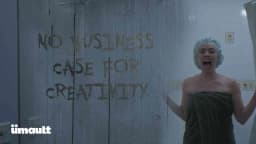
Goodwill Southern California's 2018 Halloween campaign by The Miller Group positioned 85 thrift stores as the go-to destination for affordable, distinctive

Goodwill Halloween Turns Thrift Into Southern California's Costume Destination
Goodwill Southern California's 2018 Halloween campaign is a 30-second online film, created by The Miller Group and launched in September 2018, that repositioned Goodwill's 85 stores across the United States as the definitive destination for affordable, distinctive Halloween costumes and decorations — competing directly with large seasonal Halloween specialty retailers.
The campaign carried a single-minded strategic ambition: to make Goodwill synonymous with Halloween. Rather than communicating the brand's social mission or its price advantage in abstract terms, the work made a direct, seasonal retail claim at a moment when American consumers are actively seeking costume solutions. Goodwill Southern California, a regional affiliate of Goodwill Industries International, operates across one of the most competitive retail markets in the United States, and the Halloween window represented a concentrated opportunity to shift shopping behaviour at scale.
The Miller Group, based in Pacific Palisades, California, conceived the campaign as a multi-channel effort spanning video, social media, out-of-home advertising, digital media, public relations, and live activations. The 30-second film served as the creative centrepiece, distributed online and running through October 2018. In positioning Goodwill as what agency materials describe as the king of thrift and arguably the world's most sustainable brand, per millergroup.com, the campaign aligned a heritage retail organisation with a cultural moment that rewards creativity, individuality, and resourcefulness — precisely the values that distinguish thrift shopping from mass retail. The Clapboard Score for this campaign is 60 out of 100.
The Miller Group identified Halloween as a structurally underserved moment for thrift retail in the United States. Seasonal Halloween specialty chains such as Spirit Halloween and Halloween City dominate the holiday retail category each autumn, commanding significant share of the costume and decoration market through high-visibility temporary store formats. Goodwill Southern California's 85 permanent locations represented a credible, year-round alternative — stocked with the kind of eclectic, one-of-a-kind inventory that seasonal pop-up retailers cannot replicate.
The broader resale market context reinforced the strategic logic. The resale segment grew by approximately 49 percent from 2017 to 2018, compared with 9 percent for traditional retail and 2 percent for the apparel market overall, according to ThredUp and GlobalData research cited across industry reporting. Goodwill Industries International generated approximately $4.52 billion in retail revenue across affiliated organisations in 2018, according to Finance Yahoo, underlining the scale of the network the Southern California affiliate operates within. In the United States, the secondhand apparel market was estimated at approximately $24 billion in 2018, reflecting a broader market definition, per available industry data.
By anchoring the campaign to Halloween specifically, The Miller Group gave Goodwill a seasonal permission structure that mass-market thrift positioning alone cannot provide. The campaign did not ask consumers to reconsider thrift shopping in general — it asked them to solve a specific, time-bound retail problem through Goodwill's inventory. That precision of occasion targeting is what separates the Halloween strategy from broader brand-awareness efforts and aligns it with measurable retail performance goals across the Southern California market.
The campaign's creative execution centred on a single 30-second film distributed through online channels across the United States during September and October 2018. The format choice reflects the realities of the media landscape Goodwill Southern California's audience inhabits: short-form video designed for digital consumption, capable of generating organic sharing alongside paid distribution across social media platforms.
The film's creative premise leaned into the inherent drama and playfulness of Halloween costuming, treating Goodwill's thrift inventory not as a budget compromise but as the source of genuinely distinctive, character-rich looks unavailable through mass seasonal retailers. This reframing is the campaign's central creative act — transforming the perception of secondhand goods from necessity to creative advantage at a moment when originality is the explicit consumer goal. The approach reflects The Miller Group's stated positioning of Goodwill as the world's most sustainable brand, per millergroup.com, translating a broad brand value into a specific, emotionally resonant seasonal context.
The campaign extended beyond the film into out-of-home advertising, social media content, digital media, public relations, and live activations across the Southern California market, creating a unified seasonal presence that reinforced the film's central message at multiple consumer touchpoints. According to millergroup.com, the campaign generated more than 150,000 YouTube views and more than $250,000 in estimated earned media value, suggesting the creative work achieved meaningful organic traction beyond its paid distribution footprint. Production credits for the Goodwill Halloween campaign's film direction are not fully documented in publicly available sources, though the work was produced under The Miller Group's creative leadership.
No independently audited third-party performance data for the Goodwill Halloween campaign is publicly available, but multiple agency and portfolio sources provide consistent reported figures. According to millergroup.com, the campaign achieved a reported 38 percent increase in sales for Goodwill Southern California during the Halloween period, alongside more than 150,000 YouTube views and more than $250,000 in estimated earned media value. Portfolio documentation published by Gregcollins Work reports a 13 percent sales increase in the first year of the campaign and a 38 percent sales increase by year three, suggesting the Halloween positioning strategy built cumulative retail momentum across multiple seasons in the United States rather than delivering a single-year spike.
The earned media figure, also reported via millergroup.com and corroborated across 50pros.com documentation, indicates that the campaign's public relations and activation components extended its reach meaningfully beyond paid media expenditure — a structurally efficient outcome for a regional nonprofit retail organisation operating across 85 locations. The YouTube view count of more than 150,000, per millergroup.com, reflects solid organic traction for a regional retail film in 2018, a period when online video competition for consumer attention was intensifying rapidly across the United States market. Taken together, the reported metrics support the conclusion that The Miller Group's occasion-specific strategy delivered measurable commercial impact for Goodwill Southern California by converting a seasonal consumer need into a direct retail traffic driver.
The Goodwill Halloween campaign was a 30-second online film created by The Miller Group for Goodwill Southern California, launched in September 2018. It ran through October 2018 across the United States and aimed to position Goodwill's 85 stores as the primary destination for affordable, distinctive Halloween costumes and decorations, competing with large seasonal retailers.
The Goodwill Halloween campaign reported a 38 percent increase in Halloween-period sales, according to millergroup.com. Portfolio documentation from gregcollins.work reports a 13 percent sales increase in year one, growing to 38 percent by year three, indicating the strategy built sustained retail momentum across multiple Halloween seasons in Southern California.
The Miller Group, based in Pacific Palisades, California, created the Goodwill Halloween campaign. The agency developed the full multi-channel effort for Goodwill Southern California, encompassing the 30-second film, social media, out-of-home advertising, digital media, public relations, and live activations across the Southern California market in 2018.
The Goodwill Halloween campaign generated more than 150,000 YouTube views, according to millergroup.com. The campaign also produced more than $250,000 in estimated earned media value, per the same source, indicating that its public relations and activation components extended reach significantly beyond paid media distribution in the United States.
Goodwill Southern California's Halloween campaign targeted seasonal Halloween specialty retailers, particularly large pop-up chains such as Spirit Halloween and Halloween City. The Miller Group's strategy positioned Goodwill's 85 permanent thrift stores as a superior alternative, offering eclectic, one-of-a-kind inventory unavailable through mass seasonal retail formats operating across the United States.
The Goodwill Halloween campaign by The Miller Group holds a Clapboard Score of 60 out of 100. The score reflects the campaign's structurally sound occasion-based retail strategy and its reported commercial results, balanced against the regional scale of the execution and the limited publicly verified independent performance data available for the 2018 United States campaign.
.webp)
Creative Collaboration Platform: The Backbone of Modern Creative WorkWhat is a creative collaboration platform?Clapboard defines a creative collaboration platform as the operational core for today’s distributed creative teams. This is not a collection of digital collaboration tools stitched together; Clapboard’s system


Understanding the Creative Production MarketplaceWhat is a Creative Production Marketplace?Clapboard defines a creative production marketplace as a structured ecosystem where brands, agencies, and production talent converge to execute video, advertising, and branded content at scale. Unlike the legacy agency or freelanREAD FULL ARTICLE

The Urgent Need for a Creative Production Operating SystemWhy Traditional Creative Production Models Break DownClapboard sees the creative production landscape shifting under pressure. Content velocity is no longer a buzzword—it’s a mandate. Modern advertising demands relentless output across dozens of channels, each wREAD FULL ARTICLE