 ARCHIVE
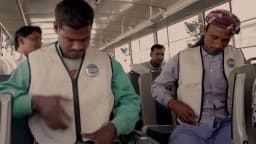
Emirates NBD A/C Vests Turns Construction Site Heat Into a Banking Moment
How Emirates NBD Reached UAE Construction Workers With a Wearable Direct Campaign Emirates NBD's...
How Go-Jek Made Gratitude a Product Feature for Ramadan 2016
Go-Jek's #RamadanBersamaGojek campaign is a June 2016 digital initiative launched in Indonesia that transformed existing platform features — including tipping, in-app appreciation, and food delivery categories — into instruments of Ramadan generosity, reaching more than 120,000 views on its principal digital asset, according to Clapboard's archive.
Go-Jek launched the Ramadan program in Jakarta on 8 June 2016, according to antaranews.com. The campaign operated across multiple service verticals simultaneously: Go-Ride, Go-Car, Go-Food, and Go-Mart each carried Ramadan-specific functionality designed to reflect the spirit of giving that defines the holy month in Indonesia. The result was a campaign that did not sit alongside the product — it lived inside it.
The mechanics were precise. Go-Jek introduced a Ramadan-themed app update featuring new loading screens and service icons calibrated to the season. Within Go-Food, two dedicated meal categories — 'Buka Puasa' for breaking the fast at sunset and 'Sahur' for the pre-dawn meal — were created to serve the specific consumption rhythm of Ramadan. A new in-app 'Terima Kasih' feature, meaning 'Thank You' in Bahasa Indonesia, allowed customers to send direct appreciation to driver partners, while Go-Pay functionality was extended to enable tipping for those same drivers. A donation logistics initiative with Rumah Zakat, Indonesia's established zakat and charitable foundation, ran from 6 to 30 June 2016, per gojek.com, with distribution of collected donations scheduled to continue through 30 July 2016.
The campaign produced a single principal digital asset, classified as a digital medium execution and published in Indonesia in June 2016. It earned a Clapboard Score of 68 out of 100, reflecting solid strategic coherence and cultural specificity within the eCommerce and professional services categories. The hashtag #RamadanBersamaGojek — translating broadly to 'Ramadan Together with Gojek' — functioned as both a social identifier and a statement of community intent, positioning the platform not merely as a logistics provider but as an active participant in one of the most culturally significant periods in the Indonesian calendar.
Go-Jek recognised a structural truth about Indonesian consumer behaviour during Ramadan. In Indonesia, the month of Ramadan consistently produces the highest on-demand service and food delivery demand of the calendar year, as patterns documented by Mix Co Id and regional trade observers confirm. The campaign's design responded to that demand not with promotional discounting but with feature-level empathy — a distinction that separates #RamadanBersamaGojek from standard seasonal marketing.
The strategic foundation rested on a clear market reality. In 2016, approximately 77% of Indonesian internet users shopped online, according to a survey of 1,468 respondents cited by slideshare.net. Of those online shoppers, approximately 70% used smartphones rather than desktops, per mmaglobal.com — a figure that made mobile-first, in-app campaign mechanics not merely preferable but essential. Go-Jek, operating natively on mobile, was structurally positioned to reach this audience at the moment of highest intent.
The competitive landscape in Indonesia's ride-hailing and on-demand delivery sector in 2016 was intensifying. Grab, Go-Jek's most direct regional competitor, was expanding aggressively across Southeast Asia with comparable super-app ambitions. Lazada, meanwhile, dominated Indonesian eCommerce and held significant brand equity during seasonal shopping peaks. Against these rivals, Go-Jek's decision to frame #RamadanBersamaGojek around gratitude rather than price or speed represented a differentiated positioning move — one that leaned into the platform's relationship with its driver partners as a core brand asset rather than an operational detail.
The Rumah Zakat partnership added institutional credibility to the campaign's charitable dimension. Rumah Zakat is one of Indonesia's most recognised social and humanitarian organisations, and its involvement signalled that Go-Jek's Ramadan commitment extended beyond the app interface into verifiable community action. This combination of product innovation and social partnership gave #RamadanBersamaGojek a layered strategic architecture that pure promotional campaigns rarely achieve.
Mahatma Putra served as Creative Director and Copywriter on #RamadanBersamaGojek, with Dennis Hasangapon credited as Co-Director, Tasha May as Producer, and Moch Ares as Art Director, according to Clapboard's archive. Production was handled by Anatman Pictures, an Indonesian production house.
The campaign's creative output centred on a single principal media asset — a disciplined choice that concentrated impact rather than diffusing it across multiple executions. In the context of Indonesia's 2016 digital media environment, where mobile data costs and connection speeds still shaped consumption behaviour, a single high-quality digital film was both a practical and an artistic decision. According to tothenew.com and regional digital media observers, Indonesian audiences in this period responded most strongly to narrative-driven content that reflected local cultural values, and the creative team built directly toward that insight.
The visual and narrative language of the asset drew on the specific emotional register of Ramadan in Indonesia — a register defined by restraint, reflection, and communal obligation rather than celebration alone. The 'Terima Kasih' mechanic, which the creative team had to make legible within the film's storytelling, required translating an in-app gesture into a felt human moment. The decision to foreground driver partners as the recipients of gratitude rather than as background service infrastructure was a creative choice with genuine strategic weight: it humanised the platform at the precise moment when Indonesian consumers were most attuned to themes of compassion and interdependence.
Post-production house, music composer, and editor credits for #RamadanBersamaGojek are not publicly documented in available sources. The agency responsible for the campaign was not disclosed. No verified direct quotes from the creative team appear in available search results. What the credits confirm is a compact, senior-led Indonesian creative unit working with a specialist production partner to produce a culturally grounded digital narrative within a tight June 2016 window.
The principal digital asset for #RamadanBersamaGojek generated more than 120,000 views, according to Clapboard's archive. For a single-asset digital campaign produced for a domestic Indonesian audience in June 2016, this figure reflects meaningful organic reach within a market where, per mmaglobal.com, smartphone penetration was accelerating but total internet user numbers remained well below the levels recorded in subsequent years.
No additional verified performance data — including engagement rates, conversion metrics, Go-Pay tip volumes, Rumah Zakat donation totals, or Go-Food category adoption figures specific to this campaign — is publicly available. The campaign's structural effectiveness, however, is legible from its architecture. By embedding Ramadan functionality directly into the Go-Jek app rather than running a parallel above-the-line campaign, Go-Jek created a system in which every product interaction during the campaign period became a potential expression of the campaign's values. The 'Buka Puasa' and 'Sahur' food categories served functional user needs while reinforcing the brand's cultural fluency. The Rumah Zakat donation logistics programme, active from 6 to 30 June 2016 per gojek.com, added a measurable philanthropic dimension that extended the campaign's social footprint beyond digital views alone.
The Clapboard Score of 68 out of 100 positions #RamadanBersamaGojek as a competent and culturally intelligent campaign that executes its core idea with consistency across product and content dimensions. The score reflects the campaign's strength in strategic clarity and cultural specificity while acknowledging the limited scope of a single-asset execution and the absence of documented measurable outcomes beyond view count.
#RamadanBersamaGojek was a June 2016 digital campaign by Go-Jek in Indonesia designed to embed Ramadan values into the platform itself. It introduced Go-Food meal categories for breaking and beginning the fast, an in-app driver appreciation feature called 'Terima Kasih', Go-Pay tipping, and a donation logistics partnership with Rumah Zakat running throughout June 2016.
Go-Jek launched the campaign in Jakarta, Indonesia, on 8 June 2016, according to antaranews.com. The broader digital campaign ran through June 2016, with the Rumah Zakat donation distribution phase continuing through 30 July 2016, per gojek.com. It was classified as a digital medium campaign targeting Indonesian consumers during the Ramadan season.
Mahatma Putra served as Creative Director and Copywriter. Dennis Hasangapon was Co-Director, Tasha May produced the project, and Moch Ares acted as Art Director. Production house Anatman Pictures executed the work, according to Clapboard's archive. The commissioning agency was not disclosed, and no post-production or music credits are publicly documented.
The principal digital asset for #RamadanBersamaGojek generated more than 120,000 views, according to Clapboard's archive. The campaign comprised a single media asset, a focused production choice suited to Indonesia's mobile-first digital environment in 2016, where approximately 70% of online shoppers used smartphones, per mmaglobal.com.
Clapboard assigned #RamadanBersamaGojek a score of 68 out of 100. The rating reflects strong cultural specificity and strategic coherence — particularly the decision to embed Ramadan generosity into live product features — while noting the campaign's single-asset scope and the absence of publicly verified conversion or engagement metrics beyond total view count.
Go-Jek partnered with Rumah Zakat, one of Indonesia's most recognised charitable foundations, to manage donation logistics from 6 to 30 June 2016, per gojek.com. Distribution of collected donations was then scheduled through 30 July 2016. The partnership gave #RamadanBersamaGojek a verified philanthropic dimension extending the campaign beyond its digital content asset.
.webp)
Creative Collaboration Platform: The Backbone of Modern Creative WorkWhat is a creative collaboration platform?Clapboard defines a creative collaboration platform as the operational core for today’s distributed creative teams. This is not a collection of digital collaboration tools stitched together; Clapboard’s system


Understanding the Creative Production MarketplaceWhat is a Creative Production Marketplace?Clapboard defines a creative production marketplace as a structured ecosystem where brands, agencies, and production talent converge to execute video, advertising, and branded content at scale. Unlike the legacy agency or freelanREAD FULL ARTICLE

The Urgent Need for a Creative Production Operating SystemWhy Traditional Creative Production Models Break DownClapboard sees the creative production landscape shifting under pressure. Content velocity is no longer a buzzword—it’s a mandate. Modern advertising demands relentless output across dozens of channels, each wREAD FULL ARTICLE