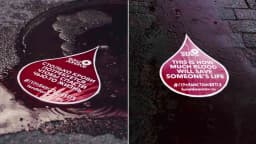
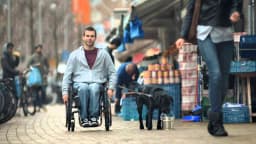
The "Click to End World Hunger" campaign by Global Ties leverages a simple yet powerful brand proposition: individual online actions, specifically clicking a digital banner, can collectively generate tangible financial support to combat global hunger. By aligning user engagement directly with monetary contributions through YouTube’s monetization model, the campaign positions Global Ties as a catalyst for accessible, measurable social impact—transforming passive viewers into active participants in humanitarian aid without friction or additional effort.
The market strategy centers on the insight that internet users, when presented with an immediate and effortless way to contribute, are more likely to engage. Targeting a global digital audience, the campaign emphasizes collective power through the vast number of internet users (3 billion), encouraging a sense of shared responsibility and amplifying the potential reach and impact of a single click. Creatively, the campaign adopts a documentary/social experiment genre to authentically demonstrate this concept, enhancing credibility and emotional resonance. Utilizing a concise 90-second video and clear calls-to-action, it integrates fundraising, awareness, and social proof into a seamless user experience. By making the act of donation frictionless and measurable, the campaign reframes charitable giving as an everyday digital behavior, potentially increasing conversion rates and sustaining ongoing support for Global Ties' mission.
FORMAT#1 DEMONSTRATION — Directly shows how a product works and highlights its benefits.
This campaign most likely uses the Demonstration format, as it is centered on showing viewers exactly how their click can convert into real funds for fighting world hunger via YouTube's ad monetization process. The argument is pragmatic and mechanically transparent: "Your click is enough," and the video walks through how each click directly benefits the cause. There’s a focus on illustrating the functional simplicity — viewers see that their mere action has a measurable, beneficial effect. There are no storytelling arcs, celebrity involvement, or symbolic elements dominating the narrative; it’s a clear, step-by-step demonstration of a digital action (clicking) turning into tangible world impact, aligning most closely with the Demonstration creative format.
1. World Food Programme (WFP) – Positioned as the leading global humanitarian organization combating hunger through emergency relief and long-term development, WFP leverages international partnerships and cutting-edge logistics to deliver food assistance efficiently, emphasizing transparency and impact-driven efforts.
2. Action Against Hunger – Differentiates itself by focusing on both immediate hunger relief and sustainable nutrition programs, combining medical expertise with community-based interventions to address malnutrition, with a strong commitment to innovation in public health.
3. The Hunger Project – Known for its grassroots empowerment strategy, this organization focuses on sustainable, community-led solutions to end hunger, prioritizing local leadership, gender equality, and self-reliance, thus promoting systemic social transformation.
4. CARE International – Positions itself through a broad humanitarian mandate with a strong emphasis on women and girls as change agents, integrating food security with poverty alleviation and disaster response to create resilient communities.
5. Feeding America – As the largest domestic hunger-relief organization in the US, it distinguishes itself by collaborating with a vast network of food banks, focusing on efficient food rescue and distribution systems, and advocating for policy reforms to address food insecurity.
Q: What is Click to end world hunger about?
A: Click to end world hunger is a 2014 digital campaign created for Global Ties by Havas, targeting the Russian market and directed by Kirill Zhukov of the Creative and Technological Solutions Department. The campaign centers on a 90-second video produced by Bulldog Studio, featuring a speech by Marcos Guimaraes and music by Keith Kenniff. Its core idea is to harness the collective power of internet users by turning each click on a YouTube banner into direct financial support for fighting world hunger, leveraging YouTube’s monetization system to make charitable giving immediate and frictionless.
Q: What creative device does Click to end world hunger use?
A: Click to end world hunger employs the Demonstration format, as classified by Clapboard’s 12-format taxonomy. The campaign directly shows viewers how their simple digital action—clicking a banner—translates into real funds for humanitarian aid via YouTube’s monetization process. The video eschews narrative storytelling and celebrity involvement, instead offering a transparent, step-by-step demonstration of the mechanism, making the impact of each click clear and measurable to the audience.
Q: What is the campaign proposition for Click to end world hunger?
A: The campaign proposition for Click to end world hunger positions Global Ties as a catalyst for accessible, measurable social impact by aligning individual online actions with tangible humanitarian outcomes. Targeting a global digital audience, the campaign asserts that every internet user can contribute to ending world hunger simply by clicking a banner, transforming passive engagement into active participation. This frictionless, transparent approach reframes charitable giving as an everyday digital behavior, aiming to drive higher conversion rates and sustain ongoing support for Global Ties’ mission in the public service sector.
Q: How does Click to end world hunger rank in Clapboard's archive?
A: Click to end world hunger holds a Clapboard Campaign Score of 63/100. This score reflects the campaign’s creative ambition, execution quality, and cultural relevance as evaluated by Clapboard’s global ad archive.
Q: Who are the competitors in Global Ties's category?
A: In the public service sector focused on hunger relief, Global Ties operates alongside major organizations such as the World Food Programme, which leads with large-scale emergency and development food assistance; Action Against Hunger, known for integrating medical expertise with community nutrition programs; The Hunger Project, which emphasizes grassroots empowerment and sustainable solutions; CARE International, which combines food security with broader humanitarian initiatives, particularly for women and girls; and Feeding America, the largest US-based hunger-relief network, recognized for its efficient food distribution and policy advocacy.


 ARCHIVE
.webp)