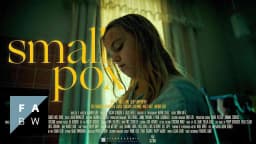
Garnier and Buzzman's 2017 Tutorial film, directed by Bruno Aveillan, partners with UNICEF to expose the deadly consequences of hygiene access failures in

How Garnier and Buzzman Turned a Hand-Washing Tutorial Into a Health Emergency Wake-Up Call
Garnier's "Tutorial" is a 2017 public-interest film created with Paris-based agency Buzzman that uses the familiar format of a beauty how-to video to expose a devastating global reality: according to Clapboard's editorial records, 1.4 million children die each year from diseases that could be prevented through hand-washing alone.
Published on April 1, 2017, the film was produced in partnership with UNICEF to support programs addressing hygiene access in humanitarian emergency situations. Directed by Bruno Aveillan and produced by QUAD with producer Martin Coulais, "Tutorial" operates as an awareness film rather than a conventional product advertisement. The campaign belongs to the public interest category, using Garnier's platform within the L'Oréal Group to direct attention toward a health emergency that disproportionately affects children in crisis-affected regions. While Garnier's geographic market for the campaign was not formally specified at launch, the cause it champions — children's access to basic hygiene — carries universal relevance across every market in which the L'Oréal Group operates. The film was publicly disclosed during April 2017, as confirmed by industry coverage recorded on April 25, 2017. By adopting the visual and structural conventions of the online tutorial genre — one of the dominant content formats in beauty communication — Garnier and Buzzman created a piece of advocacy that speaks directly in the language its audience already trusts and engages with daily. The Clapboard Score for "Tutorial" is 63 out of 100, reflecting the campaign's strong conceptual clarity and cause alignment weighed against the absence of verifiable performance data in the public domain.
Garnier occupies a specific strategic position within the global beauty market as L'Oréal Group's mass-market brand. The global cosmetics market was valued at approximately €200 billion in 2017 at manufacturers' net prices, according to L'Oréal's financial disclosures, with skincare representing approximately €74 billion and haircare approximately €44 billion of that total. Within a category that competitive, differentiation through values-led communication represents a meaningful strategic lever, particularly as consumer expectations around brand purpose began intensifying across the industry in the mid-2010s.
The strategic rationale behind "Tutorial" is rooted in a precise consumer insight: the tutorial video format had become the dominant mode of beauty content consumption online by 2017, making it instantly recognisable to Garnier's core audience. Buzzman's creative decision to exploit that familiarity and then subvert it — replacing aspirational product application with the stark reality of children lacking access to clean water — creates a cognitive dissonance that holds attention and sharpens the campaign's public health message. Competitors such as Dove, with its long-running Real Beauty platform, and Nivea, which has invested in community-focused brand narratives, had already established that beauty brands could sustain commercial relevance through cause-adjacent positioning. Garnier's partnership with UNICEF moves a step further by anchoring its advocacy to a specific humanitarian organisation and a specific, quantifiable health emergency, lending the campaign an institutional credibility that distinguishes it from softer brand purpose exercises. The hygiene products segment represented approximately €20 billion of the global cosmetics market in 2017, according to L'Oréal's published figures, underscoring how hygiene sits at the intersection of Garnier's commercial territory and the cause it chose to champion.
Bruno Aveillan directed "Tutorial" for production company QUAD, with Martin Coulais serving as producer. Aveillan is a director known for combining cinematic scale with emotional restraint, qualities that prove essential to the film's strategy of drawing audiences in through a familiar format before confronting them with an unfamiliar and urgent reality.
The creative team at Buzzman assembled for this campaign reflects the agency's senior creative architecture. Georges Mohammed-Chérif served as executive creative director and president, with Thomas Granger as vice-president and Julien Levilain as associate director. Art direction was led by Julien Doucet, with Lilian Moine as copywriter and Fanny Camus Tournier as strategic planner. Social media responsibilities were held by Julien Scaglione as head of social media and Loris Bernardini as social media creative director. Public relations leadership came from Amélie Juillet and Calypso Asline, with account direction handled by Maïté Orcasberro. The depth and specificity of this credit list signals a campaign conceived as a fully integrated production rather than a simple broadcast film — social amplification and earned media were built into the campaign's architecture from the outset.
The film's formal execution leans on the visual grammar of the documentary-style tutorial: direct address, instructional pacing, and an aesthetic that deliberately mirrors user-generated beauty content. This is not a polished product commercial disguised as purpose content. The craft choice is one of deliberate restraint — allowing the weight of the public health statistic and the UNICEF cause partnership to carry the emotional payload, rather than layering on cinematic spectacle. The result is a film that earns its place in the public interest category with structural honesty.
No verified performance data for "Tutorial" is publicly available in terms of view counts, reach figures, earned media value, or documented shifts in awareness metrics. Garnier and Buzzman have not published campaign results in any indexed source, and no independent measurement body has released figures attributable to this specific film.
Structural analysis, however, points to a campaign designed for durable impact rather than short-cycle performance. The documentary format and UNICEF institutional partnership give "Tutorial" a credibility shelf-life that product-led campaigns rarely achieve. By naming a specific, verifiable statistic — 1.4 million preventable child deaths annually linked to hand-washing access, as cited in Clapboard's editorial records — the film anchors itself to a fact that invites third-party verification and repeat sharing across public health, education, and media contexts. The campaign's publication date of April 1, 2017 placed it in a media environment where cause-driven content from established beauty brands was beginning to attract sustained trade-press attention, as evidenced by industry coverage confirmed through late April of that year. The involvement of Bruno Aveillan as director lends the film festival and award-circuit visibility that extends its effective lifespan beyond the initial release window. For a campaign operating in the public interest category without a direct conversion objective, these structural factors — institutional partnership, directorial credibility, falsifiable central claim, and integrated social architecture — represent the primary mechanisms through which impact is generated and sustained.
Garnier's Tutorial is a 2017 public-interest film created with Buzzman that uses the beauty tutorial format to highlight a global health emergency. According to Clapboard's records, 1.4 million children die annually from diseases preventable through hand-washing, a statistic the film foregrounds in partnership with UNICEF.
Bruno Aveillan directed Tutorial for production company QUAD, with Martin Coulais as producer. Aveillan brought a documentary-style restraint to the film's execution, using the visual grammar of online beauty tutorials to draw audiences into a public health message about hygiene access in humanitarian emergencies.
Garnier partnered with UNICEF to lend institutional credibility to its hygiene awareness messaging. The UNICEF partnership connected Garnier's mass-market beauty platform to a documented humanitarian cause — children dying from preventable diseases in emergency situations — moving the campaign beyond conventional brand purpose communication into substantive public interest advocacy.
Paris-based agency Buzzman created Tutorial for Garnier, published April 1, 2017. The agency's team included executive creative director Georges Mohammed-Chérif, art director Julien Doucet, and copywriter Lilian Moine, supported by an integrated social media and public relations structure built into the campaign's original architecture.
Garnier's Tutorial receives a Clapboard Score of 63 out of 100. The score reflects strong conceptual clarity and a well-matched cause partnership with UNICEF, balanced against the absence of publicly verified performance data and the campaign's limited documented geographic footprint at the time of release.
Tutorial exploits the tension between beauty tutorials — aspirational content about personal care — and the reality that millions of children lack access to basic hand-washing. Garnier's position in the hygiene and personal care segments makes the cause alignment structurally coherent, grounding the public interest message in the brand's actual commercial territory.
.webp)
Creative Collaboration Platform: The Backbone of Modern Creative WorkWhat is a creative collaboration platform?Clapboard defines a creative collaboration platform as the operational core for today’s distributed creative teams. This is not a collection of digital collaboration tools stitched together; Clapboard’s system


Understanding the Creative Production MarketplaceWhat is a Creative Production Marketplace?Clapboard defines a creative production marketplace as a structured ecosystem where brands, agencies, and production talent converge to execute video, advertising, and branded content at scale. Unlike the legacy agency or freelanREAD FULL ARTICLE

The Urgent Need for a Creative Production Operating SystemWhy Traditional Creative Production Models Break DownClapboard sees the creative production landscape shifting under pressure. Content velocity is no longer a buzzword—it’s a mandate. Modern advertising demands relentless output across dozens of channels, each wREAD FULL ARTICLE