Fussy Rewrites the Festive Rulebook with Lost Claus
Fussy's Lost Claus campaign is a film-led UK Christmas campaign launched on 5 December 2024, created by London agency 10 Days, promoting a limited-edition Santa-inspired natural deodorant scent built around notes of tonka bean, leather, and sandalwood.
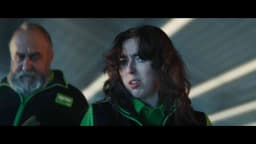
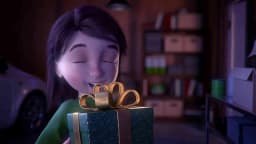
The campaign centres on a single 60-second film titled "Smelling Is Believing," distributed across digital and social channels in the United Kingdom. The film's premise follows a child who suspects his father might be Santa Claus because he shares the same scent — a narrative that resolves in a deliberately adult, sexually suggestive twist designed to subvert the conventions of seasonal advertising. As submitted to Clapboard by Brooks: Zoe, the campaign contains one media asset, making every second of that single film the total weight of the creative argument.
Fussy is a natural, refillable deodorant brand that gained early UK market prominence after appearing on BBC's Dragons' Den in 2021, an appearance that, according to moreaboutadvertising.com, generated approximately two weeks' worth of sales in a single hour. The Lost Claus launch extended a creative relationship with 10 Days that had already produced the brand's October 2024 campaign, "Believe the Fuss," as reported by 10days London. In positioning Lost Claus as a festive fable with a punchline no mainstream Christmas advertiser would dare deliver, Fussy stakes a clear claim for category disruption during one of the most competitive advertising periods in the United Kingdom's commercial calendar. The Clapboard Score for Lost Claus is 63 out of 100, reflecting a campaign with a sharply defined creative premise that carries notable structural and reach limitations.
Fussy occupies a challenger position in the United Kingdom's personal care market. The brand's strategic rationale for Lost Claus is explicit: differentiation through tonal disruption at the moment when the advertising landscape is most saturated and most uniform. Jolyon White, Chief Creative Officer at 10 Days, stated publicly — as reported by marketing-beat.co.uk — that the goal was to "create something that was going to stand out from the sea of worthy and samey Christmas ads" by delivering "a festive story that's never been told before (for obvious, X-rated reasons)."
The competitive context is unambiguous. Established household product and deodorant giants Unilever and Procter and Gamble together hold more than a combined dominant share of the global deodorant category, according to lpinformationdata.com, and both brands invest heavily in emotionally conventional Christmas advertising in the United Kingdom. For Fussy, matching that spend is not possible; matching their creative audacity on a contrarian frequency is. Lost Claus is, in structural terms, a cultural judo move: using the ubiquity of festive advertising tropes as the very mechanism by which the campaign's unexpected adult twist registers its impact.
The limited-edition nature of the Lost Claus scent itself — tonka bean, leather, and sandalwood framed as the olfactory signature of Santa Claus — adds a direct commercial mechanic to the campaign's narrative novelty. In the United Kingdom, the natural and refillable personal care segment has been expanding steadily as sustainability concerns increasingly influence consumer purchasing decisions, a trajectory documented by giiresearch.com across the broader deodorant and antiperspirant category. By anchoring the scent in a culturally loaded fictional character, Fussy turns product discovery into a shareable story rather than a functional claim, a strategy well suited to the digital and social channels on which the campaign was distributed across the UK market.
Jolyon White directed the Lost Claus film and led the campaign's creative development in his role as Chief Creative Officer at 10 Days, as documented by adsoftheworld.com and News Designrush. The decision to have the agency's creative lead also direct the film is itself a signal of intentionality: this is a piece of work where voice and vision were designed to be inseparable.
The 60-second film, titled "Smelling Is Believing," operates on the architecture of a children's Christmas story told with the pacing of a short comedy film. It opens from a child's point of view, using the familiar logic of festive wonder — if this man smells exactly like Santa, perhaps he is Santa — before pivoting in its final moments to an adult inference that recontextualises the entire preceding narrative. The tonal shift is the creative product. Every frame before the twist functions as setup; the twist functions as the brand's personality statement.
White described the campaign to marketing-beat.co.uk as "playful, unexpected, and disruptive — just like Fussy," a formulation that reveals the strategic brief embedded in the creative direction. The film is built for digital and social environments in the United Kingdom where content either earns a second share or disappears. A single-asset campaign of this nature places an unusually high burden on the film itself: there is no supporting print, no outdoor, no broadcast safety net. The scent's physical attributes — tonka bean, leather, sandalwood — are communicated through the narrative logic of the film rather than through product demonstration, a craft decision that prioritises brand character over ingredient education. Matt Kennedy, Founder of Fussy, articulated the brand's tolerance for creative risk directly, stating — as reported by moreaboutadvertising.com — that "a threesome with Santa might not be everyone's idea of a Happy Christmas... thankfully that's why we've launched a Santa-scented deodorant."
No verified performance data for the Lost Claus campaign is publicly available. Fussy has not published figures for views, engagement rates, earned media reach, or sales uplift attributable to the campaign in the United Kingdom, and no third-party measurement has been cited by any named source in coverage to date.
Structural analysis, however, is instructive. The campaign's single-asset format concentrates its entire creative and media investment into one 60-second film. This approach is high-efficiency when the film achieves organic amplification — shares, press coverage, and social commentary effectively extending paid reach — but it carries measurable risk if the audience segment that finds the adult twist alienating rather than charming proves larger than anticipated. In the United Kingdom's Christmas advertising environment, where brand safety sensitivities are acute and platforms apply variable content policies to suggestive material, a sexually implicit punchline can constrain distribution in ways that a more conventional campaign does not encounter.
The Clapboard Score of 63 out of 100 reflects this structural tension. The campaign demonstrates genuine creative courage and a coherent brand voice, evidenced by the consistency between Jolyon White's stated creative ambition and the film's actual execution as assessed across coverage by adsoftheworld.com, news.designrush.com, and adsofbrands.net. What limits the score is the combination of a single-asset footprint, the absence of a broader media ecosystem to extend the narrative, and the inherent reach ceiling that adult-inflected content faces in a market where Christmas household product advertising is expected to operate across wide demographic groups. Lost Claus is a bold creative statement; its commercial effectiveness remains unverified.
Lost Claus is a UK Christmas campaign launched by natural deodorant brand Fussy on 5 December 2024. Created by London agency 10 Days, it features a 60-second film promoting a limited-edition Santa-inspired scent with notes of tonka bean, leather, and sandalwood, distributed across digital and social channels.
The Lost Claus campaign was created by London agency 10 Days. Jolyon White, Chief Creative Officer at 10 Days, directed the film and led the creative development, as reported by adsoftheworld.com and news.designrush.com. The campaign was submitted to Clapboard by Brooks: Zoe.
Fussy's Lost Claus is a limited-edition natural deodorant scent described as Santa-inspired. According to marketing-beat.co.uk and adsoftheworld.com, the scent features notes of tonka bean, leather, and sandalwood — framed within the campaign's festive narrative as the olfactory signature of Santa Claus himself.
Fussy positioned Lost Claus as a deliberate alternative to conventional festive advertising in the United Kingdom. Jolyon White stated the goal was to stand out from what he described as worthy and samey Christmas ads, as reported by marketing-beat.co.uk. The adult twist reflects the brand's consistently disruptive creative identity.
Lost Claus holds a Clapboard Score of 63 out of 100. The score reflects the campaign's coherent creative voice and genuine tonal boldness, balanced against structural limitations including its single-asset format and the reach constraints that adult-inflected content can face in the UK Christmas advertising market.
Lost Claus follows Fussy's October 2024 campaign "Believe the Fuss," also created by 10 Days, as reported by 10days.london. Fussy gained early UK recognition after appearing on BBC's Dragons' Den in 2021, which according to moreaboutadvertising.com generated approximately two weeks of sales in a single hour.
.webp)
Creative Collaboration Platform: The Backbone of Modern Creative WorkWhat is a creative collaboration platform?Clapboard defines a creative collaboration platform as the operational core for today’s distributed creative teams. This is not a collection of digital collaboration tools stitched together; Clapboard’s system


Understanding the Creative Production MarketplaceWhat is a Creative Production Marketplace?Clapboard defines a creative production marketplace as a structured ecosystem where brands, agencies, and production talent converge to execute video, advertising, and branded content at scale. Unlike the legacy agency or freelanREAD FULL ARTICLE

The Urgent Need for a Creative Production Operating SystemWhy Traditional Creative Production Models Break DownClapboard sees the creative production landscape shifting under pressure. Content velocity is no longer a buzzword—it’s a mandate. Modern advertising demands relentless output across dozens of channels, each wREAD FULL ARTICLE