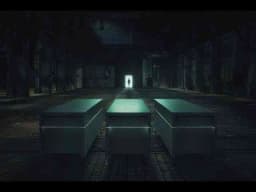
Funlab's Office Party From Hell, created by DDB Group Melbourne in 2023, uses deliberately defective AI-generated video to reframe corporate parties and drive

Funlab Turns Fake Office Fun Into a Real Campaign Moment
Funlab's Office Party From Hell is a 2023 social and LinkedIn campaign created by DDB Group Melbourne, with Mango Communications as PR partner, that uses deliberately defective AI-generated text-to-video footage to satirise the hollow ritual of the corporate office party and position Funlab's venues — including Strike Bowling and Holey Moley — as the credible alternative for Australian businesses seeking genuine shared experiences.
The campaign launched in June 2023 across Australia, targeting corporate decision-makers on the platforms where they already spend professional time. Rather than presenting Funlab as a conventional leisure brand competing on price or proximity, Office Party From Hell leads with a cultural provocation: that the traditional office party is so artificial it deserves to be represented by footage that is itself artificial. The AI-generated film, accompanied by a jingle composed by Melbourne-based Terry Mann, leans into the uncanny, glitch-prone aesthetic of early text-to-video generation tools to make its argument visually rather than rhetorically. The result is a piece of work that is simultaneously a product demonstration, a media-moment play, and a brand-positioning statement.
Funlab operated approximately 40 venues across nine brands in Australia in 2023, according to the company's own published information, and employed more than 2,000 people. Its portfolio spans Strike Bowling, Holey Moley Golf Club, Archie Brothers Cirque Electriq, B. Lucky and Sons, La Di Darts, and Hijinx Hotel — a breadth that makes the corporate events and group bookings segment commercially significant. Office Party From Hell sits within a broader 2023 creative programme: earlier in March of that year, DDB Group Melbourne and Funlab had launched a subscription campaign promoting the Fun Pass offering, which provided access to 24 activities per month across multiple Funlab brands, as reported by Campaign Brief. The Office Party From Hell campaign builds on that momentum by speaking directly to the business buyer rather than the individual consumer.
 ARCHIVE
Funlab's campaign identifies a culturally specific frustration felt across the Australian corporate landscape. The forced office party — catered trays, awkward small talk, a function room that no one chose — is a near-universal grievance, and DDB Group Melbourne recognised that naming it directly would generate more brand affinity than any conventional leisure advertising could. The creative strategy converts consumer cynicism into commercial argument: if the office party is fake, it should look fake, and if you want something real, Funlab is the answer.
The choice of LinkedIn as a primary channel reflects deliberate audience targeting. Corporate event planners, operations managers, and senior decision-makers who approve group spending are active on LinkedIn in ways they are not on Instagram or TikTok. Mango Communications' involvement as PR partner extended the campaign's reach into earned media, treating the AI-technology angle as a news hook as much as a creative device. Shots, the international creative industry publication, covered the campaign on 27 June 2023, describing it as using what shots called the horrid reality of AI-generated video to depict the artificiality of office celebrations — trade coverage that amplified the campaign well beyond its paid distribution.
In the Australian entertainment and leisure sector, Funlab competes with venue operators including Timezone and AMF Bowling, as well as the growing wave of competitive socialising concepts entering Australian capital cities. The global amusement parks and attractions market was valued at approximately US$69.2 billion in 2023, according to Allied Market Research, with a forecast compound annual growth rate of 6.8 percent through to 2034. Within Australia, the segment for group and corporate leisure experiences has grown alongside hybrid working patterns that have made in-person team events more deliberate and more budget-scrutinised. Office Party From Hell speaks directly to that scrutiny, making a rational as well as emotional case for redirecting corporate social spend toward Funlab destinations.
DDB Group Melbourne built the creative execution around a specific technological moment. According to shots, the agency adopted the newly released beta of an AI text-to-video generation tool on the day it became available, using its inherent visual instability — warped faces, impossible physics, jittering transitions — as the aesthetic foundation of the film rather than a problem to be corrected. Giles Watson, Creative Director at DDB Group Melbourne, was quoted by shots comparing the AI video's technical failures to a fitting metaphor for the performative emptiness of the office party itself: both are trying to simulate something genuine and both fall conspicuously short.
This creative decision is structurally significant. Rather than using AI to produce polished content more efficiently, the team weaponised the technology's limitations to carry the campaign's argument. The glitches are the point. Every distorted face and uncanny movement reinforces the idea that fake office fun, like AI-generated imagery, cannot replicate the texture of a real experience. The campaign therefore achieves a rare integration of medium and message: the how of its production is inseparable from the what of its argument.
Terry Mann, a Melbourne-based composer, wrote the campaign's jingle, adding a layer of tonal control that prevents the film from reading as purely cynical. The jingle functions as a comic device, scoring the absurdity with a brightness that keeps the work entertaining rather than alienating. The combination of Mann's audio work and the deliberately degraded visual register gives Office Party From Hell a distinctive production identity that sets it apart from both conventional leisure advertising and the wave of AI-novelty content that flooded creative industry feeds in mid-2023. Production credits beyond Mann and Watson are not publicly documented in available trade sources.
No independently verified campaign performance data for Office Party From Hell — such as booking uplift, reach figures, or conversion metrics — is publicly available from Funlab, DDB Group Melbourne, or Mango Communications. What the public record does confirm is that the campaign achieved meaningful trade attention: shots published editorial coverage on 27 June 2023, and the work was submitted to and archived within the creative industry ecosystem, accumulating 3,378 views and 8 likes as recorded in available metadata at the time of archiving.
Structurally, the campaign's effectiveness case rests on several observable qualities. Its channel selection — social media and LinkedIn — aligns precisely with its target audience of corporate decision-makers in Australia. Its earned media angle, built around the novelty of day-one AI text-to-video adoption, generated trade coverage that extended reach without additional paid spend. Its creative mechanism, using the medium's own failures as persuasive content, is both memorable and shareable, which are prerequisites for social performance in a crowded creative environment.
Funlab's Office Party From Hell receives a Clapboard Score of 61 out of 100. The score reflects the campaign's genuine creative ingenuity and well-chosen strategic provocation, tempered by the limited scale of its documented public engagement and the absence of verified business results. The concept is sharp and the execution is internally consistent, but the campaign's reach appears to have remained largely within the creative industry rather than generating the mass corporate-audience traction its LinkedIn-first distribution strategy was designed to achieve.
Office Party From Hell is a 2023 campaign by Funlab created by DDB Group Melbourne. It uses deliberately glitchy AI-generated text-to-video footage to satirise hollow corporate office parties and encourage Australian businesses to book real experiences at Funlab venues like Strike Bowling and Holey Moley instead.
DDB Group Melbourne created the campaign. Mango Communications served as the PR partner. The campaign launched in June 2023 across social media and LinkedIn in Australia, targeting corporate decision-makers and event planners responsible for group and team-building spend at Funlab's venue portfolio.
DDB Group Melbourne adopted an AI text-to-video tool on its launch day, according to shots. Rather than hiding the technology's visual instability, the team used its glitches — distorted faces, impossible physics — as the campaign's central creative argument: fake office fun looks exactly as broken as AI-generated imagery.
Terry Mann, a Melbourne-based composer, wrote the jingle for Office Party From Hell. The music adds tonal lightness to the campaign's satirical premise, scoring the AI footage's absurdity in a way that keeps the work entertaining rather than cynical, and gives the film a distinctive audio identity.
The campaign promotes Funlab's broader venue network as alternatives to corporate office parties. Funlab operated approximately 40 venues across nine brands in Australia in 2023, including Strike Bowling, Holey Moley Golf Club, Archie Brothers Cirque Electriq, and others, employing more than 2,000 people, per the company's published information.
Office Party From Hell receives a Clapboard Score of 61 out of 100. The score recognises the campaign's inventive use of AI aesthetics and its precise strategic targeting of Australian corporate buyers, while reflecting the limited scale of its documented public engagement and the absence of publicly verified business performance results.
.webp)
Creative Collaboration Platform: The Backbone of Modern Creative WorkWhat is a creative collaboration platform?Clapboard defines a creative collaboration platform as the operational core for today’s distributed creative teams. This is not a collection of digital collaboration tools stitched together; Clapboard’s system


Understanding the Creative Production MarketplaceWhat is a Creative Production Marketplace?Clapboard defines a creative production marketplace as a structured ecosystem where brands, agencies, and production talent converge to execute video, advertising, and branded content at scale. Unlike the legacy agency or freelanREAD FULL ARTICLE

The Urgent Need for a Creative Production Operating SystemWhy Traditional Creative Production Models Break DownClapboard sees the creative production landscape shifting under pressure. Content velocity is no longer a buzzword—it’s a mandate. Modern advertising demands relentless output across dozens of channels, each wREAD FULL ARTICLE