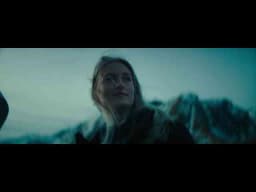
Frontier Airlines' 2013 'Best Kept Secret' campaign by AbbaSez promoted Trenton Airport as a low-fare alternative to major US hubs, using humor and animals.

Frontier Airlines Bets on Trenton Airport as America's Best Kept Secret
LinkedIn.clapboard.com/archive/frontier-vacation-travel">Frontier Airlines' "Best Kept Secret" is a 2013 film campaign created by New York agency AbbaSez that positions Trenton Airport as an affordable, uncrowded alternative to the major hubs serving the northeastern United States, promoting the airline's low fares, inexpensive parking, and ease of access to travelers in the region, according to Adsoftheworld.
Published in February 2013 and documented in the Clapboard archive, the campaign speaks directly to a pain point familiar to millions of American air travelers: the anxiety, cost, and congestion of navigating large metropolitan airports. Rather than competing head-to-head with legacy carriers on the terrain of prestige or network size, Frontier Airlines and AbbaSez chose a more subversive angle, framing Trenton Airport not as a compromise but as insider knowledge. The campaign's central idea is that the airport's relative obscurity is itself the benefit, a place where the crowds thin out, parking remains affordable, and the experience of flying feels manageable again.
In the United States, where air travel options for northeastern corridor passengers typically default to Philadelphia International, Newark Liberty, or John F. Kennedy International, Trenton-Mercer Airport sits as a genuine geographic alternative that remains overlooked by the broader traveling public. The campaign leans into that underdog status with self-awareness and wit. The single media asset archived by Clapboard takes the form of a film spot, making it a television-first creative execution designed for broad reach across the US market. With a Clapboard Score of 63 out of 100, the work sits in creditable territory for a regionally focused campaign produced for a low-fare carrier operating outside the top tier of airline advertising budgets, according to Transportation Gov.
Frontier Airlines operates in the most competitive segment of the US domestic aviation market. In 2013, Southwest Airlines held approximately 22 to 25 percent of US domestic passenger traffic, making it the dominant low-fare competitor in the country, according to Oliver Wyman. Delta Air Lines commanded approximately 15 to 17 percent of the domestic market in the same period, per Oliver Wyman, illustrating the scale of incumbent pressure that carriers like Frontier faced when trying to grow passenger volume. Against that backdrop, the strategic logic of the "Best Kept Secret" campaign becomes clear: Frontier Airlines could not win a spending war with Southwest or Delta, but it could win a relevance battle for a specific and underserved traveler segment.
North American scheduled air traffic grew just 2.0 percent in 2013, significantly slower than Asia-Pacific at 7.7 percent and the Middle East at 11.2 percent, according to the International Air Transport Association. That sluggish growth environment made customer acquisition through differentiation more valuable than ever. AbbaSez identified Trenton Airport's structural advantages — lower fares, cheaper parking, reduced congestion — and built a campaign around reframing those attributes as desirable rather than merely practical. The insight is straightforward but sharp: travelers who already know about Trenton are pleased with the experience, so the creative job is simply to widen that circle of knowledge. By positioning the airport as a hidden gem rather than a secondary option, the campaign attempts to transfer cultural cachet onto a functional benefit, making the "smart choice" feel like a lifestyle discovery rather than a budgetary concession. That reframe is where the strategic ambition of the work lives.
The creative execution of "Best Kept Secret" draws on a comedic device that carries specific resonance in the context of Frontier Airlines' advertising history. The campaign uses animals disrupting the airport's hidden-gem status, a concept documented in the Clapboard archive, and that choice is not incidental. As reported by the New York Times and Airline Geeks, Grey Advertising won the Frontier Airlines account in 2002 and built a long-running campaign around tail-art animals — characters including Jack the Rabbit, Foxy the Fox, Grizwald the Bear, and Sal the Cougar — under the tagline "A whole different animal," replacing the earlier "Spirit of the West" positioning. By the late 2000s those characters had evolved into talking spokesanimals in television commercials, according to Airline Geeks. Grey Advertising's creative team associated with the campaign was laid off in 2011, as reported by the New York Times, yet AbbaSez returned the animal motif to the screen in 2013 with fresh intent, using it to dramatize the idea that even the wildlife cannot help but reveal Trenton Airport's appeal.
Shawn Couzens served as both creative director and copywriter on the campaign, and co-directed the film alongside Joe Barone, per Ads of the World. Gary Ennis is credited as art director. The production was handled by Wild(child) Editorial, with editing completed by Neil Miller and audio production by Bar 1, as documented by Ads of the World. That combination of a tight creative team and specialist post-production partners reflects the leaner production model typical of regional airline campaigns in the United States during this period. The humor in the spot operates through incongruity — animals as involuntary brand ambassadors — which is a comedic register that travels well in a film medium and requires minimal explanation to resonate with a broad US domestic audience. Production credits for the full campaign beyond the single archived asset are not publicly documented.
No verified performance data for the "Best Kept Secret" campaign is publicly available. Frontier Airlines did not release passenger uplift figures, brand tracking results, or media spend attributable to this specific execution, and no independent measurement body has published metrics connected to the AbbaSez campaign in the accessible record.
Structural analysis, however, offers a reasonable basis for assessment. The campaign's single-asset film format, regional strategic focus, and humour-led creative approach are all consistent with executions designed to shift consideration rather than drive immediate direct response. Campaigns built around reframing a perception — in this case transforming "obscure" into "insider" — typically require sustained media exposure to move aggregate consumer behaviour, and a single film asset constrains that potential. The creative concept is well-constructed in the sense that it connects a genuine functional advantage to an emotionally resonant narrative frame, which is the foundational requirement of effective travel advertising in the United States.
The Clapboard Score of 63 out of 100 reflects a campaign that demonstrates craft and conceptual clarity without reaching the level of cultural penetration or formal recognition that would push it into the upper archive tiers. Listed on Ads of the World and documented in the Clapboard archive, the work is preserved as a representative example of low-fare airline advertising strategy in the US market during a period of slow domestic traffic growth. Its primary analytical value lies in the strategic decision to rehabilitate the animal creative territory that defined Frontier Airlines' brand identity across the previous decade, while applying it to a hyper-specific geographic and consumer brief.
The "Best Kept Secret" campaign promoted Trenton Airport as an affordable, less crowded alternative to major northeastern US hubs. Created by AbbaSez in February 2013, it used humor and animals to reframe the airport's obscurity as an advantage, highlighting Frontier Airlines' low fares, cheap parking, and easier travel experience for US passengers.
AbbaSez, a New York agency, created the campaign. Shawn Couzens served as creative director, copywriter, and co-director alongside Joe Barone. Gary Ennis was the art director. Wild(child) Editorial handled production, Neil Miller edited the film, and Bar 1 provided audio, as documented by Ads of the World.
Animals carry deep brand heritage for Frontier Airlines. As reported by the New York Times and Airline Geeks, Grey Advertising built Frontier's identity around tail-art animal characters from 2002 onward. AbbaSez revived that motif in 2013, using animals humorously disrupting the airport's secret status, connecting the new campaign to established brand recognition in the US market.
The campaign promoted Trenton-Mercer Airport in New Jersey as an overlooked alternative to Philadelphia International, Newark Liberty, and JFK for northeastern US travelers. Frontier Airlines positioned the airport's lower fares, affordable parking, and reduced congestion as genuine benefits rather than compromises, per the Clapboard archive.
The campaign holds a Clapboard Score of 63 out of 100, according to the Clapboard archive. That score reflects a campaign with clear conceptual direction and production craft that stops short of broad cultural impact or formal award recognition, placing it in creditable mid-range territory for regionally focused US airline advertising from 2013.
.webp)
Creative Collaboration Platform: The Backbone of Modern Creative WorkWhat is a creative collaboration platform?Clapboard defines a creative collaboration platform as the operational core for today’s distributed creative teams. This is not a collection of digital collaboration tools stitched together; Clapboard’s system


Understanding the Creative Production MarketplaceWhat is a Creative Production Marketplace?Clapboard defines a creative production marketplace as a structured ecosystem where brands, agencies, and production talent converge to execute video, advertising, and branded content at scale. Unlike the legacy agency or freelanREAD FULL ARTICLE

The Urgent Need for a Creative Production Operating SystemWhy Traditional Creative Production Models Break DownClapboard sees the creative production landscape shifting under pressure. Content velocity is no longer a buzzword—it’s a mandate. Modern advertising demands relentless output across dozens of channels, each wREAD FULL ARTICLE