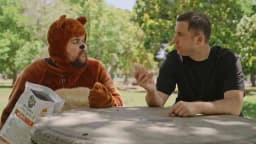
Faber-Castell and Madepa launched #MyFirstLoveLetter in Bolivia in September 2022, using the country's own Day of Love to revive the lost custom of handwritten

How Faber-Castell Turned Bolivia's Day of Love Into a Handwriting Revival
The #MyFirstLoveLetter campaign is a 2022 experiential, content, and film initiative created by agency Athos for Faber-Castell and Madepa in Bolivia, launched on September 21 to coincide with Bolivia's own national Day of Love, inviting couples across the country to rediscover the custom of writing handwritten love letters using Faber-Castell writing instruments.
Madepa is the authorised distributor representing the Faber-Castell and Top brands in Bolivia. The campaign, also identified by its Spanish-language hashtag #MiPrimeraCartaDeAmor, was conceived around a simple cultural observation: as digital communication accelerates — through chat messages, voice notes, and typed correspondence — the handwritten letter is disappearing from everyday Bolivian life. Against that backdrop, the campaign offered couples something literal and tangible: their first love letter, written by hand.
Bolivia holds a distinctive calendar position that made the September 21 activation strategically coherent. While February 14 is observed globally as Valentine's Day, Bolivia celebrates its own Day of Love on September 21, a date that also aligns with the Southern Hemisphere's first day of spring and, as reported by timeanddate.com, is recognised in Bolivia as Student's Day. That layering of cultural meaning gave the campaign a platform with genuine national resonance rather than a borrowed international occasion. The campaign sits within the Office Equipment and Consumer Durables category, and its single media asset combined content production, an experiential component, and a short film to carry its message across the Bolivian market.
Faber-Castell positioned the #MyFirstLoveLetter campaign as a direct response to the measurable cultural shift away from handwriting. The strategic premise is straightforward: Bolivians are passionate about love and maintain their own romantic calendar, yet the medium through which that affection is expressed has migrated almost entirely to digital platforms. By anchoring the campaign to September 21 rather than February 14, Athos and Madepa claimed a cultural moment that competitors operating from global playbooks were unlikely to occupy.
The global writing-instruments market was valued at approximately US$11.7 billion in 2022, according to Allied Market Research, with an alternative estimate of US$12.6 billion offered by Transparency Market Research for the same year. Allied Market Research further projects the category to grow at a compound annual rate of around 4.6 percent through 2032, suggesting that demand for physical writing tools remains structurally durable even as digital alternatives multiply. Within that global market, pens represent the largest single product segment, accounting for approximately 33.8 percent of category value in 2022, according to Allied Market Research. In the Bolivian context, Madepa's distribution relationship with Faber-Castell positions the brand against international stationery competitors who service the same retail channels, including Staedtler and BIC, both of which maintain active Latin American distribution networks. Neither competitor, however, has been documented activating around Bolivia's September 21 occasion specifically, which left the cultural territory open. The insight driving the campaign — that writing a letter is itself an act of love, not merely a vehicle for one — transformed a product-category message into an emotional proposition that required no price comparison to land.
The #MyFirstLoveLetter campaign was produced as a short film alongside an experiential activation, with production handled by Café Estudio. The director of the film is Jose Francisco, and the creative development was led by DCG Fernando Fernandes at agency Athos Bolivia. The broader creative team included Victor William Mendez Ugarte, Adrian Méndez Akamine, Ruben Antonio Escobar, Pierina Bibolotti Sevilla, Mani Cáceres Méndez, Luis Gustavo Vaca Pereira Alvarez, Rebeca Gutiérrez Gros, Fito Chipana Ramos, and Alvaro Cuentas Paredes. Account management was handled by Claudia Pedraza and Leslie Capobianco Méndez, with client contacts Anabell Mustafa and Thomas Kuhnel representing Madepa and Faber-Castell respectively.
The creative approach places the physical act of writing at the centre of the narrative rather than the product itself. This is a meaningful creative decision: by foregrounding the gesture — pen meeting paper, words forming slowly and deliberately — the campaign assigns emotional weight to the instrument without requiring a product demonstration in the conventional advertising sense. The experiential layer extended the film's invitation into real space, offering couples the opportunity to actually write and present a first love letter, making the brand a facilitator of a personal moment rather than a sponsor of one. In the Bolivian market, where September 21 carries the combined resonance of love, spring, and student life as noted by classadventuretravel.com and latinpost.com, that facilitation role carries cultural legitimacy. The campaign's single consolidated media asset — spanning content, experiential, and film formats — reflects a disciplined production approach suited to the scale of the Bolivian market while maintaining craft standards consistent with Faber-Castell's global brand positioning, which faber-castell.com describes as rooted in creativity, quality, and sustainability.
No independently verified performance data for the #MyFirstLoveLetter campaign — such as reach figures, sales uplift, or earned media volume — is publicly available from named third-party sources. The campaign's archive record shows a modest engagement footprint: the entry accumulated 1,277 views, 2 likes, and no comments on its archive page, and no independently verifiable social-media discussion has been documented on major platforms. No coverage appeared in trade publications including Campaign, Ad Age, Adweek, The Drum, or Contagious, and no award recognition has been independently confirmed.
Structurally, the campaign demonstrates several qualities that support effectiveness in a contained national market. It occupied a cultural calendar moment — Bolivia's September 21 Day of Love — with no documented competitive activity, giving Faber-Castell and Madepa clear share of voice on a date meaningful to the target audience. The integration of experiential, content, and film formats created multiple points of engagement for a single strategic message, reducing reliance on any one channel to carry the narrative. The emotional architecture of the campaign — positioning handwriting as an act of intimacy rather than a functional skill — aligns with established principles of brand-building in the consumer durables category, where purchase decisions are rarely made on price alone. The campaign earned a Clapboard Score of 63 out of 100, reflecting solid creative rationale and cultural specificity offset by limited documented reach and the absence of verified outcome metrics. For a distributor-led activation in a market the scale of Bolivia, the campaign's conceptual clarity represents a meaningful brand investment regardless of measurable short-term returns.
#MyFirstLoveLetter is a 2022 experiential, content, and film campaign created by agency Athos for Faber-Castell and Madepa in Bolivia. It launched on September 21, Bolivia's national Day of Love, inviting couples to revive the custom of writing handwritten love letters using Faber-Castell writing instruments, countering the decline of handwriting in a digital era.
September 21 is Bolivia's own Day of Love, distinct from the globally observed February 14. As reported by timeanddate.com and latinpost.com, the date also marks the Southern Hemisphere's first day of spring and Student's Day in Bolivia, giving the campaign layered cultural relevance specific to the Bolivian market.
Athos Bolivia created the campaign. The team was led by DCG Fernando Fernandes and included nine named creative contributors. Production was handled by Café Estudio, with Jose Francisco directing the film component. Account management was overseen by Claudia Pedraza and Leslie Capobianco Méndez on the agency side.
Madepa is the authorised Bolivian distributor for the Faber-Castell and Top brands. It served as co-client on the campaign alongside Faber-Castell, with client contacts Anabell Mustafa and Thomas Kuhnel named in the production credits. The campaign ran under the dual branding of Madepa and Faber-Castell throughout the Bolivian market.
The #MyFirstLoveLetter campaign received a Clapboard Score of 63 out of 100. The score reflects the campaign's strong cultural specificity and clear creative rationale for the Bolivian market, balanced against limited publicly documented reach data and the absence of independently verified performance metrics or trade-press coverage.
A separate Faber-Castell Bolivia campaign titled "Colors," created by agency Humano in January 2022, promoted the brand's 60-color pencil set using ambient, digital, and print media, according to Clapboard's archive. #MyFirstLoveLetter is distinct in its use of experiential and film formats and its focus on emotional and cultural storytelling rather than product features.
.webp)
Creative Collaboration Platform: The Backbone of Modern Creative WorkWhat is a creative collaboration platform?Clapboard defines a creative collaboration platform as the operational core for today’s distributed creative teams. This is not a collection of digital collaboration tools stitched together; Clapboard’s system


Understanding the Creative Production MarketplaceWhat is a Creative Production Marketplace?Clapboard defines a creative production marketplace as a structured ecosystem where brands, agencies, and production talent converge to execute video, advertising, and branded content at scale. Unlike the legacy agency or freelanREAD FULL ARTICLE

The Urgent Need for a Creative Production Operating SystemWhy Traditional Creative Production Models Break DownClapboard sees the creative production landscape shifting under pressure. Content velocity is no longer a buzzword—it’s a mandate. Modern advertising demands relentless output across dozens of channels, each wREAD FULL ARTICLE