 ARCHIVE
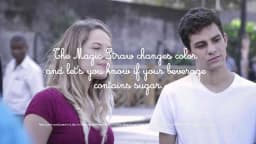
Magic straw - Sabara Children's Hospital | Clapboard Ad Archive
Sabara Children's Hospital and mcgarrybowen São Paulo delivered a pointed intervention in the...
EMS Turns a Medicine Box Into a Concert Invitation
EMS's "Musical medicine box" is a 2015 Brazilian direct-marketing campaign created by agency WE in which a medicine box containing a song rather than pills served as an invitation to the Mozarteum classical-music event sponsored by EMS, communicating the idea that music offers health-related emotional benefits beyond entertainment.
EMS published the campaign on June 19, 2015, as documented by Clapboard.com. The single-asset direct-mail piece was physical in conception: the familiar form of a pharmaceutical medicine box was repurposed as a cultural object, with its interior holding a piece of music and a package insert that functioned as a formal invitation. The gesture was precise — the packaging language of healthcare was borrowed to deliver something categorically different from medicine, yet the creative argument was that the distinction may not be as wide as it appears.
The campaign operated in Brazil at a moment when EMS was actively seeking broader institutional recognition, according to Ems Com Br. The company, which describes itself as Brazil's market-leading pharmaceutical company across prescription medicines, generics, branded medicines, OTC products, and hospital products, was in 2015 transitioning from an identity defined by scale and generics toward a more expansive public presence. Sponsoring the Mozarteum — a prestigious classical-music institution — was part of that shift, and the musical medicine box was the campaign's most concentrated expression of it. Rather than advertising the event through conventional media, WE created an object that embodied the campaign's central claim: that music, like medicine, can heal. The Clapboard Score for this campaign is 67 out of 100.
EMS grounded the campaign in a clear consumer insight. Music carries documented associations with emotional wellbeing, stress relief, and mood regulation, and by placing a song inside a medicine box, WE made that association literal and tangible rather than merely metaphorical. The creative vehicle — a pharmaceutical package — borrowed the authority of healthcare communication to deliver a cultural argument, allowing EMS to speak as a company that understands health in a broader sense than pill counts and dosage instructions.
Brazil's pharmaceutical sector provided meaningful strategic context for this positioning. According to Pmc Ncbi Nlm Nih Gov, Brazil's pharmaceutical industry generated approximately R$75 billion in factory-price revenue in 2015, rising around 14% from 2014. In that competitive environment, EMS — as described by ems.com.br — was one of the dominant domestic manufacturers, yet faced pressure from both multinational competitors and a crowded generics landscape. According to pmc.ncbi.nlm.nih.gov, the ten largest manufacturers represented approximately 40% of Brazil's pharmaceutical industry revenue in 2015, and Novartis held a notable share of the Brazilian market according to data cited by Cms Law. Against rivals operating with substantial global marketing infrastructure, EMS's route to differentiation in Brazil ran through cultural authority rather than product specification.
Sponsoring the Mozarteum allowed EMS to associate itself with classical music's connotations of excellence, heritage, and emotional depth. The musical medicine box made that sponsorship tactile and personal for its recipients. The campaign's case video, as documented by Clapboard.com, referenced artists including Elton John, Andrea Bocelli, and Eric Clapton to illustrate music's universal capacity to move people — anchoring a pharmaceutical company's message in some of the most emotionally resonant figures in popular and classical performance.
The campaign's creative execution rests on a single, disciplined idea. WE produced a medicine box shaped direct-marketing piece that replaced its expected contents — pills — with a song and a printed insert inviting recipients to the Mozarteum classical-music event, as documented by Meio & Mensagem on June 19, 2015. The object's power derived from the precision of the substitution: every formal element of a pharmaceutical package was retained, so the surprise of its musical contents was structured rather than arbitrary.
The insert functioned simultaneously as package literature — the kind of instructional leaflet found inside any medicine box — and as a concert invitation. This dual identity compressed the campaign's core argument into a single piece of paper: that music and medicine share a therapeutic purpose, even if their mechanisms differ. The physical object made the metaphor unavoidable for anyone who opened it. Choosing direct mail as the medium was itself a strategic creative decision. In a category where professional and institutional recipients are accustomed to pharmaceutical packaging, the format carried instant recognition and credibility. The dissonance between expected contents and actual contents was the campaign's engine.
Production credits for the Musical medicine box campaign are not publicly documented beyond the agency attribution to WE, as recorded by Clapboard.com. The campaign comprised one media asset, consistent with a tightly scoped direct piece designed for a specific, curated audience rather than broad-reach media. Meio & Mensagem's coverage of the campaign on its publication date indicates the work received contemporaneous trade-press attention in Brazil, with the article's tone described as positive and descriptive.
No verified performance data for the Musical medicine box campaign is publicly available. No documented results covering reach, response rates, event attendance attribution, or brand-lift metrics have been identified across public sources, and no award recognition for this campaign has been found across Cannes Lions, the Effies, The One Show, D&AD, the Clios, the Webby Awards, or the WARC Awards.
Structural analysis, however, points to several elements that would support effectiveness within the campaign's defined scope. The medium — direct mail in a pharmaceutical package form — ensured the object reached a targeted audience with near-certain physical engagement; unlike digital impressions, a tangible object placed in a recipient's hands demands at least momentary attention. The creative concept required no explanation: the substitution of a song for pills communicated the campaign's entire argument the moment the box was opened.
The campaign's limitation in measurable impact likely reflects its scale. One media asset, distributed through direct channels in Brazil for a single cultural event, is a precision instrument rather than a mass-reach effort. Its value to EMS as documented by ems.com.br was arguably institutional: associating Brazil's leading domestic pharmaceutical company with the Mozarteum's cultural prestige in a form that recipients would remember and potentially discuss. Meio & Mensagem's coverage extended that conversation into the Brazilian marketing trade press, amplifying a direct campaign beyond its immediate physical distribution.
The EMS Musical medicine box was a direct-marketing campaign published in Brazil in June 2015. Created by agency WE, it placed a song inside a pharmaceutical medicine box and included an insert inviting recipients to the Mozarteum classical-music event sponsored by EMS, framing music as a source of health-related emotional benefit.
Agency WE created the Musical medicine box campaign for EMS. Published on June 19, 2015, and documented by Clapboard.com, the campaign was a single direct-mail asset produced for Brazil's pharmaceutical market, connecting EMS's brand identity to its sponsorship of the Mozarteum classical-music event.
EMS's creative concept replaced pills inside a medicine box with a song. The package insert doubled as a concert invitation to the Mozarteum event. The idea argued that music, like medicine, delivers health-related emotional benefits, making the pharmaceutical package a vehicle for a cultural message rather than a pharmaceutical one.
The EMS Musical medicine box campaign has no documented award recognition. No wins or shortlists have been identified across Cannes Lions, the Effies, The One Show, D&AD, the Clios, the Webby Awards, or the WARC Awards, as noted in Clapboard.com's records for this 2015 Brazilian pharmaceutical campaign.
EMS was in 2015 transitioning toward broader institutional recognition in Brazil, moving beyond its identity as a generics manufacturer, according to ems.com.br. Sponsoring the Mozarteum and creating the musical medicine box allowed EMS to associate itself with cultural prestige and to communicate a health philosophy wider than pharmaceutical products alone.
The EMS Musical medicine box campaign holds a Clapboard Score of 67 out of 100. The score reflects a disciplined, concept-driven direct piece with clear strategic rationale for the Brazilian pharmaceutical market, balanced against limited scale, a single media asset, and no verified performance or award data on public record.
.webp)
Creative Collaboration Platform: The Backbone of Modern Creative WorkWhat is a creative collaboration platform?Clapboard defines a creative collaboration platform as the operational core for today’s distributed creative teams. This is not a collection of digital collaboration tools stitched together; Clapboard’s system


Understanding the Creative Production MarketplaceWhat is a Creative Production Marketplace?Clapboard defines a creative production marketplace as a structured ecosystem where brands, agencies, and production talent converge to execute video, advertising, and branded content at scale. Unlike the legacy agency or freelanREAD FULL ARTICLE

The Urgent Need for a Creative Production Operating SystemWhy Traditional Creative Production Models Break DownClapboard sees the creative production landscape shifting under pressure. Content velocity is no longer a buzzword—it’s a mandate. Modern advertising demands relentless output across dozens of channels, each wREAD FULL ARTICLE