 ARCHIVE
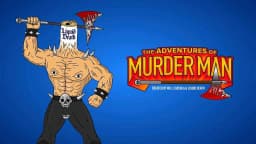
The Adventures of Murder Man - Liquid Death | Clapboard Ad Archive
Liquid Death’s The Adventures of Murder Man marks a pivotal shift in the non-alcoholic drinks...
How Domino's Brought Back the Noid to Fight a Delivery Robot
Domino's 'The Return of the Noid' is a 2021 United States television and multi-platform campaign that revives the brand's long-running antihero mascot to dramatise the company's autonomous pizza delivery test with Nuro's R2 self-driving robot, positioning Domino's as the definitive leader in pizza delivery technology while anchoring a promotional offer of two or more two-topping pizzas delivered for just $5.99 each.
The campaign launched on April 26, 2021, according to clapboard.com, developed jointly by agencies WorkInProgress and Crispin Porter Bogusky. Its central premise is disarmingly simple: the Noid — a red-suited saboteur originally created for Domino's advertising in 1986 — has returned because Domino's ongoing delivery innovation has become too threatening to ignore. The arrival of Nuro's R2 autonomous vehicle, which Domino's was actively testing in Houston at the time, gives the antihero a new mechanical nemesis and the brand a vivid narrative hook.
In the United States, the campaign extended well beyond a single thirty-second television spot. As reported by Marketing Dive, the Noid was integrated into the mobile game Crash Bandicoot: On the Run, bringing the character into an interactive entertainment context and reaching audiences unlikely to encounter a traditional food industry television advertisement. The campaign also encompassed limited-edition Noid merchandise, GIFs, stickers, and, as subsequently reported by Marketing Dive in July 2021, a series of NFTs built around the Noid's catalogue of failed tools. Across every channel, the strategic logic remained consistent: the Noid's repeated failure to stop Domino's is proof that Domino's delivery cannot be stopped. Clapboard Score for this campaign is 71 out of 100.
Domino's holds a commanding position in the United States pizza delivery market. According to Second Measure, Domino's represented approximately 42% of consumer sales among the four major US pizza chains at the time of the campaign, a figure that reflects years of sustained investment in ordering technology, logistics, and brand distinctiveness. That dominance, however, does not insulate the brand from competitive pressure. Pizza Hut and Papa Johns both operate aggressive delivery programmes in the US market, and the broader food industry faces structural disruption from third-party delivery aggregators that commoditise the delivery experience regardless of which restaurant fulfils the order.
The strategic answer Domino's and WorkInProgress devised was to make delivery itself a spectacle. Rather than competing on price alone — though the $5.99 promotional price point served a clear transactional purpose — the campaign framed autonomous delivery as a story worth following. Testing with Nuro's R2 robot in Houston gave the brand a genuine, verifiable technological milestone around which to build narrative. The Noid, as a character whose entire identity is defined by opposition to successful delivery, is structurally ideal for that story: every time he fails, Domino's wins.
The timing was equally considered. As reported by Ad Age and mediapost.com, Crispin Porter Bogusky had held the Domino's account for approximately thirteen years before its contract concluded in late 2020, with WorkInProgress stepping in as lead agency. Launching the Noid revival as one of the first major campaigns under the new agency arrangement signalled continuity with Domino's heritage while demonstrating creative ambition under new stewardship. In a food industry defined by short promotional cycles, anchoring a campaign to a character with thirty-five years of brand equity is a rare form of strategic patience. The global pizza market was valued at approximately $135.5 billion in 2021, according to actowizsolutions.com, underscoring the scale of the category Domino's was working to lead.
The creative execution of 'The Return of the Noid' rests on a deliberate tension between the familiar and the futuristic. The Noid's visual identity — the red suit, the rabbit ears, the slapstick physicality — is reproduced faithfully, signalling to audiences that this is a genuine revival rather than an ironic remix. Set against that retro character is the Nuro R2, a fully autonomous delivery vehicle that reads as unambiguously contemporary. The juxtaposition is not accidental: it is the campaign's primary visual argument, placing Domino's legacy and its technological present in the same frame.
The thirty-second television spot functions as the campaign's narrative spine. The Noid encounters the R2 robot and attempts, as always, to interfere with pizza delivery. The robot, indifferent to sabotage, completes its mission. It is a compressed myth: the old enemy meets the new machine and loses again. That structure translates cleanly across formats, which is why the campaign could extend credibly into a mobile game integration, merchandise, GIFs, stickers, and NFTs without fragmenting its central message. Each extension is a different stage for the same story.
Production credits for 'The Return of the Noid' are not publicly documented in full. What the available record confirms, per clapboard.com and Media Dominos, is that the campaign was produced under the creative direction of WorkInProgress in collaboration with Crispin Porter Bogusky, with the Nuro R2 vehicle featured as a functional, real-world prop rather than a digitally constructed stand-in. The decision to use an actual autonomous delivery vehicle in the creative execution gives the campaign a documentary credibility that animation alone could not achieve. In the food industry, where technology claims are frequently abstract, showing the machine is a meaningful creative choice.
Quantified performance data specific to 'The Return of the Noid' beyond viewership on owned channels is not publicly available in full. What clapboard.com records indicate is that the campaign's primary YouTube asset accumulated 337,193 views. That figure reflects organic and paid reach on a single platform and does not account for television gross rating points, social media amplification across GIF and sticker formats, in-game impressions from the Crash Bandicoot integration, or the audience reach generated by the NFT programme reported by Marketing Dive in July 2021.
Structurally, the campaign demonstrates several attributes associated with durable effectiveness in the food industry. The Noid revival gave press and social audiences a ready-made narrative — the return of a beloved character — that generated earned media coverage independent of paid distribution. The multi-platform architecture, spanning television, gaming, merchandise, and digital collectibles, created multiple touchpoints across different audience segments without requiring each format to carry the full weight of the message. The promotional mechanic, two or more two-topping pizzas at $5.99 each ordered online, tied brand storytelling directly to a measurable transaction.
According to Ir Dominos, Domino's reported strong same-store sales growth in the United States during 2021, a period that coincided with the campaign's active run. While no causal link between the Noid campaign and specific sales outcomes is independently verifiable, the campaign launched during a period of demonstrated commercial momentum for the brand in the US market. The Clapboard Score of 71 out of 100 reflects the campaign's creative coherence and strategic ambition, balanced against the limited availability of third-party verified performance metrics.
Domino's 'The Return of the Noid' is a 2021 US advertising campaign that revives the brand's 1986 antihero mascot to promote its autonomous pizza delivery test with Nuro's R2 robot. Created by WorkInProgress and Crispin Porter Bogusky, it ran across television, gaming, merchandise, and digital formats, anchored by a $5.99 two-topping pizza promotional offer.
Domino's launched 'The Return of the Noid' on April 26, 2021, in the United States. The campaign coincided with the brand's active testing of Nuro's R2 autonomous delivery vehicle in Houston, Texas, giving the mascot revival a specific, real-world technological event to dramatise for US audiences.
WorkInProgress and Crispin Porter Bogusky jointly created the 2021 Domino's Noid campaign. The collaboration marked one of the final projects produced under CPB's approximately thirteen-year relationship with Domino's, as reported by adage.com and mediapost.com, with WorkInProgress subsequently assuming the lead agency role for the brand.
The Nuro R2 autonomous delivery vehicle serves as the Noid's primary adversary in the campaign. Domino's was testing the R2 for self-driving pizza delivery in Houston at the time of launch. The robot's real-world existence gave the campaign documentary credibility and positioned Domino's as a genuine innovator in US pizza delivery technology.
Domino's extended the Noid campaign into mobile gaming, merchandise, GIFs, stickers, and NFTs. As reported by Marketing Dive, the Noid appeared as a character in Crash Bandicoot: On the Run, while a subsequent NFT series based on the Noid's failed tools launched in July 2021, broadening the campaign's reach across the United States.
Domino's 'The Return of the Noid' received a Clapboard Score of 71 out of 100. The score reflects the campaign's strong creative coherence, its effective use of a legacy brand character alongside genuine autonomous delivery technology, and its multi-platform ambition, balanced against the limited availability of publicly verified third-party performance metrics.
.webp)
Creative Collaboration Platform: The Backbone of Modern Creative WorkWhat is a creative collaboration platform?Clapboard defines a creative collaboration platform as the operational core for today’s distributed creative teams. This is not a collection of digital collaboration tools stitched together; Clapboard’s system


Understanding the Creative Production MarketplaceWhat is a Creative Production Marketplace?Clapboard defines a creative production marketplace as a structured ecosystem where brands, agencies, and production talent converge to execute video, advertising, and branded content at scale. Unlike the legacy agency or freelanREAD FULL ARTICLE

The Urgent Need for a Creative Production Operating SystemWhy Traditional Creative Production Models Break DownClapboard sees the creative production landscape shifting under pressure. Content velocity is no longer a buzzword—it’s a mandate. Modern advertising demands relentless output across dozens of channels, each wREAD FULL ARTICLE