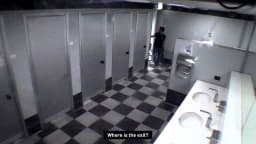
Diesel's 2018 film campaign The Capsule, created by Publicis Italy, satirised unproductive workplace meetings through a deliberately uncomfortable room

Diesel Turns Workplace Misery Into a Fashion Statement with The Capsule
Diesel's The Capsule is a 2018 film campaign created by Publicis Italy that satirises the unproductive workplace meeting by constructing a physical room engineered to make sustained conversation impossible, positioning Diesel's nonconformist brand attitude against the rituals of corporate mediocrity in the Italian market.
Published in June 2018, The Capsule arrived as a single film asset, yet its ambition extended beyond the screen. A physical version of the meeting room was displayed at Milan's Wired Next Fest, as reported by Ad Age, giving the campaign a tangible presence in Italy's cultural calendar and rooting the satirical premise in lived, three-dimensional experience. The room was designed to make meetings difficult to sustain for more than 15 minutes, according to Ad Age, transforming an architectural object into an argument about how people spend their working lives.
The campaign's objectives aligned squarely with Diesel's long-standing brand positioning. Rather than advertising a specific product line, The Capsule used workplace frustration as a creative lens — one consistent with the irreverence Diesel had cultivated across decades under founder Renzo Rosso. Ad Age described the campaign as Diesel's return to its quirky and subversive roots at the time of the Milan presentation on May 25, 2018. Neo2 framed the work in similar terms, reading it as a reassertion of the brand's countercultural instincts. In Italy, where Diesel was founded and where its creative identity remains most concentrated, The Capsule functioned as a statement of renewed intent as much as a conventional advertising vehicle.
Diesel operates in the premium fashion denim tier, competing on brand attitude, design, and cultural relevance rather than price alone. That strategic position demands creative work that generates conversation rather than simply communicates product. The Capsule addresses that brief directly by making the campaign's concept as provocative as its category.
The consumer insight anchoring the campaign is specific and verifiable. Ad Age reported that workers spend approximately 9,000 hours in meetings over a career, with roughly half of that meeting time wasted. That statistic gave Publicis Italy a precise cultural grievance to weaponise: the meeting room as a symbol of squandered potential. For a brand whose heritage is built on nonconformity and decisive action — Renzo Rosso stated to Ad Age in May 2018 that the best decisions he has ever made were quick — the meeting room represents everything Diesel's identity opposes. The capsule room, engineered to collapse under its own discomfort, becomes a physical argument for the brand's worldview.
In the Italian market, Diesel faces sustained competitive pressure from peers including Levi Strauss and Co., which competes across multiple denim price tiers, and from premium European fashion houses whose brand equity spans apparel categories beyond denim. Within this landscape, Diesel's ability to generate earned media and cultural commentary becomes a competitive differentiator. Mihnea Gheorghiu, Creative Director at Publicis Italy, noted in a separate context reported by LBBOnline in March 2021 that work influences a huge chunk of people's lives — an observation that retrospectively illuminates the strategic logic of choosing the workplace as the campaign's central arena. By making the meeting room the product, Diesel and Publicis Italy claimed cultural territory that no competitor had occupied.
Bruno Bertelli led the creative architecture of The Capsule in his role as Global Chief Creative Director of Publicis Worldwide and CEO of Publicis Italia, according to Clapboard. Cristiana Boccassini served as Chief Creative Officer on the project, and Milos Obradovic is credited among the campaign's makers, bringing a creative leadership structure that combined global strategic oversight with Italy-specific cultural fluency.
The campaign's central execution is a film — a single media asset — but its most distinctive creative decision was the construction of a real, physical meeting room displayed at Milan's Wired Next Fest, as reported by Ad Age. That dual existence, as both a film and an installation, is a craft choice with structural significance. The film could be distributed globally and consumed digitally, while the physical room allowed journalists, industry figures, and the Italian public to experience the campaign's satirical premise corporeally. The room's design — engineered to become uninhabitable within 15 minutes, per Ad Age — meant the installation was not decorative but functional as argument.
The visual and tonal register of The Capsule sits within a tradition of Diesel campaigns that deploy deadpan humour and conceptual precision rather than aspirational imagery. Where many fashion film campaigns in 2018 leaned toward cinematic beauty or celebrity, Diesel and Publicis Italy chose institutional ugliness: fluorescent lighting, ergonomic dysfunction, and the recognisable dreariness of corporate space. That creative decision is disciplined. It requires confidence in the brand's audience and in the concept's ability to carry meaning without conventional fashion codes. The result is a campaign that communicates Diesel's attitude through absence — the absence of everything a conventional fashion advertisement would offer — and trusts the viewer to complete the argument.

No verified sales lift, revenue growth, or market-share data for The Capsule is publicly available, and no records of the campaign appear in the Cannes Lions, Effie Awards, The One Show, D&AD, Clio Awards, Webby Awards, or WARC databases, according to Clapboard. A formal quantitative effectiveness assessment is therefore not possible on the basis of available evidence.
Structural evidence of impact exists, however, and it is meaningful. Ad Age covered the campaign positively at the time of its Milan presentation in May 2018, framing it as a return to Diesel's subversive roots — a form of earned editorial endorsement from one of the advertising industry's most authoritative publications. Neo2 provided similarly affirmative coverage, reinforcing the campaign's reception across both trade and cultural press. The decision to stage a physical installation at Milan's Wired Next Fest, as reported by Ad Age, indicates that Diesel and Publicis Italy invested in the campaign's real-world presence beyond the film itself, a resource commitment consistent with confidence in the concept's ability to generate engagement in the Italian market.
Trendhunter documented the campaign as a notable example of workplace-themed brand activity, extending its reach into trend-oriented editorial. That breadth of coverage — trade press, cultural media, and trend platforms — suggests The Capsule achieved meaningful organic distribution for a single-asset campaign. The Clapboard Score for The Capsule is 63 out of 100, reflecting the campaign's creative coherence and cultural relevance balanced against the absence of documented performance metrics and major awards recognition. The score positions The Capsule as a solid, strategically grounded piece of work that demonstrates Diesel's creative recovery without yet rising to the level of the brand's most celebrated campaigns.
The Capsule is a 2018 Diesel campaign created by Publicis Italy. It satirises unproductive workplace meetings through a film and a physical meeting room displayed at Milan's Wired Next Fest, engineered to make sustained conversation impossible within 15 minutes. Ad Age described it as Diesel's return to its subversive roots.
Publicis Italy created The Capsule for Diesel in 2018. Bruno Bertelli served as Global Chief Creative Director of Publicis Worldwide and CEO of Publicis Italia. Cristiana Boccassini was Chief Creative Officer, and Milos Obradovic is also credited among the campaign's makers, according to Clapboard.
The Capsule was published in Italy in June 2018, with a Milan presentation on May 25, 2018, according to Ad Age. A physical installation of the campaign's meeting room was displayed at Milan's Wired Next Fest, giving the campaign a real-world presence in Italy's cultural calendar alongside its film format.
The Capsule used an uncomfortable meeting room to satirise corporate waste. Ad Age reported that workers spend approximately 9,000 hours in meetings over a career, with roughly half that time wasted. Diesel and Publicis Italy designed the room to become uninhabitable within 15 minutes, turning the installation into a physical argument for the brand's nonconformist values.
The Capsule does not appear in the Cannes Lions, Effie Awards, The One Show, D&AD, Clio Awards, Webby Awards, or WARC awards databases, according to Clapboard. The campaign received positive editorial coverage from Ad Age and Neo2 at the time of its release, positioning it as a critically noted rather than formally decorated piece of work.
The Clapboard Score for The Capsule is 63 out of 100, according to Clapboard. The score reflects the campaign's creative coherence and cultural relevance, balanced against the absence of publicly verified performance metrics and major industry awards recognition, placing it among solid but not landmark campaigns in Diesel's creative history.
.webp)
Creative Collaboration Platform: The Backbone of Modern Creative WorkWhat is a creative collaboration platform?Clapboard defines a creative collaboration platform as the operational core for today’s distributed creative teams. This is not a collection of digital collaboration tools stitched together; Clapboard’s system


Understanding the Creative Production MarketplaceWhat is a Creative Production Marketplace?Clapboard defines a creative production marketplace as a structured ecosystem where brands, agencies, and production talent converge to execute video, advertising, and branded content at scale. Unlike the legacy agency or freelanREAD FULL ARTICLE

The Urgent Need for a Creative Production Operating SystemWhy Traditional Creative Production Models Break DownClapboard sees the creative production landscape shifting under pressure. Content velocity is no longer a buzzword—it’s a mandate. Modern advertising demands relentless output across dozens of channels, each wREAD FULL ARTICLE