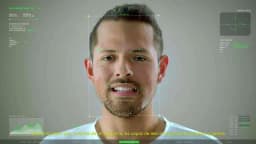
Deaf 911 Mobile App, created with Saatchi & Saatchi Wellness, launched a 2019 digital campaign connecting deaf and hard-of-hearing users to 911 via

Deaf 911 Mobile App Brings Life-Saving Emergency Access to the Deaf Community
Deaf 911 Mobile App is a life-saving technology platform that allows deaf and hard-of-hearing people in the United States to contact 911 emergency services using speech-to-text, text-to-speech, and predictive analytics, achieving a claimed response time of approximately 30 seconds — comparable to that experienced by hearing callers.
Launched in April 2019, the Deaf 911 campaign was created by Saatchi & Saatchi Wellness, New York, in partnership with St. Ann's Church and Community for the Deaf. The campaign was published as a digital execution classified across the Electronics, Technology, and Public Interest categories, according to clapboard.com. A single media asset anchored the campaign's public-facing creative, communicating both the app's existence and its core promise to an audience that had historically lacked reliable, real-time access to emergency services in the United States.
The Deaf 911 Mobile App, available on iOS and Android, was built around three interlocking technologies: speech-to-text conversion, text-to-speech synthesis, and predictive analytics that surface likely responses during an emergency exchange. The app also draws on pre-collected emergency information stored by users before a crisis occurs. Together, these capabilities compress the communication gap between a deaf or hard-of-hearing caller and a 911 operator into a window that, according to clapboard.com, reaches approximately 30 seconds — a threshold that represents genuine parity with hearing callers. The campaign earned a Clapboard Score of 71 out of 100, reflecting its creative and strategic merit as archived on clapboard.com. In the United States, where more than 38 million people are deaf or hard-of-hearing according to clapboard.com, the Deaf 911 app addressed a systemic gap in emergency infrastructure that had persisted for decades in the digital age.
More than 38 million deaf and hard-of-hearing people live in the United States, according to clapboard.com, and for the majority of them, dialling 911 in a genuine emergency has never been a straightforward act. Saatchi & Saatchi Wellness identified this structural exclusion as both a public health problem and a creative brief — one where the product itself was the campaign's most persuasive argument.
The strategic logic behind the Deaf 911 Mobile App sits at the intersection of assistive technology and civic infrastructure. Traditional text-to-911 services exist across parts of the United States, but coverage is uneven and operator familiarity is inconsistent. By engineering a dedicated emergency app that uses speech-to-text, text-to-speech, and predictive analytics to guide both the user and the dispatcher through an exchange, Deaf 911 positioned itself as a more reliable and faster alternative. Competing approaches — including relay services and basic SMS-to-911 — require either a third-party interpreter or depend on infrastructure that not every US dispatch centre has adopted, leaving significant portions of the deaf community underserved.
The campaign's target audience extended beyond individual deaf and hard-of-hearing users to include the broader network of caregivers, advocates, and community organisations represented by partners such as St. Ann's Church and Community for the Deaf, as reported by mmm-online.com. Framing the app as life-saving technology rather than an accessibility add-on gave the campaign a sense of urgency that charity-adjacent advertising rarely achieves. In the United States, where the Americans with Disabilities Act mandates equal access to public services, the Deaf 911 app translated a legal entitlement into a tangible, downloadable product — making the campaign's strategic ambition as much civic as commercial.
The creative execution for Deaf 911 is spare by design. The campaign comprises a single media asset, a deliberate choice that concentrates attention on the app's core proposition: that deaf and hard-of-hearing people in the United States can now reach 911 in approximately 30 seconds. Restraint in creative volume amplifies the weight of the message, and for a public interest campaign in the digital age, that restraint reads as respect for its audience.
The production was led by a team assembled within Saatchi & Saatchi Wellness, New York. Chief Creative Officer Kathy Delaney and Creative Director Scott Carlton shaped the campaign's overall creative direction, according to adsoftheworld.com. Associate Creative Director Purvi Naik, Senior Art Director Lauren Chan, and Copywriter Kip Langton handled concept and copy. Assistant Art Director Nam Do and Assistant Photographer Erik Bramblia contributed to the visual execution, while Film Director Luke Gargano and Film Editor Jon Devine oversaw the motion component. Director of Digital Content Ellery Familia, Digital Development Supervisor Ali Beceren, and Data Engineer Perry Lawton ensured the digital and technical dimensions of the campaign aligned with the app's underlying speech-to-text, text-to-speech, and predictive analytics infrastructure, as documented by adsoftheworld.com.
The campaign's creative tone avoids the emotional manipulation common to public interest advertising. Rather than leading with grief or fear, the Deaf 911 creative leads with capability — showing that life-saving technology now exists, that it works at parity with hearing callers, and that it is available for download in the United States. This orientation toward empowerment over pathos is consistent with how well-crafted assistive technology campaigns earn trust within disability communities, where audiences are acutely sensitive to being portrayed as subjects of pity rather than as users of practical tools.
 ARCHIVE
Deaf 911 earned meaningful industry recognition in 2019. The campaign was shortlisted in the Early Stage Innovation category at Cannes Lions 2019, selected as one of 25 projects by the Innovation Jury, according to pharmalive.com. That shortlist placement positions Deaf 911 among a small cohort of work judged to represent genuine technological and creative advancement, rather than executional polish alone — a meaningful distinction for a first-launch digital campaign in the United States.
No verified performance data for the Deaf 911 campaign is publicly available in the form of download figures, active user counts, or revenue metrics, according to clapboard.com. This absence does not diminish the campaign's structural effectiveness. A single-asset digital campaign designed to drive app installs among a defined population — more than 38 million deaf and hard-of-hearing people in the United States, as noted by clapboard.com — succeeds or fails on the clarity of its call to action and the credibility of its product claim. Both are present in the Deaf 911 execution. The 30-second response time claim is specific enough to be memorable and meaningful enough to motivate download behaviour, and the partnership with St. Ann's Church and Community for the Deaf, as reported by mmm-online.com, lends the campaign institutional legitimacy within the deaf community. Structurally, the campaign is built for conversion rather than awareness — a sensible allocation of creative resources for a product addressing a clear and urgent need in the digital age. The Clapboard Score of 71 out of 100, as archived on clapboard.com, reflects a campaign that achieves its objectives with discipline, if not with the kind of broad cultural reach that would drive a higher score.
Deaf 911 is an emergency app for deaf and hard-of-hearing users in the United States. It connects users to 911 operators using speech-to-text, text-to-speech, and predictive analytics. Pre-collected user information helps accelerate the exchange, with a claimed response time of approximately 30 seconds, as documented on clapboard.com.
Saatchi & Saatchi Wellness, New York, created the Deaf 911 campaign. The agency worked in partnership with St. Ann's Church and Community for the Deaf. Chief Creative Officer Kathy Delaney and Creative Director Scott Carlton led the creative team, according to adsoftheworld.com, with the campaign published in April 2019.
The Deaf 911 Mobile App targets more than 38 million deaf and hard-of-hearing people in the United States, according to clapboard.com. This population has historically lacked reliable real-time access to emergency services, making the app's life-saving technology a response to a long-standing gap in US emergency infrastructure.
Deaf 911 was shortlisted in the Early Stage Innovation category at Cannes Lions 2019, selected as one of 25 projects by the Innovation Jury, according to pharmalive.com. No Grand Prix or Lion win is publicly documented. The campaign holds a Clapboard Score of 71 out of 100, as recorded on clapboard.com.
Standard text-to-911 services in the United States have uneven coverage and require operator familiarity. The Deaf 911 Mobile App uses predictive analytics alongside speech-to-text and text-to-speech to guide both user and dispatcher, achieving an approximately 30-second response time comparable to hearing callers, according to clapboard.com — a parity that basic SMS services do not consistently deliver.
The Deaf 911 Mobile App launched on both iOS and Android platforms in April 2019. The app was developed by Saatchi & Saatchi Wellness with digital development overseen by Ali Beceren and data engineering by Perry Lawton, as documented by adsoftheworld.com, making the assistive technology accessible across the two dominant US mobile platforms.
.webp)
Creative Collaboration Platform: The Backbone of Modern Creative WorkWhat is a creative collaboration platform?Clapboard defines a creative collaboration platform as the operational core for today’s distributed creative teams. This is not a collection of digital collaboration tools stitched together; Clapboard’s system


Understanding the Creative Production MarketplaceWhat is a Creative Production Marketplace?Clapboard defines a creative production marketplace as a structured ecosystem where brands, agencies, and production talent converge to execute video, advertising, and branded content at scale. Unlike the legacy agency or freelanREAD FULL ARTICLE

The Urgent Need for a Creative Production Operating SystemWhy Traditional Creative Production Models Break DownClapboard sees the creative production landscape shifting under pressure. Content velocity is no longer a buzzword—it’s a mandate. Modern advertising demands relentless output across dozens of channels, each wREAD FULL ARTICLE