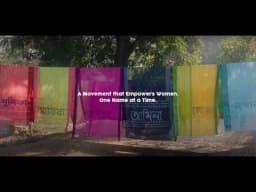
Converse and Joe Public United launched All Her Stories Are True in South Africa in June 2019, a film campaign giving four women unscripted space to challenge

Converse All Her Stories Are True Puts South African Women at the Centre
Converse launched "All Her Stories Are True" in South Africa in June 2019, a film-led fashion campaign created by Joe Public United that placed four real South African women — an illustrator, a motorsport enthusiast, a women's-rights activist, and a choreographer — at the centre of unscripted personal narratives designed to challenge gender stereotypes.
The campaign operates on a clear creative premise. Rather than constructing a polished brand fiction, Converse and Joe Public United invited four participants to speak in their own words, without prescribed script lines, according to reporting by Bizcommunity. The result is a suite of films — a 60-second cinema version, a 45-second television cutdown, and shorter online edits — in which the women's voices carry the entire persuasive weight of the work. The four central figures are Karabo Poppy, an illustrator and street artist; Stacey-Lee May, a young motorsport enthusiast and car-spinning performer; Zulaikha Patel, a women's-rights activist; and Robyn Brophy, a performer and choreographer, as documented by Bizcommunity and Ads of the World.
Bradley Knowles, Group Marketing Executive at Skye Distribution, described the strategic intent directly, stating: "As a brand, we acknowledge the power in storytelling and the history that our brand has played in South African people's lives. We partnered with the very capable and talented crew at Joe Public who helped us pull this all together creating this platform where we were able to share truthful narratives about what makes South Africans truly unique under the banner of our campaign, All the Stories Are True." That framing connects Converse's global positioning — the Chuck Taylor as a cultural symbol associated with outsiders, artists, activists, and musicians, as noted by Ads of the World — to a specifically South African context, anchoring an international apparel brand to local identity with precision.
South Africa presented a distinct strategic environment for a girl power fashion campaign in 2019. The country's broader cultural moment, shaped by youth-led activism including the high-profile natural-hair protests at Pretoria schools in which Zulaikha Patel herself became a national figure, gave the campaign's anti-stereotype premise immediate local resonance beyond generic empowerment messaging.
The global sports-apparel market was valued at approximately $181 billion in 2019, growing more than $7 billion year-over-year, according to research cited by Efsupit Ro. Within that landscape, athletic footwear was valued at approximately $58 billion in 2018 and forecast to reach $88 billion by 2024, representing a compound annual growth rate of approximately 7.1 percent, per Finance Yahoo. Converse operates within the Nike portfolio, and Nike held approximately 31 percent of the global athletic market in 2019, with footwear revenue exceeding $24.2 billion in 2018 according to Highsnobiety and finance.yahoo.com. Adidas, the most direct competitor in the South African streetwear and fashion apparel space, reported footwear revenue of approximately $15 billion in 2018, per finance.yahoo.com. In South Africa, both Nike and Adidas command significant retail presence, making differentiation through cultural authenticity a more viable competitive lever than price or product specification alone.
Joe Public United's strategic rationale, as articulated by Chief Creative Officer Xolisa Dyeshana and reported by Bizcommunity, was that the films and narratives aimed to go beyond surface-level representation. By selecting women who had already earned cultural credibility in their respective fields — Patel through activism, Poppy through her internationally recognised illustration work, May through motorsport, and Brophy through performance — the campaign positioned Converse not as a brand bestowing visibility on women but as one recognising agency that already existed. That distinction separates the work from the more generalised girl-power advertising that had become prevalent across the global fashion industry by 2019.
Katlego Baaitse directed "All Her Stories Are True." The decision to assign direction to Baaitse, a South African director, is itself a craft statement: the camera's relationship to the four subjects carries the warmth of genuine cultural familiarity rather than the studied distance of an outsider observer.
The creative leadership behind the campaign at Joe Public United was substantial. Pepe Marais served as Group Chief Creative Officer, Xolisa Dyeshana as Chief Creative Officer, and Claudi Potter as Creative Director, as documented by Ads of the World. That three-tier creative structure, with senior oversight from both Marais and Dyeshana, reflects the weight the agency placed on the work. Dyeshana's own public commentary, reported by Bizcommunity, framed the films as an attempt to surface stories that exist independently of brand narrative — a philosophically demanding brief that requires creative restraint as much as invention.
The production architecture across multiple formats — cinema, television, and digital — demonstrates deliberate platform thinking. The 60-second cinema cut allows the women's stories to breathe at a pace appropriate to that environment, while the 45-second television version and the shorter online edits compress without losing the essential unscripted texture, according to Bizcommunity's coverage from 6 June 2019. The campaign contains one primary media asset as submitted to the archive, but the multi-format production strategy indicates a considered approach to reach across South African media contexts.
The decision not to provide participants with prescribed script lines, confirmed by Bizcommunity, is the single most consequential creative choice in the work. It shifts the filmmaker's role from director of performance to curator of testimony, and it places the entire credibility of the campaign on the authenticity of the four women rather than on production craft or post-production polish. As Ads of the World documents, this approach aligns with Converse's long-running global lineage of treating the Chuck Taylor as a symbol of individual self-expression rather than aspirational conformity.
No verified performance data for "All Her Stories Are True" is publicly available. No independent metrics covering view counts, earned media value, retail impact, or brand-tracking uplift in the South African market have been published by Converse, Joe Public United, or any third-party measurement body. The campaign does not appear in publicly documented award shortlists or results, and no industry body has published quantitative results attributable to this work.
Structural analysis, however, points to meaningful effectiveness indicators. The unscripted testimony format creates high authenticity signals — a quality that, in the South African fashion and apparel market of 2019, was strategically differentiated from competitor campaigns. The selection of participants with pre-existing public profiles, particularly Zulaikha Patel whose activism had already generated national news coverage as reported by News24, significantly reduces the campaign's dependence on paid media to generate awareness. Each featured woman brought an existing audience to the work, functioning as organic distribution nodes in a market where earned reach carries proportionally higher credibility than paid placement.
The multi-format execution across cinema, television, and online also suggests a distribution strategy designed for cumulative cultural presence rather than a single high-impact moment. For a brand like Converse operating within the highly competitive South African sportswear and fashion apparel environment — against dominant players including Nike parent-company stablemates and Adidas — that sustained cultural presence is a measurable strategic asset even in the absence of published campaign metrics. Clapboard rates "All Her Stories Are True" 67 out of 100, reflecting strong strategic clarity and creative restraint tempered by limited verifiable distribution data.
"All Her Stories Are True" is a 2019 Converse film campaign created by Joe Public United in South Africa. It features four real South African women — illustrator Karabo Poppy, motorsport enthusiast Stacey-Lee May, activist Zulaikha Patel, and choreographer Robyn Brophy — sharing unscripted personal narratives to challenge gender stereotypes, according to Bizcommunity.
Joe Public United created the campaign. The agency's creative leadership included Pepe Marais as Group Chief Creative Officer, Xolisa Dyeshana as Chief Creative Officer, and Claudi Potter as Creative Director, as documented by Ads of the World. Director Katlego Baaitse helmed the film production in South Africa.
The campaign features four South African women: Karabo Poppy, an illustrator and street artist; Stacey-Lee May, a motorsport enthusiast and car-spinning performer; Zulaikha Patel, a women's-rights activist; and Robyn Brophy, a performer and choreographer, as reported by Bizcommunity and documented by Ads of the World.
The campaign ran across three formats in South Africa: a 60-second cinema version, a 45-second television cutdown, and shorter online films, according to Bizcommunity's coverage from June 2019. This multi-format approach was designed to reach audiences across cinema, broadcast television, and digital platforms within the South African market.
Converse and Joe Public United chose not to give participants prescribed script lines, per Bizcommunity, placing the campaign's credibility entirely on authentic personal testimony. This approach distinguished the work from conventional fashion industry empowerment advertising and aligned with Converse's established global positioning around individual self-expression, as noted by Ads of the World.
Clapboard rates "All Her Stories Are True" 67 out of 100. The score reflects the campaign's strong strategic clarity, culturally grounded casting, and creative restraint in the South African fashion market, balanced against the absence of publicly verified distribution data or independently documented performance metrics for the 2019 campaign.
.webp)
Creative Collaboration Platform: The Backbone of Modern Creative WorkWhat is a creative collaboration platform?Clapboard defines a creative collaboration platform as the operational core for today’s distributed creative teams. This is not a collection of digital collaboration tools stitched together; Clapboard’s system


Understanding the Creative Production MarketplaceWhat is a Creative Production Marketplace?Clapboard defines a creative production marketplace as a structured ecosystem where brands, agencies, and production talent converge to execute video, advertising, and branded content at scale. Unlike the legacy agency or freelanREAD FULL ARTICLE

The Urgent Need for a Creative Production Operating SystemWhy Traditional Creative Production Models Break DownClapboard sees the creative production landscape shifting under pressure. Content velocity is no longer a buzzword—it’s a mandate. Modern advertising demands relentless output across dozens of channels, each wREAD FULL ARTICLE