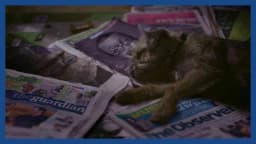
Comix's Veterinarian film by Forchets Milan launched in Italy in November 2011, using genre parody and visual effects by BUF to land a single comedy punchline.

How Comix and Forchets Made a Veterinarian Funny Enough to Matter
Comix's "Veterinarian" is a comedy-led, character-driven film advertisement created by Milan agency Forchets and published in Italy in November 2011, using a veterinarian clinic setting as the vehicle for genre parody in support of the brand's Agende 2012 campaign across television, cinema, and the web.
Comix is an Italian media and entertainment brand owned by Franco Cosimo Panini Editore, as documented by clapboard.com. The brand's positioning is built around a single, declarative tagline — "Se fa ridere… è COMIX!!" ("If it makes you laugh… it's COMIX!!") — which functions as both a creative brief and a brand promise simultaneously. In the Italian market, where stationery and youth publishing converge with pop culture, that promise demands campaigns that earn laughter rather than merely claim it.
"Veterinarian" is one media asset: a single film. The campaign's broader Agende 2012 initiative ran across television, cinema, and digital platforms in Italy, according to clapboard.com, suggesting that this spot was intended to carry significant creative weight within a multi-channel rollout. The strategic logic is straightforward — if a single film can crystallise the brand's comedic identity sharply enough, it becomes the anchor around which every other touchpoint orbits. The veterinarian setting, comic and recognisably domestic in its absurdity, provided exactly that kind of universal recognisability for an Italian youth audience in 2011.
The campaign was built around what clapboard.com describes as an "effect of surprise", a structural device in which audience expectations established by the veterinarian framing are systematically subverted. This approach aligns directly with the Comix brand's core promise: comedy is not decoration, it is the product. Clapboard assigns the campaign a score of 55 out of 100, placing it in the competent middle range — a film that executes its comic premise with craft but does not fully transcend it.
Forchets grounded the Veterinarian campaign in a strategic insight specific to the Italian youth market: comedy that recognises a genre before it subverts it travels faster among audiences already fluent in that genre's conventions.
The veterinarian setting is not arbitrary. As a familiar, emotionally charged domestic scenario — animals, anxiety, unexpected outcomes — it gives a youth-skewing Italian audience an immediate frame of reference that the campaign then dismantles for comic effect. This genre-parody structure is a proven creative strategy in Italian advertising, where absurdist humour has historically outperformed earnest product demonstration among younger consumers.
In the broader comics and entertainment publishing market, competitive context matters. In 2011, Marvel Comics held a retail-dollar share of approximately 37 percent and DC Comics held approximately 31 percent of the specialty-retail channel, according to Diamond Comic Distributors data cited by comicsalliance.com. Those figures reflect the English-language North American market rather than Italy specifically, but they establish the competitive intensity of entertainment publishing globally during the period when Comix was investing in brand-building advertising. Comix, operating within Franco Cosimo Panini Editore's Italian publishing ecosystem, was not competing directly with Marvel or DC for comic-book shelf space, but it was competing for the same scarce resource: the cultural attention of young Italian consumers who had multiple entertainment choices.
The decision to deploy film — rather than print or static digital formats — as the campaign's primary asset reflects a strategic judgment that comedy lands harder in motion. Forchets built the Agende 2012 campaign, of which "Veterinarian" is the centrepiece, across television, cinema, and the web in Italy, according to clapboard.com, maximising reach across the screens most relevant to the brand's youth demographic at that moment in the Italian market.
Riccardo Paoletti directed the Veterinarian film, bringing a performance-led approach to a comedy spot that depends entirely on the precision of its comic reveal, as documented by clapboard.com.
The creative team at Forchets Milan was led by creative directors Niccolò Brioschi and Francesco Montella. Copywriting was handled by Federica Guidolin and Luca Regonesi, while Ritz Colombo served as art director. Account responsibilities were managed by Claudio Grandi and Federica Ravizza, according to clapboard.com. The breadth of the named creative roster for a single-asset campaign signals that Forchets treated this film as a flagship execution rather than a routine production.
Visual effects were executed by BUF, an internationally active VFX studio known for its work on high-craft commercial and cinematic productions. The involvement of BUF in a comedy spot of this kind indicates that at least a portion of the film's comic mechanics relied on effects-driven construction — a choice that elevates the production beyond what a purely performance-led comedy spot could achieve. In a campaign built around the "effect of surprise," as clapboard.com describes it, visual effects serve a structural narrative function: they are the mechanism through which the surprise is delivered rather than merely embellished.
The creative direction from Brioschi and Montella, working with copywriters Guidolin and Regonesi and art director Ritz Colombo, produced a script in which the veterinarian setting is exploited for its genre legibility before being overturned. The single-asset format demanded that every creative decision — casting, pacing, the precise timing of the gag, the integration of BUF's effects work — function as a unified whole. In Italian advertising of 2011, where television and cinema remained premium environments for brand comedy, this level of craft investment was the expected cost of credibility.
No verified performance data for the Comix Veterinarian campaign is publicly available. Audience reach figures, view counts, recall scores, and commercial effectiveness metrics have not been documented in any publicly accessible source, and none are fabricated here.
What structural analysis can offer is this: the campaign's design logic is internally coherent. A single film anchoring a multi-platform rollout across television, cinema, and the web in Italy — as documented by clapboard.com — is a format that concentrates creative risk and creative reward in equal measure. If the joke lands, everything lands. The Comix brand tagline, "Se fa ridere… è COMIX!!", sets an explicit and measurable creative standard: laughter is the deliverable. Genre parody executed through a veterinarian scenario, directed by Riccardo Paoletti with VFX by BUF and written by Federica Guidolin and Luca Regonesi, represents a genuine attempt to meet that standard with craft rather than volume.
Clapboard assigns Veterinarian a score of 55 out of 100. That score reflects a campaign that demonstrates competence across its creative and production disciplines without achieving the kind of breakout execution that would push it into the upper tier of Italian advertising from the period. The comedy premise is sound, the production investment is visible, and the strategic fit with the Comix brand is clear. What the score suggests is that the sum of those parts did not fully transcend its individual components — a common outcome for single-asset comedy campaigns where the gag, however well-crafted, carries the entire weight of the campaign's memorability.
The Comix Veterinarian campaign is a single comedy film created by Forchets Milan for Italian brand Comix, published in Italy in November 2011. Directed by Riccardo Paoletti with visual effects by BUF, it used a veterinarian clinic setting and genre parody to deliver a comedic punchline aligned with the Comix brand tagline.
Riccardo Paoletti directed the Veterinarian film. The Forchets creative team included creative directors Niccolò Brioschi and Francesco Montella, copywriters Federica Guidolin and Luca Regonesi, art director Ritz Colombo, and account executives Claudio Grandi and Federica Ravizza, according to clapboard.com.
The Comix Agende 2012 campaign ran across television, cinema, and the web in Italy, according to clapboard.com. Veterinarian served as a centrepiece film within that multi-platform rollout, carrying the brand's comedy-first positioning through a single character-driven asset built around an effect of surprise.
Clapboard assigns the Comix Veterinarian campaign a score of 55 out of 100. That result places the film in the competent middle range, reflecting sound creative logic and visible production craft without achieving the breakout execution that would push it into the upper tier of Italian advertising from 2011.
BUF provided visual effects for the Veterinarian film, according to clapboard.com. In a campaign built around a comedic effect of surprise, BUF's contribution was structural rather than decorative — the effects work served as the delivery mechanism for the film's central gag rather than a post-production embellishment.
Comix is owned by Franco Cosimo Panini Editore, as documented by clapboard.com. The brand operates in Italian media and entertainment and is known for its comedy-first identity, encapsulated by the tagline "Se fa ridere… è COMIX!!" — meaning "If it makes you laugh… it's COMIX!!" — targeting a youth audience in Italy.
.webp)
Creative Collaboration Platform: The Backbone of Modern Creative WorkWhat is a creative collaboration platform?Clapboard defines a creative collaboration platform as the operational core for today’s distributed creative teams. This is not a collection of digital collaboration tools stitched together; Clapboard’s system


Understanding the Creative Production MarketplaceWhat is a Creative Production Marketplace?Clapboard defines a creative production marketplace as a structured ecosystem where brands, agencies, and production talent converge to execute video, advertising, and branded content at scale. Unlike the legacy agency or freelanREAD FULL ARTICLE

The Urgent Need for a Creative Production Operating SystemWhy Traditional Creative Production Models Break DownClapboard sees the creative production landscape shifting under pressure. Content velocity is no longer a buzzword—it’s a mandate. Modern advertising demands relentless output across dozens of channels, each wREAD FULL ARTICLE