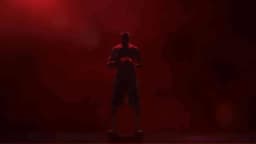
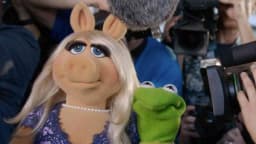
Clash of Clans partnered with Barton F. Graf in 2015 to release three film spots — Shocking Moves, Balloon Paradise, and Ride of the Hog Riders — targeting US

Clash of Clans and Barton F. Graf Wage War on Mobile Indifference
Clash of Clans released a three-part film campaign in the United States in May 2015, created by New York agency Barton F. Graf, comprising the spots "Shocking Moves," "Balloon Paradise," and "Ride of the Hog Riders" — a coordinated creative effort designed to extend the game's irreverent, character-driven voice across the US media and entertainment landscape.
Clash of Clans was developed and published by Supercell, a Finnish mobile-game company founded in 2010, according to Wikipedia. The game launched in 2012 and by 2015 had become one of the most commercially dominant titles in the global mobile category. In the United States, the game faced a maturing but intensely competitive market, where retaining existing players while compelling new audiences to download and engage required advertising that transcended conventional gaming tropes. The three films archived in this campaign represent a deliberate attempt to do precisely that — translating the game's cartoon belligerence and strategic absurdity into cinematic, character-forward narratives that could land with equal force on a non-gaming viewer as on a devoted clan member.
Each of the three spots operates as a self-contained story while sharing a unified visual grammar rooted in the game's aesthetic. The campaign sits within the Media and Entertainment category and was produced as a film medium execution, meaning its primary delivery vehicle was broadcast and digital video. Barton F. Graf, the agency responsible for conceiving and producing the work, had already demonstrated its command of the Clash of Clans brand voice earlier in 2015, having created the brand's widely discussed Super Bowl commercial, as noted by campaignlive.com. The May 2015 release of these three spots follows directly in that lineage, representing a sustained creative partnership rather than a one-off executional moment. Clapboard rates this campaign 63 out of 100.
Clash of Clans generated approximately $1.3 billion in revenue in 2015, making it the leading mobile title by earnings that year, according to gamesindustry.biz. That commercial dominance did not eliminate strategic pressure — it intensified it. According to mediapost.com, by 2014 Supercell was treating Clash of Clans as a high-scale acquisition and retention problem, with rising cost per install placing greater weight on brand-level advertising to generate organic interest and reduce dependence on performance media alone.
In the United States, the mobile gaming landscape in 2015 was structurally favourable but fiercely contested. SuperData reported the digital games mobile category at a significant scale in 2015, approximately ten percent higher than 2014, according to gamesbeat.com. Games represented more than eighty percent of worldwide consumer spending on app stores that year, according to pcgamer.com, even as the sheer volume of competing titles made cut-through increasingly difficult. Competitors such as Candy Crush Saga, operated by King, and Clash Royale — itself a Supercell product yet to launch — represented both the category's commercial ceiling and the audience fragmentation risk that brand advertising was designed to counteract.
Barton F. Graf's strategic response was to lean into character rather than gameplay. Rather than demonstrate mechanics or promote a limited-time event, the three films gave the game's iconic units — Balloons, Hog Riders, and unnamed combatants — enough narrative space to become genuinely funny and recognisably human. This approach mirrored the logic of the Super Bowl Liam Neeson spot, which accumulated approximately forty million YouTube views by February 2015, according to gamesbeat.com and polygon.com, and exceeded fifty million views by April 2015, according to the same sources. The May 2015 campaign applied that same comedic, character-centred philosophy at a smaller but no less considered scale.
Gerry Graf served as Chief Creative Officer on the campaign, with Scott Vitrone credited as Executive Creative Director, according to adsoftheworld.com and the campaign's own documentation. Their creative direction established the tone that runs consistently across all three films: deadpan physical comedy, a respect for the game's cartoon logic, and a refusal to condescend to either hardcore players or casual observers encountering the brand for the first time.
Each of the three spots — "Shocking Moves," "Balloon Paradise," and "Ride of the Hog Riders" — takes a single game unit or combat scenario and extrapolates it into a miniature dramatic situation. The approach is structurally similar to the sketch-comedy tradition, where the premise is established quickly, escalated with discipline, and resolved with a punchline that doubles as a brand moment. In the context of US gaming advertising in 2015, this represented a meaningful departure from the then-dominant convention of fast-cut gameplay footage underscored by orchestral music, a format that studios including Activision and Electronic Arts had refined but which left limited room for personality or warmth.
The production of all three films as a coordinated set, rather than as standalone executions, demonstrates a considered approach to campaign architecture. Releasing three distinct films simultaneously allows the brand to occupy more media real estate, serve different audience segments with different comedic premises, and signal creative confidence — the implicit argument being that Clash of Clans has enough characters and situations worth dramatising to fill a campaign rather than a single spot. Chris Stephens is credited in connection with the production, according to the campaign record, though full production credits beyond the named agency leadership are not publicly documented in available third-party sources. The visual language throughout remains tightly aligned with the game's own aesthetic, ensuring that familiarity functions as a creative asset rather than a constraint.
No verified performance data for the "Shocking Moves," "Balloon Paradise," and "Ride of the Hog Riders" campaign is publicly available in the form of documented view counts, download attribution, or brand-lift metrics specific to these three May 2015 spots. No award wins for this campaign have been verified across Cannes Lions, the Effies, the One Show, D&AD, the Clios, the Webby Awards, or WARC, according to available records across those bodies.
What is structurally assessable is the campaign's position within a demonstrably effective brand moment. Barton F. Graf's earlier Clash of Clans Super Bowl execution — the Liam Neeson spot — drove Clash of Clans up eighteen positions in the games category on Appfigures following its February 2015 broadcast, according to gamesbeat.com. That measurable uplift establishes the brand's responsiveness to well-executed advertising in the United States, lending credibility to the proposition that the May 2015 follow-up campaign was designed to sustain rather than generate that momentum.
The decision to release three films simultaneously rather than a single hero execution reflects a platform-native understanding of how gaming audiences consume content in the US media environment — episodically, voluntarily, and with a preference for series over singular events. Whether that structural ambition translated into equivalent audience engagement cannot be confirmed without proprietary data. What Clapboard's editorial analysis can confirm is that the campaign represents a coherent, craft-literate extension of a brand voice that had already demonstrated its ability to move meaningful metrics when properly resourced and distributed across the United States market.
The campaign is a set of three film spots released in the United States in May 2015, created by Barton F. Graf for Clash of Clans. Each film dramatises a different game character or combat scenario using deadpan physical comedy, extending the brand's character-driven voice established by the earlier Super Bowl Liam Neeson commercial.
Gerry Graf served as Chief Creative Officer and Scott Vitrone as Executive Creative Director on the campaign, according to adsoftheworld.com. Chris Stephens is also credited in connection with the production. The three spots — "Shocking Moves," "Balloon Paradise," and "Ride of the Hog Riders" — were produced for Supercell's Clash of Clans brand in the United States.
No award wins for this campaign have been verified. No recognition has been confirmed across Cannes Lions, the Effies, the One Show, D&AD, the Clios, the Webby Awards, or WARC for the "Shocking Moves, Balloon Paradise, Ride of the Hog Riders" campaign, according to available records from those award bodies.
Clash of Clans generated approximately $1.3 billion in revenue in 2015, making it the leading mobile title by earnings that year, according to gamesindustry.biz. Earlier in 2015, following the Barton F. Graf Super Bowl commercial, the game rose eighteen positions in the games category on Appfigures, according to gamesbeat.com.
Releasing three simultaneous films allowed Clash of Clans to occupy broader media space, serve distinct audience segments, and signal creative depth — an approach consistent with how US gaming audiences consume video content episodically. The structure also reinforced the game's roster of characters as a genuine creative asset rather than a single-use campaign mechanic.
Clapboard rates the "Shocking Moves, Balloon Paradise, Ride of the Hog Riders" campaign 63 out of 100. The score reflects the campaign's coherent brand voice and craft-literate execution while acknowledging the absence of verified performance data and the lack of documented award recognition from major industry bodies.
.webp)
Creative Collaboration Platform: The Backbone of Modern Creative WorkWhat is a creative collaboration platform?Clapboard defines a creative collaboration platform as the operational core for today’s distributed creative teams. This is not a collection of digital collaboration tools stitched together; Clapboard’s system


Understanding the Creative Production MarketplaceWhat is a Creative Production Marketplace?Clapboard defines a creative production marketplace as a structured ecosystem where brands, agencies, and production talent converge to execute video, advertising, and branded content at scale. Unlike the legacy agency or freelanREAD FULL ARTICLE

The Urgent Need for a Creative Production Operating SystemWhy Traditional Creative Production Models Break DownClapboard sees the creative production landscape shifting under pressure. Content velocity is no longer a buzzword—it’s a mandate. Modern advertising demands relentless output across dozens of channels, each wREAD FULL ARTICLE