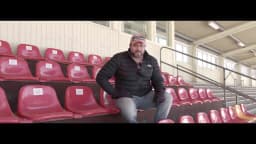
Kelme and SD Huesca's 2018 Spanish film campaign Colours That Leave A Mark sent three real supporters to summit Aneto, the Pyrenees' highest peak, to embody

Kelme and SD Huesca Climb to New Heights with Colours That Leave A Mark
Colours That Leave A Mark is a 2018 Spanish film campaign created by Valencia-based agency Estimado Jose Alfredo for sportswear brand Kelme in partnership with football club SD Huesca, in which three real SD Huesca supporters climbed Aneto — the highest peak in the Pyrenees and in Huesca province, standing at approximately 3,400 metres — to symbolise the effort and commitment required to reach the top of the sport, according to Nysportsjournalism Squarespace.
The campaign launched in July 2018, a moment of genuine significance for SD Huesca. The club had just secured promotion to La Liga for the first time in its history, making the metaphor of ascending to the summit both timely and emotionally resonant. Kelme, a Spanish sportswear company with deep roots in the country's athletic culture, supplied the club's new kits to mark the partnership, and the campaign was conceived to give that commercial relationship a human and physical dimension rather than a conventional product announcement, according to LinkedIn. In Spain, where football culture is inseparable from regional identity and collective pride, the decision to anchor the narrative in real supporters rather than athletes or celebrities carried particular weight.
The campaign exists as a single film asset, produced by Viernes Producciones and shaped by the creative team at Estimado Jose Alfredo, according to Alfredojaar. Its central mechanism is straightforward: three ordinary fans undertake an extraordinary physical challenge, wearing Kelme colours, with the mountain serving as both literal terrain and visual metaphor. The Spanish title, Colores que dejan huella, carries an additional resonance — huella means both mark and footprint, a duality that the mountain setting makes literal. This linguistic and visual layering distinguishes the campaign from a standard kit launch and positions it within the tradition of sports narrative filmmaking that prizes effort, identity, and place over product specification.
Kelme occupies a specific position in the Spanish sportswear market as a heritage brand competing alongside global giants. In Spain, the fitness and sports apparel sector operates within a broader active-lifestyle economy: Spain's fitness-club sector generated revenue of approximately 2.291 billion euros in 2018, according to data cited by Deloitte and sourced through Scribd industry reports, reflecting a market in which physical aspiration and sports participation were commercially significant. Against that backdrop, Kelme's partnership with SD Huesca represented an opportunity to align the brand with an authentic underdog story rather than manufactured glamour.
SD Huesca's promotion to La Liga placed the club in direct competition with Spain's established football hierarchy, including sides backed by far larger commercial partners. Competitors such as Nike and Adidas dominate kit supply across the top tier of Spanish football, commanding visibility through partnerships with Real Madrid and FC Barcelona respectively. Estimado Jose Alfredo's strategic response for Kelme was to refuse that terrain entirely. Rather than competing on scale or celebrity, the agency built the campaign around specificity — one club, one province, one mountain, three supporters — in a move that converted Kelme's smaller footprint into a storytelling advantage.
The insight driving the campaign is rooted in the relationship between physical geography and local sporting pride. Aneto is not simply the highest point in the Pyrenees; it is the defining landscape feature of the province of Huesca, and by sending supporters to its summit in Kelme kit, the campaign made the brand's colours part of that geography. In a media environment where Spanish sports advertising frequently defaults to highlight reels and stadium spectacle, this outdoor, human-scale narrative represented a deliberate counter-position.
Viernes Producciones directed and produced the film at the centre of Colours That Leave A Mark. The production company took on the logistical and cinematic challenge of capturing a genuine mountain ascent on Aneto, at approximately 3,400 metres, which required shooting in conditions that most sports advertising productions deliberately avoid. The decision to use a real climb rather than a simulated or studio-assisted environment gives the footage an authenticity that is immediately legible on screen — the effort, weather, and scale of the mountain are not dressed; they are present.
Creative direction and copywriting were led by Xamu Olmos, with art direction by Jose Carlos Angulo and additional copywriting by Benji Clemente. Account direction was handled by Blanca Mora. The creative team built the campaign around the dual meaning embedded in the Spanish title: huella, footprint and mark, allowed the film to operate simultaneously as a record of a physical journey and a statement about what a sports brand should leave behind. That conceptual economy — one word doing two jobs — reflects a disciplined approach to campaign construction that resists over-explanation.
The film's visual grammar follows the supporters across the mountain environment, using the scale and severity of the landscape to contextualise the emotional stakes of SD Huesca's promotion season. Kelme's colours appear throughout not as product placements but as the natural clothing of people undertaking something genuinely difficult, which shifts the brand's presence from commercial to experiential. The single-asset format concentrates the campaign's meaning into one sustained narrative rather than dispersing it across multiple executions, a choice that demands more from the film itself and rewards close attention. The result is a piece of sports filmmaking that uses geography, language, and real human effort as its primary creative materials.
No verified performance data for Colours That Leave A Mark is publicly available. No independent trade-press coverage citing reach, view counts, engagement rates, or commercial outcomes for the campaign has been identified through publicly accessible sources, and no awards recognition is documented in the available record. The campaign carries a Clapboard Score of 63 out of 100, which reflects competent and purposeful creative execution without reaching the level of formal industry recognition or documented audience impact that would indicate outstanding effectiveness.
Structurally, the campaign presents several elements that support effectiveness in the Spanish market. The timing of a July 2018 launch aligned the film with the immediate aftermath of SD Huesca's historic promotion, when supporter emotion and media interest in the club were at a demonstrable peak. The decision to cast real supporters rather than paid talent reduced production distance from the audience and increased the credibility of the physical challenge depicted. The geographic specificity of Aneto — a landmark with genuine cultural meaning in the province of Huesca — gave the campaign local resonance that a generic mountain setting would not have provided.
The single-film format limits the campaign's ability to sustain attention over time or adapt messaging across platforms, which may account in part for the absence of documented reach metrics. Against the broader context of Spanish sports advertising in 2018, where digital video distribution was increasingly central to campaign visibility, a one-asset strategy requires exceptional content quality to generate organic amplification. The creative ambition evident in the concept is real; its translation into measurable commercial impact for Kelme remains, based on available evidence, unconfirmed.
Colours That Leave A Mark is a 2018 Spanish film campaign for Kelme sportswear and SD Huesca. Created by Estimado Jose Alfredo in Valencia, it follows three real SD Huesca supporters climbing Aneto, the highest peak in the Pyrenees at approximately 3,400 metres, to symbolise the effort of reaching the top in sport.
Estimado Jose Alfredo, a Valencia-based agency, created the campaign. The creative team included Xamu Olmos as creative director and copywriter, Jose Carlos Angulo as art director, and Benji Clemente as copywriter. Viernes Producciones directed the film, and Blanca Mora served as account director on the project.
Aneto is the highest peak in the Pyrenees and the defining geographical landmark of Huesca province. SD Huesca had just reached La Liga for the first time in 2018, making the ascent a precise metaphor for the club's own rise. The mountain gave the campaign local cultural meaning specific to the region.
The title translates as Colours That Leave A Mark, but the Spanish word huella carries a second meaning: footprint. This duality was central to the creative concept, allowing the film to function simultaneously as a record of a physical mountain journey and a statement about the lasting impression a sports brand should make.
Colours That Leave A Mark holds a Clapboard Score of 63 out of 100. This reflects purposeful and structurally coherent creative execution, particularly in its use of real supporters, authentic location filming on Aneto, and a concept tied to SD Huesca's historic 2018 promotion, without reaching documented industry award recognition.
The campaign took a distinct approach in the Spanish sports advertising landscape by rejecting stadium spectacle and celebrity talent in favour of real supporters and genuine mountain terrain. Where competitors such as Nike and Adidas relied on scale and fame, Estimado Jose Alfredo built the campaign around geographic specificity and authentic human effort.
.webp)
Creative Collaboration Platform: The Backbone of Modern Creative WorkWhat is a creative collaboration platform?Clapboard defines a creative collaboration platform as the operational core for today’s distributed creative teams. This is not a collection of digital collaboration tools stitched together; Clapboard’s system


Understanding the Creative Production MarketplaceWhat is a Creative Production Marketplace?Clapboard defines a creative production marketplace as a structured ecosystem where brands, agencies, and production talent converge to execute video, advertising, and branded content at scale. Unlike the legacy agency or freelanREAD FULL ARTICLE

The Urgent Need for a Creative Production Operating SystemWhy Traditional Creative Production Models Break DownClapboard sees the creative production landscape shifting under pressure. Content velocity is no longer a buzzword—it’s a mandate. Modern advertising demands relentless output across dozens of channels, each wREAD FULL ARTICLE