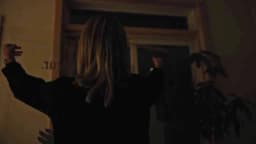
Children with Cancer UK launched #RingTheBell in October 2018 in the United Kingdom, a two-day interactive digital OOH installation at Westfield London

Children with Cancer UK Turns a Treatment Bell Into a National Moment
Children with Cancer UK's #RingTheBell campaign is a two-day interactive digital out-of-home installation launched in October 2018 at Westfield London, inviting members of the public to simulate ringing an end-of-treatment bell via their smartphones and trigger personalised thank-you messages from children who had completed cancer treatment.
The campaign launched on 16 October 2018, anchored by a live physical activation at Westfield London that ran for two days. Shoppers were directed to a mobile web address where they entered their name, then shook their phone to simulate the ringing of a bell — a ritual moment in paediatric oncology wards that signals the end of a child's treatment. That gesture triggered a sequence of video content showing real children ringing their own bells, alongside a personalised message of thanks addressed directly to the participant. The donation mechanic was simple and immediate: text BELL to 70020.
The campaign was produced by Grand Visual, with OOH media planned and booked by Talon and Accord, according to adsoftheworld.com. Its reach extended beyond the physical installation through a social-video release running in parallel, broadening the campaign's footprint across the United Kingdom without requiring physical presence at Westfield London. The single media asset at the heart of the campaign concentrated creative energy into one unified experience rather than fragmenting attention across multiple executions. Jason Rigby, Director of Fundraising and Communications at Children with Cancer UK, has noted that two out of ten young children with cancer do not survive, according to adsoftheworld.com — a statistic that gives the bell-ringing ritual its full emotional weight and defines the stakes the campaign was asking the public to acknowledge.
Children with Cancer UK pursued a shift in charitable communications strategy that had been building since at least 2014. Rather than leading with disease and distress — the dominant mode of much charity advertising in the United Kingdom — the organisation moved toward survival, research and family support as its central narrative, according to Childrenwithcancer Org Uk. The bell-ringing ritual made that pivot concrete: it is an emblem of victory, not suffering, and it invited the public to share in a moment of joy rather than absorb a message of loss.
The strategic context matters. In 2018, only five percent of charity-sector advertising spend in the United Kingdom was allocated to internet channels, compared with forty-six point two percent of total UK advertising spend across all sectors, according to nfpresearch.com. That gap illustrates how cautiously the charity sector was moving toward digital integration at the time. Children with Cancer UK's decision to anchor its campaign in a physical out-of-home installation while simultaneously activating online through social video represented a more ambitious cross-channel approach than the sector average. The Westfield London site placed the activation in a high-footfall retail environment where spontaneous public participation was architecturally possible in a way a traditional OOH poster could never achieve.
Competitors in the children's health and cancer charity space in the United Kingdom — including organisations such as CLIC Sargent and the Teenage Cancer Trust — have historically relied heavily on television and direct mail for donor acquisition. Children with Cancer UK's own first television and outdoor donor-acquisition campaign launched in October 2014, created by WPN Chameleon with media planning by MC&C, according to itvmedia.co.uk. The 2018 #RingTheBell campaign marked a measurable step beyond that broadcast-first model, using technology to create participation rather than simply awareness.
Grand Visual produced the digital OOH installation at the centre of the #RingTheBell campaign. The creative technology challenge was to collapse the distance between a shopping centre visitor and a child on an oncology ward — to make a stranger's phone gesture feel genuinely connected to a real human experience rather than a branded interaction.
The solution layered several mechanisms together. The mobile web address acted as the entry point, keeping the interaction accessible without requiring an app download. The phone-shake gesture was the critical creative decision: it translated a meaningful clinical ritual into a physical action that a member of the public could perform in a retail environment, without trivialising the source moment. The personalised thank-you message that followed gave the interaction an emotional resolution, closing a loop between participant and patient that a static poster or passive video could not achieve.
Ric Albert served as Creative Director on the project, according to adsoftheworld.com. Dan Dawson, Chief Creative Technology Officer at Grand Visual, oversaw the technical and creative architecture of the installation, according to marcommnews.com. Nadiya Abubakar served as Production Director, Jon Jones as Creative Technologist, and Keira Kaine as Technical Director, according to adsoftheworld.com. The division of those roles — separating creative technology from production direction and technical direction — reflects the genuine complexity of building an installation that had to function reliably across mobile devices of varying specifications in a live public environment over two consecutive days. Talon handled OOH media placement, according to adsoftheworld.com, ensuring the installation occupied a site at Westfield London capable of sustaining the footfall the activation required.

No verified performance data for the #RingTheBell campaign is publicly available. Children with Cancer UK has not published figures for donations generated via the BELL text mechanic, total social-video views, or footfall through the Westfield London installation, and no third-party measurement report has been released into the public domain.
Structural analysis points to a campaign well-designed for emotional conversion. The participation mechanic eliminated passive consumption as an option: to experience the campaign fully, a member of the public had to perform an action, enter personal information and receive a personalised response. That architecture is meaningfully different from an awareness poster, because it creates a record of engagement — the donor has already given something, making a subsequent financial ask considerably less effortful. The two-day window at Westfield London created scarcity without creating exclusivity, concentrating coverage and word-of-mouth into a short period that the parallel social-video release could amplify nationally across the United Kingdom.
The campaign's weakness structurally is its single-asset concentration. One installation in one location over two days caps physical reach in a way that no amount of social distribution fully compensates for, because the most powerful version of the experience required physical presence. The Clapboard Score for #RingTheBell is 63 out of 100, reflecting strong creative and technological craft alongside meaningful but geographically bounded reach for a public service campaign in the United Kingdom.
#RingTheBell was a Children with Cancer UK awareness campaign launched in October 2018 in the United Kingdom. Produced by Grand Visual, it invited the public to shake their phones at a Westfield London digital OOH installation to simulate ringing an end-of-treatment bell, triggering personalised videos and a donation prompt via text.
The #RingTheBell live activation ran for two days at Westfield London in October 2018. The campaign launched on 16 October 2018 with a simultaneous social-video release that extended the campaign's reach across the United Kingdom beyond the physical installation site.
Grand Visual produced the digital OOH installation, with Ric Albert as Creative Director and Dan Dawson as Chief Creative Technology Officer, according to adsoftheworld.com. Talon and Accord handled OOH media planning and buying. The advertising agency behind the broader campaign brief has not been publicly disclosed.
Participants visited a mobile web address, entered their name, and shook their phone to simulate ringing a treatment bell. The gesture triggered videos of real children completing treatment and a personalised thank-you message. Donations could be made immediately by texting BELL to 70020, according to mobilemarketingmagazine.com.
#RingTheBell holds a Clapboard Score of 63 out of 100. The score reflects strong creative technology craft and an emotionally precise participation mechanic, offset by the campaign's geographic concentration in a single United Kingdom location over just two days, which limited total physical reach.
.webp)
Creative Collaboration Platform: The Backbone of Modern Creative WorkWhat is a creative collaboration platform?Clapboard defines a creative collaboration platform as the operational core for today’s distributed creative teams. This is not a collection of digital collaboration tools stitched together; Clapboard’s system


Understanding the Creative Production MarketplaceWhat is a Creative Production Marketplace?Clapboard defines a creative production marketplace as a structured ecosystem where brands, agencies, and production talent converge to execute video, advertising, and branded content at scale. Unlike the legacy agency or freelanREAD FULL ARTICLE

The Urgent Need for a Creative Production Operating SystemWhy Traditional Creative Production Models Break DownClapboard sees the creative production landscape shifting under pressure. Content velocity is no longer a buzzword—it’s a mandate. Modern advertising demands relentless output across dozens of channels, each wREAD FULL ARTICLE