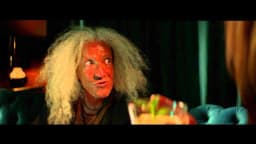
Ceres launched its minimalist 'Glass' TVC in South Africa in November 2012, created by Bester Burke Slingers, using visual symbolism over conventional product

Ceres Glass TVC Distils Purity Into a Single South African Moment
Ceres launched the short TVC titled 'Glass' in South Africa in November 2012, created by Cape Town agency Bester Burke Slingers, using a single glass as a visual metaphor for the brand's long-standing promise of pure, natural fruit juice sourced from the Ceres Valley.
The campaign consists of one media asset — a film television commercial — and operates entirely within the non-alcoholic drinks category, specifically the fruit squash and juice segment. Rather than deploying conventional product demonstration techniques common to food and drink advertising, 'Glass' anchors its communication in symbolic clarity, allowing the object itself to carry the weight of the brand's purity narrative. In South Africa, where Ceres had been positioned around 100% fruit juice and no preservatives since its founding in 1982, according to Clapboard's editorial archive, this approach represents creative continuity rather than departure. The execution extends a visual and thematic platform the brand had been building across successive campaigns, including a 2011 television commercial that followed an apple through the seasons of the Ceres Valley, as documented by Mediaupdate Co Za. The 'Glass' TVC strips that narrative to its essential symbol: the vessel that holds the juice becomes the proof of what the juice is. In the South African non-alcoholic drinks market, where premium juice brands compete heavily on ingredient transparency and provenance, this kind of single-minded creative discipline carries strategic logic that goes beyond aesthetics. The Clapboard Score for 'Glass' stands at 58 out of 100, reflecting a campaign whose creative intent is legible and coherent but whose single-asset structure limits the breadth of its measurable impact across the South African market.
Ceres ranked fourth among South African fruit-juice brands by value in 2012, according to data sourced via marketresearch.com. The competitive landscape placed Liqui-Fruit, Pick n Pay's own label, and Clover ahead of it, with Clover Life rounding out the top five. Liqui-Fruit maintained its position by leaning into messaging around 100% fruit juice and natural ingredients — a platform that overlapped directly with Ceres' own core equity, creating a category in which differentiation through ingredient claims alone carried diminishing returns.
In South Africa, fruit juice production was under pressure during the 2012 marketing year. The country produced approximately 165,000 metric tonnes of apple juice in that period, a decline of around five percent from the preceding year, according to the United States Department of Agriculture's Foreign Agricultural Service at Apps Fas Usda Gov. That contraction in supply created both cost pressures and a creative opportunity: brands able to elevate the perceived value of their juice through emotional and symbolic storytelling could insulate themselves from commodity-level competition more effectively than those relying on price or volume messaging.
Globally, the juice category was a growing market in 2012, with forecasts pointing toward significant expansion in value over the following five years, as noted by marketresearch.com. In South Africa specifically, the Ceres Valley — the geographic heartland of the brand's identity — gave Ceres a provenance asset that competitors including Liqui-Fruit could not replicate. The strategic logic of the 'Glass' TVC, therefore, was to make that provenance felt rather than explained, using visual minimalism as a premium signal in a market crowded with declarative ingredient claims.
Bester Burke Slingers, operating out of Cape Town, assembled a production team for 'Glass' whose individual roles reflect a deliberate division of creative and executional labour. Creative director Stephen Burke oversaw the campaign, with art director Bernard van der Walt shaping the visual language and copywriter Oskar Petty handling the verbal dimension — a lean creative nucleus appropriate to a project built on restraint rather than complexity.
Production was handled by Bioscope, with direction credited to Juniper, an approach that allowed the film's visual grammar to remain tightly controlled. The choice to identify the director by a single name signals a sensibility aligned with the campaign's own aesthetic: spare, singular, precise. Post-production was completed by Black Ginger, whose work in finishing and grading would have been central to achieving the quality of light and transparency that a campaign centred on a glass demands. Producer Ali Coetzee managed the logistics connecting these creative and technical elements.
The archive description of 'Glass', as documented by Clapboard, characterises the execution as minimalist and visually driven, with the glass functioning as the campaign's central object. In the context of South African food and drink advertising in 2012, this represented a deliberate rejection of the busy, demonstrative TVC format common to the non-alcoholic drinks category. The short TVC format itself enforces economy of expression, and the 'Glass' execution uses that constraint productively — every frame is required to do the work that a longer campaign might distribute across multiple scenes or assets. The result is a piece of craft whose ambition is compression: making the case for Ceres' purity platform without stating it directly.
No verified performance data for the 'Glass' campaign is publicly available. No independently reported figures for television ratings, brand lift, sales response, or media spend have been attributed to this campaign in the South African market or elsewhere. Analysis of its structural effectiveness therefore draws on creative and strategic criteria rather than measured outcomes.
As a short TVC built around a single media asset, 'Glass' operates within a format that rewards precision. In South Africa's non-alcoholic drinks category in 2012, where Ceres held fourth position by brand value according to marketresearch.com, a television commercial that reinforces provenance and purity without making explicit claims serves a clear defensive function: it sustains brand equity in a segment where competitors were pressing similar ingredient narratives. The minimalist execution also carries an implicit premium positioning signal, distinguishing Ceres from brands whose communication relied on price-led or volume-focused messaging.
The campaign's structural limitation lies in its singular asset. A single TVC, however well-crafted, cannot build the layered frequency and contextual variation that a multi-asset campaign delivers across different touchpoints. In the South African market of 2012, where broadcast television remained a primary channel for non-alcoholic drinks advertising, the 'Glass' film would have depended heavily on scheduling weight and placement to achieve reach. The Clapboard Score of 58 out of 100 reflects this balance: a campaign with coherent creative logic and genuine craft, whose overall impact is constrained by its narrow executional footprint.
Ceres launched 'Glass' as a short TVC in South Africa in November 2012. Created by Bester Burke Slingers, the film used a glass as a visual metaphor for the brand's purity and natural juice platform, producing one media asset for the non-alcoholic drinks category without conventional product demonstration.
Bester Burke Slingers, a Cape Town agency, created the Ceres Glass TVC in 2012. Creative director Stephen Burke led the campaign, supported by art director Bernard van der Walt and copywriter Oskar Petty, with production by Bioscope and post-production completed by Black Ginger.
Ceres ranked fourth among South African fruit-juice brands by value in 2012, according to marketresearch.com. Liqui-Fruit held the leading position, with Pick n Pay and Clover placed ahead of Ceres in a competitive non-alcoholic drinks market defined by overlapping purity and natural ingredient claims.
The Glass TVC used visual minimalism, placing a single glass at the centre of its narrative rather than demonstrating the product conventionally. As documented by Clapboard, this approach translated Ceres' established purity platform into symbolic terms, allowing clarity and transparency to communicate natural fruit squash quality without explicit ingredient claims.
The Ceres Glass campaign holds a Clapboard Score of 58 out of 100. This reflects coherent creative logic and a disciplined minimalist craft approach, offset by the campaign's limited executional footprint as a single short TVC asset in the South African non-alcoholic drinks market during 2012.
.webp)
Creative Collaboration Platform: The Backbone of Modern Creative WorkWhat is a creative collaboration platform?Clapboard defines a creative collaboration platform as the operational core for today’s distributed creative teams. This is not a collection of digital collaboration tools stitched together; Clapboard’s system


Understanding the Creative Production MarketplaceWhat is a Creative Production Marketplace?Clapboard defines a creative production marketplace as a structured ecosystem where brands, agencies, and production talent converge to execute video, advertising, and branded content at scale. Unlike the legacy agency or freelanREAD FULL ARTICLE

The Urgent Need for a Creative Production Operating SystemWhy Traditional Creative Production Models Break DownClapboard sees the creative production landscape shifting under pressure. Content velocity is no longer a buzzword—it’s a mandate. Modern advertising demands relentless output across dozens of channels, each wREAD FULL ARTICLE