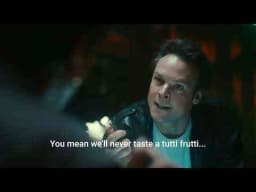
Casillero del Diablo's 2021 'The Wine Legend' campaign, created by Grey, stars Pedro Pascal as a thief who refuses to steal wine guarded by the Devil.

How Casillero del Diablo Turned Chilean Folklore Into a Global Wine Legend
Casillero del Diablo's 'The Wine Legend' is a 2021 narrative film campaign created by Grey that stars Chilean-born actor Pedro Pascal as a master thief who encounters wine protected by the Devil, reinforcing the brand's mythology of mystery, quality, and Chilean heritage across Chile and key international markets.
The campaign launched on September 3, 2021, originating in Chile before extending to the United Kingdom, the United States, Brazil, China, and several additional markets, according to casillerodeldiablo.com. Its primary medium is film, and the English-language version published on YouTube accumulated more than 56,900 views, 971 likes, and 38 comments, as recorded in archive data. A dedicated campaign hub, thewinelegend.com, served as the digital centrepiece, directing audiences from the video asset to an immersive brand experience.
The strategic objective of The Wine Legend is to elevate Casillero del Diablo beyond functional wine attributes and position it as a product inseparable from legend, tradition, and Chilean cultural identity. By casting Pedro Pascal — a globally recognised actor with Chilean roots — the campaign bridges local authenticity with international reach. The narrative premise is direct: even the world's greatest thief will not steal Casillero del Diablo, because the Devil himself guards it. This conceit draws directly from the founding story of the brand's parent company, Viña Concha y Toro, whose patriarch Don Melchor de Concha y Toro reportedly spread a rumour that his cellar was inhabited by the Devil to deter theft, as documented by vct-usa.com. The campaign carries a Clapboard Score of 69 out of 100, reflecting competent execution of an established brand mythology with strong casting but incremental creative ambition.
Casillero del Diablo occupies a distinct strategic position among Chilean wine brands competing on the global stage. The brand is owned by Viña Concha y Toro, one of Latin America's largest wine producers, and its legend-based brand architecture predates the 2021 campaign by two decades. According to vct-usa.com and Strategyonline Ca, a global Wine Legend campaign first launched in 2001 across more than 30 countries, establishing the Devil mythology as the brand's defining platform. The 2021 iteration by Grey deepens that platform rather than replacing it, using contemporary celebrity casting to refresh an enduring narrative for post-pandemic audiences.
The strategic rationale is rooted in consumer behaviour within the premium and super-premium wine segment. Drinkers in this category respond to provenance, story, and emotional resonance more than product specification alone. By anchoring the campaign in Chile — the geographic origin of both the wine and its star — Grey creates a credibility loop that competitors relying on European heritage cues cannot easily replicate. Brands such as CONCHA Y TORO stablemate Don Melchor and rival Chilean producer Santa Rita compete for similar premium positioning, but The Wine Legend's use of a globally famous Chilean actor as a narrative device rather than a conventional endorser distinguishes Casillero del Diablo's approach.
The decision to produce both Spanish-language and English-language versions reflects a deliberate market architecture. In Chile, the campaign speaks to national pride and cultural recognition; in the United States and the United Kingdom, it leverages Pedro Pascal's rising international profile to attract consumers unfamiliar with Chilean folklore. This bilingual deployment allowed a single creative idea to function simultaneously as a domestic brand reinforcement and an international acquisition tool, a structural efficiency that shapes the campaign's broad geographic footprint.
Director Rodrigo Saavedra helmed The Wine Legend, bringing a cinematic register to the film that distinguishes it from conventional category advertising, according to Edgy Cl. The production treats the wine cellar as a gothic, atmospheric space — darkness punctuated by candlelight, stone walls, and the suggestion of supernatural presence. This visual language directly serves the brand's founding narrative, transforming what could be a product demonstration into an origin myth retold for a contemporary global audience.
Pedro Pascal's performance is calibrated to operate on two registers simultaneously. As a character he is the archetypal confident thief, assured and capable; as a brand symbol he is the proxy viewer who encounters the wine's legendary status and is stopped by it. The casting functions as creative economy: Pascal's Chilean identity authenticates the story's geography, while his international recognition as of 2021 — built on major film and television roles — guarantees the campaign attention in markets where Casillero del Diablo's own brand equity is still developing.
Grey's creative approach treats the Casillero del Diablo legend not as backstory but as plot. The thief's refusal to steal the wine is the narrative climax, and that moment of restraint communicates premium quality more efficiently than any product descriptor could. The film format, distributed primarily via YouTube and the dedicated campaign domain thewinelegend.com, supports long-form engagement at a time when streaming consumption habits were accelerating globally. The English-language version, in particular, is constructed to function as a standalone piece of content rather than a translated advertisement, preserving the tone and pacing of the original Chilean creative work. Production credits beyond the director are not fully documented in publicly available sources for this campaign.
The 2021 English-language YouTube asset for The Wine Legend generated more than 56,900 views, 971 likes, and 38 comments, as recorded in archive data. These figures represent the campaign's documented digital footprint at the time of archiving and reflect organic engagement with a long-form brand film in a competitive content environment.
The longer-term impact of the Wine Legend platform is more significant. According to casillerodeldiablo.com, a 2023 iteration of the campaign featuring Pedro Pascal again reported more than 10 million video views and record growth in the brand's fan base. While those figures belong to a subsequent execution, they confirm that the 2021 campaign successfully re-established the creative and casting framework — Pedro Pascal as the thief, the Devil as guardian — that the 2023 work then scaled. In this sense, the 2021 film functions as a strategic relaunch of a long-running platform rather than a standalone execution, and its contribution is best measured by the momentum it created rather than its immediate view count alone.
Structurally, The Wine Legend demonstrates effective deployment of narrative advertising principles. A single, legible premise — even a master thief will not steal this wine — communicates brand quality, heritage, and mystique without exposition. The bilingual release strategy extended the campaign's effective reach across Chile, the United States, the United Kingdom, Brazil, and China in a single production cycle. No independent third-party effectiveness data — such as brand lift studies or sales attribution — for the 2021 campaign is publicly available beyond the view and engagement metrics cited above.
The Wine Legend is a 2021 narrative film campaign created by Grey for Casillero del Diablo. It stars Chilean actor Pedro Pascal as a thief who refuses to steal wine protected by the Devil, drawing on the founding legend of parent company Viña Concha y Toro. The campaign launched in Chile and extended to global markets.
Rodrigo Saavedra directed The Wine Legend for Casillero del Diablo. The film was produced for agency Grey and employs a cinematic, gothic visual style set within a wine cellar. According to edgy.cl, Saavedra's direction gives the campaign the atmospheric register of a short film rather than conventional category advertising.
Casillero del Diablo cast Pedro Pascal because of his Chilean roots and his growing international profile in 2021. His identity authenticates the campaign's Chilean cultural narrative while his global recognition extends the brand's reach in the United States, the United Kingdom, and other key markets beyond Chile, according to casillerodeldiablo.com.
The English-language YouTube version of The Wine Legend recorded more than 56,900 views, 971 likes, and 38 comments, as documented in archive data. A subsequent 2023 iteration of the same campaign platform, also featuring Pedro Pascal, reported more than 10 million video views, according to casillerodeldiablo.com.
Casillero del Diablo means Devil's Cellar in Spanish. The name originates from a legend surrounding Don Melchor de Concha y Toro, who reportedly spread a rumour that his cellar was haunted by the Devil to prevent theft, as documented by vct-usa.com. The 2021 Wine Legend campaign by Grey retells this story through Pedro Pascal's thief character.
The Wine Legend launched in Chile as its primary market in September 2021 and extended to the United Kingdom, the United States, Brazil, China, and additional territories, according to casillerodeldiablo.com. Grey produced both Spanish-language and English-language versions to serve domestic Chilean audiences and international markets simultaneously within a single campaign cycle.
.webp)
Creative Collaboration Platform: The Backbone of Modern Creative WorkWhat is a creative collaboration platform?Clapboard defines a creative collaboration platform as the operational core for today’s distributed creative teams. This is not a collection of digital collaboration tools stitched together; Clapboard’s system


Understanding the Creative Production MarketplaceWhat is a Creative Production Marketplace?Clapboard defines a creative production marketplace as a structured ecosystem where brands, agencies, and production talent converge to execute video, advertising, and branded content at scale. Unlike the legacy agency or freelanREAD FULL ARTICLE

The Urgent Need for a Creative Production Operating SystemWhy Traditional Creative Production Models Break DownClapboard sees the creative production landscape shifting under pressure. Content velocity is no longer a buzzword—it’s a mandate. Modern advertising demands relentless output across dozens of channels, each wREAD FULL ARTICLE