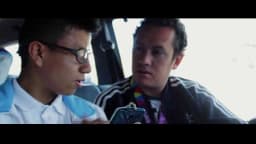
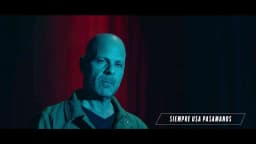
The campaign "They also need your attention," created by Arena for Cadena Mayor and launched in Costa Rica in 2017, functions as a purposeful public service initiative designed to deepen societal awareness and empathy. Positioned within the public interest sector, the campaign leverages the documentary and social experiment genre to highlight an often-overlooked issue or group requiring greater public recognition and care. The brand proposition centers on the promise of fostering heightened attentiveness and responsibility toward vulnerable or marginalized populations, urging viewers to extend their consideration beyond themselves or typical focal points.
From a market strategy perspective, the campaign taps into a social insight that individuals are frequently preoccupied with their own immediate concerns, inadvertently neglecting those who quietly endure hardship or isolation. By employing a documentary-style narrative, the campaign grounds its message in realistic and relatable scenarios, enhancing authenticity and emotional resonance. The creative angle—emphasizing the need to "also" pay attention—subtly challenges the audience’s existing awareness and invites a behavioral shift towards increased social empathy. The use of film as the primary medium, coupled with a concise yet impactful message in Spanish, aligns with the cultural context of Costa Rica, ensuring clearer communication with the target audience. While modest in viewership and engagement, the campaign’s strength lies in its poignant social commentary and strategic use of storytelling to prompt reflection and community responsiveness.
FORMAT#2 SHOW THE PROBLEM — Highlights a relatable problem, then shows the product as the solution.
This campaign, "They also need your attention," centers on a call for increased awareness regarding a public interest issue, likely related to neglected or overlooked members of society (such as the elderly, based on the brand Cadena Mayor). The genre is documentary/social experiment, suggesting real situations are highlighted to elicit empathy for a problem—lack of attention to a vulnerable group. Classic narrative and metadata cues point to the campaign first spotlighting the problem (their invisibility or neglect), then implicitly or explicitly advocating a solution, aligning most with a Show The Problem format where awareness itself is the desired behavioral change. No evidence of symbolic representation, testimonial, direct narrative arc, benefit-led storytelling, or parody/celebrity use can be inferred. Thus, its primary device is to foreground an urgent social problem to motivate a response. For reference: https://www.clapboard.com/blog/branding-and-advertising/brand-strategy/12-advertising-creative-formats
1. Teletica Foundation – Positioned as a socially responsible media entity, Teletica Foundation leverages its extensive broadcast network to promote community development and social welfare campaigns, emphasizing local engagement and education through storytelling that connects deeply with Costa Rican audiences.
2. Fundación Paniamor – Focused on protecting children's rights and preventing family violence, Fundación Paniamor differentiates itself by combining research-driven advocacy with public education initiatives, using data-backed campaigns to influence policy and societal attitudes in Costa Rica.
3. Asociación Demás – Known for its grassroots approach, Asociación Demás centers its positioning on promoting human rights and social inclusion through community-led projects and awareness campaigns that engage marginalized populations directly, emphasizing empowerment and active citizenship.
4. Un Techo para mi País (Costa Rica) – This NGO positions itself as a key player in combating poverty and homelessness by mobilizing youth volunteers and community members to build transitional housing, highlighting collaborative action and measurable social impact within vulnerable urban areas.
5. Costa Rica Foundation for Children and Adolescents with Disabilities (FUNDIAPE) – FUNDIAPE sets itself apart by advocating for disability rights and accessibility, focusing on raising public awareness and providing resources through inclusive campaigns that foster societal integration and improve quality of life.
Q: What is They also need your attention about?
A: They also need your attention is a professional campaign developed by Arena for Cadena Mayor and released in Costa Rica in 2017. Operating within the Public Interest sector, the campaign uses a film medium to spotlight the issue of societal neglect toward vulnerable or overlooked groups, likely the elderly, in Costa Rican society. Through authentic storytelling and a documentary/social experiment approach, the campaign aims to foster empathy and communal responsibility, urging viewers to broaden their awareness and extend care beyond their immediate circles. Delivered in Spanish, it leverages emotional resonance to encourage a more inclusive and attentive community mindset.
Q: What creative device does They also need your attention use?
A: They also need your attention employs the Show The Problem creative format, as classified by Clapboard’s 12-format taxonomy (FORMAT#2). This approach highlights a relatable and urgent social issue—in this case, the invisibility or neglect of a vulnerable population—before advocating for increased awareness as the solution. The campaign’s documentary and social experiment genre grounds its message in real-life scenarios, allowing viewers to witness the problem firsthand and prompting a call to action rooted in empathy and social responsibility. This format is designed to motivate behavioral change by making the issue impossible to ignore.
Q: What is the campaign proposition for They also need your attention?
A: The campaign proposition for They also need your attention centers on Cadena Mayor’s commitment to fostering greater societal attentiveness and empathy toward marginalized or vulnerable groups. Strategically, the campaign addresses an audience often preoccupied with personal concerns, challenging them to recognize and respond to the needs of those who are frequently overlooked. By leveraging a documentary-style narrative and authentic storytelling, the campaign positions Cadena Mayor as a compassionate advocate for public well-being, reinforcing its role within the public interest sector and urging a shift toward broader communal responsibility in Costa Rica.
Q: How does They also need your attention rank in Clapboard's archive?
A: They also need your attention holds a Clapboard Campaign Score of 63/100 in Clapboard’s global ad archive. This score reflects the campaign’s creative ambition, execution quality, and cultural relevance as assessed by Clapboard’s curatorial standards.
Q: Who are the competitors in Cadena Mayor's category?
A: In the public service and social welfare category in Costa Rica, Cadena Mayor faces competition from several key organizations. Teletica Foundation leverages its broadcast reach to drive community development and social education, while Fundación Paniamor focuses on children’s rights and policy advocacy through research-driven campaigns. Asociación Demás distinguishes itself with grassroots projects promoting human rights and social inclusion, and Un Techo para mi País mobilizes youth to address poverty through collaborative housing initiatives. Additionally, FUNDIAPE advocates for disability rights and accessibility, emphasizing inclusive campaigns that foster integration and improve quality of life.


 ARCHIVE
.webp)