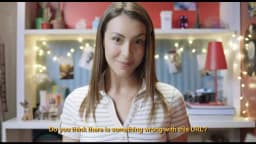
DPSP Group's Campanha Paper Toys campaign transformed cardboard donation boxes into cut-and-assemble paper toys, multiplying gifts for Brazilian children on

How DPSP Group Turned Donation Boxes Into Paper Toys for Brazilian Children
DPSP Group's Campanha Paper Toys is a direct public-interest campaign created by agency Talent and published in Brazil in July 2017, in which cardboard donation boxes were printed with paper-toy templates that children could cut, glue, and assemble, turning the packaging itself into an additional gift while encouraging greater toy donations for Children's Day.
DPSP Group was formed by the merger of Drogaria São Paulo and Drogarias Pacheco, making it one of Brazil's most recognisable pharmacy retail groups. The campaign's central mechanic was elegantly simple: the corrugated cardboard boxes already used to collect donated toys across the chain's store network were redesigned to carry printed paper-toy patterns on their exterior panels. Once the donation drive concluded and the boxes were repurposed, children receiving the collected toys could also interact with the box itself, cutting out and assembling figures without any additional cost or material. The initiative addressed two objectives simultaneously — increasing the volume of toys donated by drawing public attention to the collection effort, and expanding the number of gifts available to children in need by treating the packaging as a toy in its own right.
The campaign operated within the Public Interest category and was distributed through direct media, meaning the cardboard box functioned as both the medium and the message. In Brazil, Children's Day falls on 12 October and represents one of the country's most commercially and culturally significant calendar moments for retail, making the timing of the July 2017 publication a strategic lead-in to that peak period. Drogarias Pacheco had maintained an annual toy-donation program since at least 2014, when it collected 28,000 toys in a single year, bringing its cumulative total to 67,000 units since the program's inception, according to Propmark Com Br. The 2017 Campanha Paper Toys execution built on that established infrastructure, adding a creative layer that transformed a logistical object — the donation box — into a vehicle for play and public engagement across several Brazilian states.
DPSP Group's campaign responded to a genuine behavioural insight: donation boxes are passive objects that most consumers walk past without engaging. By printing paper-toy designs directly onto those boxes, Talent gave the public a tangible reason to notice, interact with, and ultimately contribute to the collection drive. The strategy used the box as a communications surface at zero incremental media cost, transforming an operational necessity into a point-of-difference creative asset.
The broader competitive context in Brazil's pharmacy retail sector was intensely consolidated. According to Ri Paguemenos Com Br, Raia Drogasil and other major chains collectively held approximately 47% of Brazil's pharmaceutical retail sector alongside Brazil Pharma and Grupo DPSP, creating a market in which brand differentiation through values-driven activity carried real strategic weight. In that environment, a seasonal cause campaign tied to Children's Day offered DPSP Group a platform to build emotional connection with Brazilian families beyond transactional pharmacy visits. A substantially similar Paper Toys campaign had already been executed in 2016 for both Drogarias Pacheco and Drogaria São Paulo, using five paper-toy models distributed through the brands' social media channels, according to Marcaspelomundo Com Br. The 2017 campaign refined and extended that thinking into physical in-store donation infrastructure, deepening the reuse concept from digital distribution to tangible cardboard design.
The campaign's cause-marketing rationale was grounded in the established donation program lineage. According to propmark.com.br, the toy-donation initiative targeted institutions, daycare centres, and nongovernmental organisations across multiple Brazilian states, meaning the paper-toy mechanic reached communities where the box itself might represent the only creative material available. In a market where generic-drug retail revenue in Brazil grew 14.7% in 2016 according to Researchxp1 S3-Sa-East-1 Amazonaws, pharmacy chains were already competing aggressively on price and access; Campanha Paper Toys positioned DPSP Group on a different axis — community investment and childhood play — rather than commercial promotion alone.
The creative execution of Campanha Paper Toys rests on the discipline of constraint. Talent designed a system in which the medium — a standard corrugated cardboard donation box — imposed every creative boundary, and the solution emerged entirely from working within those limits. The paper-toy templates had to be legible at the scale of a donation-box panel, printable within standard retail production budgets, and structurally coherent enough that a child could follow the cut-and-assemble instructions without adult supervision. Meeting all three requirements simultaneously constitutes the genuine craft challenge at the heart of this campaign.
According to marcaspelomundo.com.br, the 2016 iteration of the concept deployed five distinct paper-toy models through digital channels, establishing a template vocabulary that the 2017 physical execution could draw upon and extend. Translating those models from screen assets to physical die-cut patterns on a donation box required precise registration of print lines, fold indicators, and cutting guides across an irregular three-dimensional surface — a production consideration that most cause-marketing campaigns avoid entirely by defaulting to poster or digital formats. The choice to use direct mail and physical print as the campaign's sole declared medium meant that every creative decision lived or died in the hands of a consumer holding a cardboard box in a pharmacy aisle.
Production credits for Campanha Paper Toys are not publicly documented in available trade sources. The campaign was created by Talent for DPSP Group and published in Brazil in July 2017, with a single media asset submitted to the Clapboard archive. The absence of a broader asset suite — no television, no digital display, no out-of-home — is itself a creative statement: the box was the campaign. That formal economy, where the insight, the medium, the message, and the product are unified in a single object a child can hold, represents the executional idea at its most concentrated.
No verified performance data for Campanha Paper Toys is publicly available. No published campaign-specific data exists for donation-volume increase, earned-media reach, brand-awareness shift, or sales lift attributable to the 2017 execution. The campaign has not been identified as a recipient of awards at Cannes Lions, the Effie Awards, The One Show, D&AD, Clio Awards, Webby Awards, or WARC Awards.
Structural analysis offers a more substantive measure of the campaign's likely effectiveness. The paper-toy mechanic solved a genuine logistical problem — how to increase donor engagement with a passive collection object — without requiring incremental media spend, external talent, or production infrastructure beyond the donation box itself. That efficiency is a meaningful indicator of strategic soundness in a cause-marketing context, where budgets are typically constrained. The campaign also built on a multi-year program with demonstrated traction: according to propmark.com.br, the Drogarias Pacheco donation initiative had already accumulated 67,000 toys since its inception by 2014, giving the 2017 paper-toy layer an established donor base to activate rather than an audience to build from scratch.
Where the campaign faces structural limitations is in measurability and scale. A single media asset distributed through in-store donation boxes reaches only those consumers already present in DPSP Group locations, limiting organic discovery. The Clapboard Score of 63 out of 100 reflects a concept with clear originality and social purpose, offset by a narrow distribution footprint and the absence of verifiable outcome data. As a model of creative efficiency within a cause-marketing brief, however, the campaign demonstrates that the most resource-constrained medium — a cardboard box — can carry a genuinely resonant idea when the insight is precise enough.
Campanha Paper Toys is a 2017 public-interest campaign created by Talent for DPSP Group in Brazil. Cardboard donation boxes collected for Children's Day were printed with paper-toy templates children could cut and assemble. The initiative aimed to increase toy donations while giving children an additional interactive gift through the packaging itself.
Talent created Campanha Paper Toys for DPSP Group in Brazil. The campaign was published in July 2017 as a direct public-interest execution. Talent is also credited with other award-recognised work in Brazil, though Campanha Paper Toys has not been identified as a recipient of major industry awards according to available records.
Paper-toy patterns were printed directly onto the cardboard donation boxes used to collect toys for needy children across DPSP Group pharmacy locations in Brazil. Children receiving donated toys could also cut, fold, and glue the box panels to assemble the figures, turning logistical packaging into an additional gift at no extra production cost.
A substantially similar Paper Toys campaign was executed in 2016 for both Drogarias Pacheco and Drogaria São Paulo, according to marcaspelomundo.com.br. That earlier iteration used five paper-toy models distributed through the brands' social media channels. The 2017 campaign extended the concept into physical in-store donation box design across Brazil.
Campanha Paper Toys receives a Clapboard Score of 63 out of 100. The score reflects the campaign's original concept and clear social purpose, balanced against a narrow in-store distribution footprint and the absence of publicly verified performance metrics. The campaign is archived on Clapboard as a direct public-interest execution from Brazil in 2017.
Drogarias Pacheco operated an annual toy-donation program by at least 2014, when it collected 28,000 toys in a single year, reaching a cumulative total of 67,000 units since inception, according to propmark.com.br. The program supported institutions, daycare centres, and nongovernmental organisations across multiple Brazilian states before the 2017 Paper Toys campaign added its creative layer.
.webp)
Creative Collaboration Platform: The Backbone of Modern Creative WorkWhat is a creative collaboration platform?Clapboard defines a creative collaboration platform as the operational core for today’s distributed creative teams. This is not a collection of digital collaboration tools stitched together; Clapboard’s system


Understanding the Creative Production MarketplaceWhat is a Creative Production Marketplace?Clapboard defines a creative production marketplace as a structured ecosystem where brands, agencies, and production talent converge to execute video, advertising, and branded content at scale. Unlike the legacy agency or freelanREAD FULL ARTICLE

The Urgent Need for a Creative Production Operating SystemWhy Traditional Creative Production Models Break DownClapboard sees the creative production landscape shifting under pressure. Content velocity is no longer a buzzword—it’s a mandate. Modern advertising demands relentless output across dozens of channels, each wREAD FULL ARTICLE