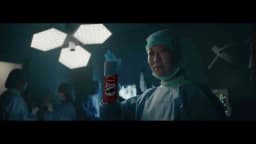
Cadbury Dairy Milk's Strangers On A Bus campaign, created by Ogilvy Singapore in 2022, uses a bus journey to prove the brand's goodness-in-everyone ethos

Cadbury Dairy Milk Strangers On A Bus Shows Goodness Lives in Everyone
Cadbury Dairy Milk's "Strangers On A Bus" is a 2022 television commercial created by Ogilvy Singapore that uses an ordinary public bus journey in Singapore to dramatise the brand's long-running platform of inherent human goodness, inviting audiences across Southeast Asia to look past snap judgements and embrace everyday kindness.
Published in Singapore in June 2022, the campaign carries the Malay proposition "Rasakan Lembutnya Kebaikan" — translating as "Taste the softness of goodness" — a phrase that binds the sensory quality of Cadbury Dairy Milk chocolate to the emotional texture of generous human behaviour. The dual meaning is deliberate: softness describes both the melt of milk chocolate on the palate and the yielding quality of an open heart, giving the campaign a conceptual coherence that extends well beyond a conventional confectionery advertisement.
The campaign launched first in Indonesia and Malaysia before a planned Philippines rollout in October 2022, as reported by Marketing Interactive and brandinginasia.com. Its strategic ambition, however, is rooted in Singapore, where Ogilvy Singapore originated and developed the creative platform. Mondelēz International, Cadbury's parent company, had built the "goodness in everyone" brand platform across the Southeast Asian region as a consistent growth driver, and "Strangers On A Bus" represents the platform's most fully realised narrative expression to date. The film centres on the universal truth of not judging a book by its cover, demonstrating through an unforced bus-ride scenario how a small act of generosity can shift the emotional register of an entire moment, for giver, receiver, and bystander alike. The campaign contains one primary media asset — the film itself — and drew more than one million views on YouTube, according to publicly available platform data cited by dailycommercials.com.
Cadbury Dairy Milk operates in one of the world's most contested confectionery categories. Milk chocolate accounted for a majority share of the global chocolate market in 2022, according to Grand View Research, making differentiation on product attributes alone increasingly difficult for any incumbent brand. In Singapore and across the broader Southeast Asian region, Cadbury competes directly with Nestlé's KitKat and Meiji, both of which invest substantially in product innovation and regional marketing, intensifying the pressure on legacy chocolate brands to build emotional rather than functional distinctiveness.
Ogilvy Singapore's strategic response was to deepen investment in a platform that Cadbury had already proven could generate both cultural resonance and measurable commercial outcomes in the region. The preceding "Flags of Generosity" campaign in Malaysia, documented by ogilvy.com, reached more than 260 million people and generated a 600% increase in donations, establishing that the goodness-in-everyone proposition could move audiences to tangible action rather than merely passive sentiment. That precedent gave the agency and client the confidence to pursue a more intimate, narrative-led execution with "Strangers On A Bus."
Ogilvy Singapore conducted a six-month strategic and creative exploration process spanning Malaysia, Singapore, Indonesia, and the Philippines before arriving at the bus-journey concept, as reported by brandinginasia.com and marketing-interactive.com. That duration signals a commitment to insight rigour unusual in the category, where seasonal confectionery campaigns are frequently developed on compressed timelines. The resulting creative brief was grounded in the observation that public transport — the shared, anonymous space of a bus — is among the last remaining contexts in urban Southeast Asian life where strangers are involuntarily proximate, making it a uniquely potent stage for a story about dissolving social barriers through generosity. Mondelēz's Southeast Asian business delivered high-single-digit growth in biscuits, chocolate, and beverages in the first quarter of 2022, as noted by foodnavigator.com, though that figure is not specifically attributed to this campaign.
Director Johan Stahl helmed the production of "Strangers On A Bus," bringing a measured, observational visual sensibility to a script that required restraint above all else. The film was produced by Hanzo Films, Dubai, with additional production involvement from Cameo Copenhagen, BaconX Copenhagen, and ArtOfficial Copenhagen, as documented by brandinginasia.com and musebyclios.com. Director of photography Werner Maritz shaped the visual language of the piece, while producer Chippy Babu oversaw the logistics of a shoot that required naturalistic performances and a credible recreation of public-transport intimacy, according to dailycommercials.com.
Nicolas Courant, Chief Creative Officer at Ogilvy Singapore, led the creative direction of the campaign, as reported by brandinginasia.com and marketing-interactive.com. His team's core creative decision — to anchor the film in a public bus rather than a domestic or celebratory setting — distinguishes "Strangers On A Bus" from the category convention of family gatherings and festive tables that dominates Southeast Asian confectionery advertising. The bus is a democratic, multicultural space, and the choice carries implicit meaning about the universality of goodness as something available in unremarkable, everyday moments rather than only in curated ones.
The film's narrative structure withholds judgement alongside its protagonist, allowing the audience to share in an initial misreading before experiencing the corrective warmth of an unexpected act of kindness. This technique, sometimes called the dramatic reversal, is well established in short-form storytelling, but its execution here is notably unforced: the emotional payoff arrives without sentimentality or melodrama, a tonal quality that brandinginasia.com described as breaking ad stereotypes in Southeast Asia. The Ogilvy Singapore team's decision to carry the Malay-language tagline across markets rather than localising it into multiple languages further signals a confidence in the emotional universality of the campaign's core proposition.
No verified sales lift, market-share movement, or brand-tracking data for "Strangers On A Bus" is publicly available. No documented finalist placements or wins at Cannes Lions, the Effie Awards, The One Show, D&AD, the Clio Awards, the Webby Awards, or WARC have been recorded for this campaign. The Clapboard Score for "Strangers On A Bus" is 63 out of 100, reflecting a campaign of solid craft and clear strategic coherence that nonetheless lacks the independently verified effectiveness data or awards recognition that would place it among the category's benchmark executions.
The most concrete publicly available performance indicator is viewership. The campaign film accumulated more than one million views on YouTube, according to data cited by dailycommercials.com, a meaningful figure for a regional confectionery television commercial that was not designed as a viral social asset. Engagement metrics were modest by platform standards, with 104 likes recorded against that view count, suggesting the film functioned primarily as a broadcast and upper-funnel brand-building tool rather than a content piece designed to generate social interaction.
Structurally, the campaign's effectiveness case rests on the strength of its predecessor. The "Flags of Generosity" campaign, documented by ogilvy.com, demonstrated that the goodness-in-everyone platform could produce measurable uplift in audience behaviour in the Southeast Asian market. "Strangers On A Bus" deepens that platform with a more intimate and cinematically ambitious execution, building the long-term brand equity that confectionery category research consistently identifies as the primary driver of purchase consideration in markets as competitive as Singapore and broader Southeast Asia.
Strangers On A Bus is a 2022 television commercial for Cadbury Dairy Milk created by Ogilvy Singapore. The film uses a public bus journey to dramatise the brand's goodness-in-everyone platform, carrying the proposition "Rasakan Lembutnya Kebaikan" — Taste the softness of goodness — across Southeast Asian markets including Singapore, Indonesia, and Malaysia.
Johan Stahl directed Strangers On A Bus for Cadbury Dairy Milk. The film was produced by Hanzo Films in Dubai, with additional production from Cameo Copenhagen, BaconX Copenhagen, and ArtOfficial Copenhagen. Werner Maritz served as director of photography, and Nicolas Courant led creative direction as Chief Creative Officer at Ogilvy Singapore.
The campaign launched in Indonesia and Malaysia in June 2022, with a Philippines rollout planned for October 2022, as reported by marketing-interactive.com. It was created by Ogilvy Singapore and is rooted in the Southeast Asian brand platform, with Singapore serving as the campaign's creative and strategic origin point.
Ogilvy Singapore conducted a six-month strategic and creative exploration process before finalising the campaign, as reported by brandinginasia.com. That process spanned four Southeast Asian markets — Malaysia, Singapore, Indonesia, and the Philippines — reflecting a commitment to regional insight depth that is uncommon in the confectionery category's typical production timelines.
Cadbury Strangers On A Bus holds a Clapboard Score of 63 out of 100. The score reflects the campaign's clear strategic grounding in Cadbury's goodness-in-everyone platform and its accomplished narrative craft, tempered by the absence of independently verified effectiveness data or recognised industry award placements at the time of assessment.
Strangers On A Bus extends Cadbury Dairy Milk's regional platform of goodness in everyone, which Mondelēz International has used as a consistent growth driver across Southeast Asia. It follows the Flags of Generosity campaign in Malaysia, which reached more than 260 million people and drove a 600% increase in donations, according to ogilvy.com, establishing the platform's proven capacity for cultural impact.
.webp)
Creative Collaboration Platform: The Backbone of Modern Creative WorkWhat is a creative collaboration platform?Clapboard defines a creative collaboration platform as the operational core for today’s distributed creative teams. This is not a collection of digital collaboration tools stitched together; Clapboard’s system


Understanding the Creative Production MarketplaceWhat is a Creative Production Marketplace?Clapboard defines a creative production marketplace as a structured ecosystem where brands, agencies, and production talent converge to execute video, advertising, and branded content at scale. Unlike the legacy agency or freelanREAD FULL ARTICLE

The Urgent Need for a Creative Production Operating SystemWhy Traditional Creative Production Models Break DownClapboard sees the creative production landscape shifting under pressure. Content velocity is no longer a buzzword—it’s a mandate. Modern advertising demands relentless output across dozens of channels, each wREAD FULL ARTICLE