Cadbury's Joyville Special Delivery, created by Saatchi & Saatchi in Australia in February 2013, deployed a 1913 steam locomotive on Sydney's rail network to

Cadbury Joyville Special Delivery Brought Chocolate Magic to Australian Commuters
Cadbury's Joyville Special Delivery is a 2013 Australian experiential and television campaign created by Saatchi & Saatchi, in which a 1913 steam locomotive dressed as a train arriving from the fictional world of Joyville travelled Sydney's metropolitan rail network, distributing free Cadbury Dairy Milk chocolate to commuters before the activation was filmed as a live commercial and broadcast nationally.
Cadbury adopted Joy as its formal brand positioning in 2012, according to research documented at contagious.com. That strategic shift gave rise to Joyville, a fictional, magical place conceptually associated with Cadbury Dairy Milk production, built to position chocolate consumption around happiness, imagination, and generosity. The wider Joyville platform launched globally in 2012 and Joyville Special Delivery represented its Australian expression in February 2013, extending the brand world from broadcast into physical, participatory territory.
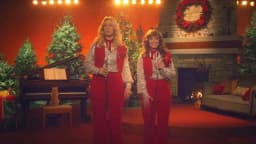
In Australia, the campaign mechanics were precise. A genuine 1913 steam locomotive and three carriages were deployed on the Sydney metropolitan rail network, presenting to passengers as a surprise arrival from Joyville, according to reporting at contagious.com. Joyville-branded staff welcomed commuters, a three-piece band performed on board, a purple carpet was rolled out, and free Cadbury Dairy Milk chocolate was distributed to the public. The activation was coordinated with RailCorp and the New South Wales Transport Minister's office, per contagious.com, lending the event an unusual degree of civic legitimacy for a confectionery brand stunt. The footage captured during the live activation was then edited and aired as a television commercial within 72 hours, during the finale of The Block, according to contagious.com. That sequencing collapsed the distance between event and broadcast, making the advertisement itself a document of something that had genuinely happened to real people across the Australian market.
Cadbury entered 2013 competing inside one of the most consolidated categories in the global consumer goods landscape. Cadbury held approximately 14.8% global market share around that period, narrowly ahead of Mars at 14.6%, according to data cited at slideshare.net, with Cadbury, Mars, Nestlé, and Hershey together controlling more than 67% of global confectionery share per the same source. In Australia, that competitive density meant brand differentiation could not rest on product alone.
The strategic rationale for Joyville Special Delivery was rooted in a broader transition Cadbury was executing across markets. The campaign represented a move away from product-specific advertising toward an emotionally led brand world, according to clapboard.com editorial analysis. Earlier Australian work, such as the 2010 Cadbury Picnic bar campaign titled No Picnic, created by Y&R and published in February 2010 per clapboard.com records, had been tied to individual product lines. Joyville Special Delivery instead promoted the entire Cadbury Dairy Milk brand and, by extension, the Cadbury masterbrand itself. The distinction mattered because it asked consumers to invest emotionally in Cadbury as an idea, not merely evaluate it as a product.
Mars's own emotional advertising, including the You're Not You When You're Hungry campaign for Snickers, had demonstrated across multiple markets that confectionery brands willing to sustain a consistent emotional register over time could build durable consumer preference. Cadbury's answer was Joy, and Joyville Special Delivery in Australia was designed to make that abstraction tangible and shareable. The live activation generated genuine public surprise, a quality that no competitor in the Australian market had directly replicated through rail infrastructure at that scale.
Joyville Special Delivery operates as a dual-format creative work: it is simultaneously a public activation and a television commercial, with the integrity of one dependent on the authenticity of the other. The creative decision to film the live event and broadcast it within 72 hours on Australian television, specifically during the finale of The Block as reported by contagious.com, was not incidental production planning but the central structural idea of the campaign.
The choice of a 1913 steam locomotive was deliberate in its symbolic weight. Steam engines carry connotations of a pre-industrial imagination, of wonder and mechanical spectacle that aligns naturally with Joyville's fictional, timeless aesthetic. Three carriages accompanied the locomotive across the Sydney metropolitan rail network, each element of the activation reinforcing the idea that the train had genuinely arrived from somewhere else, per contagious.com. Joyville-uniformed staff, a live three-piece band, a purple carpet, and free Cadbury Dairy Milk chocolate distribution created a layered sensory environment that gave commuters in Australia something to remember and, critically, something worth watching on film.
The campaign was created by Saatchi & Saatchi and directed under the creative leadership of Damon Stapleton, who was serving as Chief Creative Officer at Saatchi & Saatchi Australia during this period, according to linkedin.com. Stapleton's approach to the work favoured emotional directness and spectacle grounded in human reaction, qualities visible in the way the filmed TVC privileges the faces of surprised commuters over product close-ups. The result is a commercial that reads as documentary evidence of joy rather than a staged performance of it. Production credits beyond the directorial level for Joyville Special Delivery are not fully and publicly documented in available sources.
Joyville Special Delivery earned a Clapboard Score of 61 out of 100. That figure reflects the campaign's creative ambition and structural originality against the full universe of campaigns evaluated on the platform, positioning it as a competent and well-constructed piece of work that nonetheless stops short of exceptional by the platform's scoring criteria.
No independently verified audience reach or sales impact figures for the Joyville Special Delivery campaign in Australia are publicly available at the level of granularity required to assess commercial return precisely. What the documented record does establish, per contagious.com and wewonder.com.au, is that the activation generated sufficient public and media attention to justify national broadcast during a high-rating television event, the finale of The Block, within 72 hours of filming. That timeline is itself a performance indicator: content filmed from a live brand event reaching primetime Australian television inside three days implies the production captured material the broadcaster and brand both judged immediately compelling.
The campaign's structural effectiveness rests on two compounding mechanisms. First, the live activation in Sydney delivered genuine surprise to real commuters, generating earned attention and word-of-mouth that no media buy can replicate. Second, the TVC broadcast extended that authentic moment to a national Australian audience, converting a local event into a mass brand impression. The Joyville platform itself, which launched globally in 2012 according to contagious.com, was extended through participatory and experiential activity across markets, suggesting the model Joyville Special Delivery exemplified in Australia was validated by Cadbury and Saatchi & Saatchi as strategically sound for the broader brand.
Joyville Special Delivery was a 2013 Australian campaign by Cadbury and Saatchi & Saatchi. A 1913 steam locomotive travelled Sydney's metropolitan rail network distributing free Cadbury Dairy Milk chocolate to commuters. The live activation was then filmed and broadcast as a television commercial during the finale of The Block within 72 hours, according to contagious.com.
Joyville Special Delivery launched in Australia in February 2013, according to clapboard.com records. The activation took place on the Sydney metropolitan rail network and was produced by Saatchi & Saatchi. It formed part of the broader Joyville brand platform Cadbury had launched globally in 2012, as documented by contagious.com.
Saatchi & Saatchi created Joyville Special Delivery for Cadbury in Australia. Damon Stapleton served as Chief Creative Officer at Saatchi & Saatchi Australia during the campaign's production, according to linkedin.com. The activation required coordination with RailCorp and the New South Wales Transport Minister's office, per contagious.com, to operate the steam locomotive on the Sydney rail network.
Joyville is a fictional world Cadbury created to position Dairy Milk around happiness and imagination. Cadbury adopted Joy as its formal brand positioning in 2012, according to contagious.com. Joyville Special Delivery was the Australian experiential extension of that global platform, translating the brand world from broadcast into a physical public event on Sydney's rail network in February 2013.
Joyville Special Delivery received a Clapboard Score of 61 out of 100 on clapboard.com. The score reflects the campaign's creative originality and structural ambition, placing it as a competent and well-executed piece of confectionery advertising that demonstrated genuine innovation in combining live experiential activation with rapid-turnaround Australian television broadcast.
Saatchi & Saatchi filmed the live steam train activation on Sydney's metropolitan rail network and edited the footage into a finished television commercial within 72 hours, according to contagious.com. The TVC aired during the finale of The Block in Australia, allowing the genuine reactions of real commuters receiving free Cadbury Dairy Milk chocolate to serve as the advertisement's creative content.
.webp)
Creative Collaboration Platform: The Backbone of Modern Creative WorkWhat is a creative collaboration platform?Clapboard defines a creative collaboration platform as the operational core for today’s distributed creative teams. This is not a collection of digital collaboration tools stitched together; Clapboard’s system


Understanding the Creative Production MarketplaceWhat is a Creative Production Marketplace?Clapboard defines a creative production marketplace as a structured ecosystem where brands, agencies, and production talent converge to execute video, advertising, and branded content at scale. Unlike the legacy agency or freelanREAD FULL ARTICLE

The Urgent Need for a Creative Production Operating SystemWhy Traditional Creative Production Models Break DownClapboard sees the creative production landscape shifting under pressure. Content velocity is no longer a buzzword—it’s a mandate. Modern advertising demands relentless output across dozens of channels, each wREAD FULL ARTICLE