 ARCHIVE
How Británico Turned Pirated TV Into an English Lesson
Británico's 2013 digital campaign, "The barely legal media space," used poorly translated subtitles on illegally downloaded US television content as an advertisement for the Británico English Institute in Peru, turning a culturally ubiquitous problem into a live demonstration of why English needs to be understood.
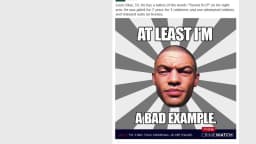
The campaign launched in June 2013, created by Y&R Peru for the Británico English Institute. The central mechanic was elegantly simple: rather than purchasing conventional digital media inventory, the campaign embedded its message within the very subtitles that Peruvian audiences were already reading on pirated US television. Those subtitles, notorious for their garbled mistranslations and broken idioms, became the advertisement itself. Each mangled phrase served as evidence of the gap between functional literacy and genuine English comprehension — a gap that Británico exists to close.
In Peru, where the consumption of imported US television content is widespread, the poorly translated subtitle had become a familiar and often comedic feature of everyday entertainment. Británico and Y&R recognised that this shared cultural experience carried a genuine educational argument embedded within it. The campaign's positioning, as documented across the Británico work of this period, stated a single clear proposition: "English needs to be understood," as reported by adruby.com. That line of thinking connected a mass behaviour — watching pirated content — directly to a commercial and educational need. The Clapboard Score for this campaign is 63 out of 100.
The campaign comprised a single digital media asset and sat within a broader creative programme Y&R Peru was developing for Británico throughout 2013, a year in which the agency produced multiple executions across film, print, and digital channels for the same client. "The barely legal media space" represented the most conceptually audacious entry in that body of work, finding its media space not in conventional inventory but in the margins of a legally grey cultural habit.
ARCHIVEBritánico competes in a crowded Peruvian English-language education market that includes multinational institutions such as the British Council and locally established chains, all targeting a population increasingly aware that English proficiency is a professional prerequisite. The strategic insight Y&R Peru identified was not about creating demand for English learning — that demand already existed — but about dramatising the cost of inadequate English in a format that required no media buy to feel credible.
The global English-language-learning market was already a substantial and growing category by 2013, and according to researchandmarkets.com and The Insight Partners, it has since grown to an estimated global value of approximately 54.7 billion US dollars in 2023, with projections reaching approximately 98.3 billion US dollars by 2031 at a compound annual growth rate of around 10.27 percent. While these figures post-date the campaign, they illustrate the structural trajectory of a sector that was already expanding rapidly in emerging markets including Peru during the early 2010s. No independently verifiable market-size figure specific to Peru in 2013 is publicly available.
What made the strategy distinctive was its media logic. Conventional competitors in the Peruvian English-education space ran print and broadcast advertising. Y&R Peru chose instead to occupy a space that was technically illegal — the subtitle track of pirated content — and in doing so made the medium inseparable from the message. The poor translation was not a flaw to be observed; it was the argument to be felt. By intercepting an audience already engaged with US cultural content, the campaign reached aspirational viewers at precisely the moment their English deficiency was most visible to them. The strategic elegance lay in converting passive embarrassment into active motivation, without a single conventional media placement.
Flavio Pantigoso served as executive creative director on "The barely legal media space," leading a team that brought together a precise set of complementary craft disciplines to execute what was, at its core, a media-channel idea rather than a conventional production. Christian Sánchez served as head of art, Daniel Lobatón as copywriter, and Gonzalo Paredes as art director, with Michel Motte producing for the agency, Carla Wilson directing the account, and Anne Hachata also credited on the project, as documented by adruby.com and shots.net. Sound for the campaign was handled by Vinylo Sound.
The creative execution demanded a particular discipline: restraint. The campaign's single media asset had to function as both advertisement and evidence simultaneously. The subtitle text itself carried the entire argumentative weight, which meant every word chosen for the execution needed to feel authentically like a bad translation while still communicating Británico's brand proposition. The line between convincing mimicry and transparent parody was narrow, and the team navigated it deliberately. Shots described the campaign as a "witty spot" in retrospective coverage, a characterisation that captures the tonal precision the work required.
The digital medium was not incidental to the creative. The campaign existed specifically because digital distribution had made pirated US television content a mainstream Peruvian leisure habit by 2013. The subtitle format exploited the visual grammar audiences had already absorbed — the white text at the bottom of the screen, the slight delay, the occasional grammatical collapse — and placed a crafted message inside that grammar. The result was a piece of work that could only have existed in its precise cultural and technological moment, dependent on the intersection of digital piracy, US cultural aspiration, and inadequate translation tools that defined Peruvian media consumption in that period.
No verified sales lift or audience reach data for "The barely legal media space" is publicly available. No independently confirmed conversion metrics, media impressions, or brand-tracking results have been documented for this campaign in accessible sources. What exists instead is a clear and meaningful awards record that serves as a proxy for industry consensus on the work's structural quality.
Británico's campaign won a Bronze Lion at the Cannes Lions International Festival of Creativity in 2013, the most prominent peer-recognition event in global advertising, as documented in Clapboard's archive. The campaign subsequently received further recognition at Círculo de Oro México 2015, earning a Bronze award in the Corporate Responsibility category and a Silver award in the Promotions and Activations category, also per Clapboard's archive. The fact that the work was recognised across two distinct award cycles and in separate categories — creative excellence at Cannes and corporate responsibility at Círculo de Oro — indicates that judges read the campaign as both strategically coherent and socially meaningful.
Structurally, the campaign's effectiveness argument rests on its media efficiency. By embedding its message inside already-consumed content rather than purchasing exposure, it reached an audience in a high-attention state at zero conventional media cost. The single asset format — noted in Clapboard's archive — suggests the campaign was conceived as a focused, high-concept idea rather than a broad reach vehicle, which is consistent with the Cannes jury's recognition of its creative audacity. The Británico work from Y&R Peru in this period demonstrates a coherent creative platform; this execution sits at its most formally inventive point.
Británico's 2013 campaign used poorly translated subtitles on illegally downloaded US television content as advertising. Created by Y&R Peru, it turned a culturally familiar Peruvian habit into a live demonstration of why proper English comprehension matters, with the medium and the message functioning as a single unified argument.
Flavio Pantigoso served as executive creative director. The team included Christian Sánchez as head of art, Daniel Lobatón as copywriter, Gonzalo Paredes as art director, Michel Motte as agency producer, Carla Wilson as account director, and Anne Hachata, with sound by Vinylo Sound, as documented by adruby.com and shots.net.
"The barely legal media space" won a Bronze Lion at the Cannes Lions International Festival of Creativity in 2013. The campaign later received a Bronze in Corporate Responsibility and a Silver in Promotions and Activations at Círculo de Oro México 2015, per Clapboard's archive.
Y&R Peru embedded the campaign inside the subtitle tracks of illegally downloaded US television content. The digital format required no conventional media spend, using a culturally ubiquitous Peruvian viewing habit as its distribution channel and making the mistranslated subtitles themselves the advertisement for Británico English Institute.
"The barely legal media space" was part of an active 2013 creative programme Y&R Peru ran for Británico, which included film, print, and digital executions. The campaign's positioning — that English needs to be understood — ran across multiple formats, as reported by adruby.com, with this execution its most conceptually inventive expression.
.webp)
Creative Collaboration Platform: The Backbone of Modern Creative WorkWhat is a creative collaboration platform?Clapboard defines a creative collaboration platform as the operational core for today’s distributed creative teams. This is not a collection of digital collaboration tools stitched together; Clapboard’s system


Understanding the Creative Production MarketplaceWhat is a Creative Production Marketplace?Clapboard defines a creative production marketplace as a structured ecosystem where brands, agencies, and production talent converge to execute video, advertising, and branded content at scale. Unlike the legacy agency or freelanREAD FULL ARTICLE

The Urgent Need for a Creative Production Operating SystemWhy Traditional Creative Production Models Break DownClapboard sees the creative production landscape shifting under pressure. Content velocity is no longer a buzzword—it’s a mandate. Modern advertising demands relentless output across dozens of channels, each wREAD FULL ARTICLE