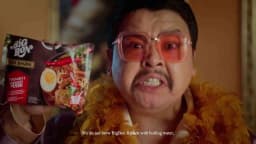
Bimbo Bakeries and McCann launched Daisy, Jim in Mexico in July 2013, a character-led Spanish-language film campaign connecting Twinkies to everyday family

Bimbo Bakeries Bets on Character and Story in 2013 Mexican Film Campaign
Daisy, Jim is a Spanish-language film campaign created by McCann for Bimbo Bakeries, published in Mexico in July 2013, using character-led storytelling to connect the brand's Twinkies product to the textures of ordinary household and family life.
Bimbo Bakeries occupies a singular position in the Mexican food and drink landscape. Its parent company, Grupo Bimbo, held approximately 90% of Mexico's packaged-bread market at the time of the campaign's release, according to Accival reports covering 2003 to 2013. That dominance gave the brand a different strategic problem than most food advertisers face: not awareness, but meaning. With near-total distribution and recognition already secured, the creative challenge in 2013 was to give a mass-market product a reason to be felt rather than simply chosen.
The campaign consists of two film assets, documented in advertising archives, both executed within a character-driven narrative framework. The protagonists — referred to by the campaign title's paired names, Daisy and Jim — provide an emotional anchor that moves the advertising away from functional product claims and toward the kind of lived domestic intimacy that positions a snack brand inside the rhythms of daily life. In Mexico, where food advertising in the Food and Drink category has long leaned on family imagery and cultural familiarity, McCann's approach here is consistent with broader category conventions while pushing the execution toward something more cinematically considered.
Clapboard rates Daisy, Jim at 55 out of 100, characterising the work as emotionally oriented and culturally localised. That score reflects a campaign that is competent in its emotional intentions and grounded in its market, while stopping short of the creative distinctiveness that separates recalled campaigns from merely adequate ones.
Grupo Bimbo entered 2013 as one of the largest baked-goods companies in the world. According to bakeryandsnacks.com, the company's global sales that year were approximately US$13.8 billion, with operations across 19 countries, more than 100 brands, and more than 10,000 products. In Mexico specifically, its packaged-bread market share sat at approximately 90%, per Accival reports cited by santelmo.org. For a brand at that scale, conventional persuasion advertising — the kind designed to move a consumer from unfamiliarity to trial — is structurally redundant. The audience already knows Bimbo. The creative task becomes one of emotional reinforcement rather than education.
That context explains the character-led film approach McCann chose for Daisy, Jim. Rather than demonstrating a product attribute or staging a competitive comparison, the campaign invests in people and situation. Competitors operating in adjacent categories in Mexico at the time included Flowers Foods and Pepperidge Farm, a Campbell Soup company, both identified as leading packaged-bread competitors in research published via D2rwhogv2mrkk6 Cloudfront. Neither had anything approaching Bimbo's domestic market position in Mexico, which meant the brand's advertising could afford to be more culturally expressive and less defensively functional.
Grupo Bimbo's own financial disclosures support the picture of a business in good health during this period. According to grupobimbo.com, the company reported a 3.8% increase in net sales in Mexico in 2013 versus 2012, alongside a 20.6% increase in operating profit. Those figures do not isolate the contribution of any single campaign, but they confirm that the broader brand and commercial environment in which Daisy, Jim appeared was one of growth, not pressure — giving McCann room to pursue emotional depth over promotional urgency.
Daisy, Jim is built around the persuasive logic of identification rather than aspiration. The campaign uses named characters — the two figures of its title — to give the audience a point of emotional entry that is domestic, specific, and Spanish-language in its cultural register. In the Food and Drink category, this is not an unusual structural choice; what distinguishes its execution is the degree to which the film format is treated as a vehicle for small, recognisable human moments rather than orchestrated product theatre.
The two media assets that comprise the campaign are framed within a narrative continuity that implies relationship and time. Character-led advertising of this kind depends heavily on casting, performance direction, and the ability of a short film format to compress emotional credibility into seconds. When those elements are calibrated correctly, the brand becomes a quiet participant in a story the viewer already recognises from their own life. When they are not, the gap between the narrative ambition and the viewer's engagement becomes visible. At a Clapboard Score of 55 out of 100, Daisy, Jim lands in the competent middle of that range.
Production credits for Daisy, Jim are not publicly documented. The campaign is attributed at the agency level to McCann, which in 2013 was operating as one of the primary creative partners for Bimbo Bakeries in Mexico, as recorded in advertising archives. The absence of a documented director or creative director makes it difficult to assess individual craft decisions in isolation, but the work's overall aesthetic — intimate framing, character-focused storytelling, culturally grounded domestic settings — is consistent with the narrative film conventions McCann applied to food and drink advertising in the Latin American market during this period.
No verified performance data for Daisy, Jim is publicly available. The campaign did not register in the records of Cannes Lions, the Effie Awards, The One Show, D&AD, the Clio Awards, the Webby Awards, or WARC Awards at the time of this analysis. No coverage was found in trade publications including Campaign, Ad Age, Adweek, The Drum, or Contagious. Sales-lift, brand-tracking, awareness, or return on advertising spend data specific to this campaign have not been disclosed publicly.
What can be assessed is structural effectiveness — whether the campaign's architecture is well suited to its stated commercial context. Daisy, Jim operates in a market where, according to grupobimbo.com, Bimbo's Mexican net sales grew 3.8% in 2013. That growth happened across the full brand portfolio and cannot be attributed to a single campaign, but it confirms that the brand's advertising strategy as a whole was not operating in a contracting environment.
The campaign's character-led, emotionally oriented approach is a rational choice for a market-dominant brand seeking to deepen affinity rather than drive awareness. The two-asset film format provides enough narrative space to establish character and situation without demanding the production scale of a larger campaign. Where the work is more constrained is in its distinctiveness: emotional narrative is the default register of food advertising in Mexico, and without a verifiable creative differentiator — an unexpected structural choice, an unusual tonal contrast, a formally distinctive visual language — a campaign risks blending into the category rather than rising above it. Clapboard scores Daisy, Jim at 55 out of 100, reflecting exactly this tension between competent emotional craft and limited creative separation.
Daisy, Jim is a film campaign created by McCann for Bimbo Bakeries, published in Mexico in July 2013. It uses named characters to connect the Twinkies product to domestic family life through a Spanish-language narrative format. The campaign comprises two film assets documented in advertising archives.
McCann created Daisy, Jim for Bimbo Bakeries in Mexico in 2013. McCann served as the documented creative agency on the campaign, as recorded in advertising archives. Production credits including director and creative director are not publicly documented for this specific campaign.
Daisy, Jim is associated with Bimbo Bakeries' Twinkies product in Mexico. The campaign uses character-led storytelling to embed the product within everyday household and family contexts, consistent with Bimbo's broader emotional advertising strategy in the Mexican Food and Drink category.
Grupo Bimbo reported a 3.8% increase in net Mexican sales in 2013 versus 2012, according to grupobimbo.com. The company also reported a 20.6% increase in operating profit that year. Neither figure can be attributed specifically to the Daisy, Jim campaign, as no campaign-level data is publicly available.
Daisy, Jim did not register in award records for Cannes Lions, the Effie Awards, The One Show, D&AD, the Clio Awards, the Webby Awards, or WARC Awards. No trade press coverage of the campaign was found in Ad Age, Adweek, Campaign, The Drum, or Contagious at the time of this analysis.
Clapboard scores Daisy, Jim at 55 out of 100. The assessment characterises the campaign as emotionally oriented and culturally localised, reflecting competent craft within established Food and Drink category conventions while noting limited creative separation from other narrative film advertising in the Mexican market.
.webp)
Creative Collaboration Platform: The Backbone of Modern Creative WorkWhat is a creative collaboration platform?Clapboard defines a creative collaboration platform as the operational core for today’s distributed creative teams. This is not a collection of digital collaboration tools stitched together; Clapboard’s system


Understanding the Creative Production MarketplaceWhat is a Creative Production Marketplace?Clapboard defines a creative production marketplace as a structured ecosystem where brands, agencies, and production talent converge to execute video, advertising, and branded content at scale. Unlike the legacy agency or freelanREAD FULL ARTICLE

The Urgent Need for a Creative Production Operating SystemWhy Traditional Creative Production Models Break DownClapboard sees the creative production landscape shifting under pressure. Content velocity is no longer a buzzword—it’s a mandate. Modern advertising demands relentless output across dozens of channels, each wREAD FULL ARTICLE