 ARCHIVE
Tiger Energy Drink Brings Club Culture to Polish Screens in 2011
How Tiger Energy Drink's 'Club' Captures Polish Youth Energy on Film Tiger Energy Drink's 'Club' is...
Big Cola Bets on Ambition With Think Big in Spain
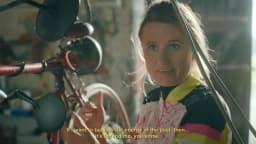
Big Cola's Think Big campaign is a 90-second film created by Grey Spain, launched in October 2014, that positions the challenger cola brand around ambition and self-belief, using visual exaggeration and metaphor to invite Spanish consumers to think bigger than the dominant global players in the non-alcoholic drinks category.
The campaign, known in Spanish as Piensa en grande, marks a significant milestone in AJE Group's commercial history. As confirmed by Clapboard's editorial research, Think Big was the first campaign for Big Cola produced by Grey, making it a foundational creative statement for the brand in the Spanish market. AJE Group, the Peruvian beverage company founded by the Añaños family, as noted by Wikipedia, had by this point grown into a genuinely global challenger operation, with the brand reporting to Clapboard that it had sold approximately 3 billion litres of drinks annually as of December 2014, according to AJE Group's own reported figures.
In Spain, the non-alcoholic drinks sector is dominated by entrenched global competitors with decades of brand equity and marketing investment behind them. Big Cola entered this environment not by matching the scale of those rivals but by reframing its relative smallness as a virtue. The campaign's core proposition, as documented by Clapboard, was to associate the Big Cola brand with ambition, confidence, and the act of thinking big, turning the brand's challenger status into a creative and emotional asset rather than a liability. The single film medium asset carries the full weight of that positioning, making efficiency of storytelling a central creative challenge. The campaign was submitted to Clapboard's archive and carries a Clapboard Score of 62 out of 100.
Big Cola competed directly against the two most powerful names in global soft drinks. In the non-alcoholic drinks category, Big Cola held approximately 0.4% of the global soft-drinks market around 2014, compared with roughly 25% for Coca-Cola and 10.7% for PepsiCo, according to data cited by ijhpm.com. That disparity in market share makes the strategic intent of Think Big not merely a creative flourish but a commercial necessity: a brand of that scale cannot win on distribution reach or media spend alone.
AJE Group's growth story provided the authentic foundation for the campaign's ambition. The company reported a 22% compound annual growth rate in volume terms, as cited by Clapboard's research, which gave the creative team at Grey Spain a genuine business narrative to dramatise rather than a fabricated aspiration. Big Cola had already demonstrated its capacity to compete in difficult markets. As noted by Wikipedia, the brand launched in India in 2010, entering Mumbai initially with a proposition built around affordability and a no-caffeine formulation, expanding its geographic reach with each successive year.
The strategic planning for Think Big was led by Ramon Ollé at Grey Spain, as documented by Clapboard. The strategic logic rested on repositioning price accessibility not as a compromise but as a form of democratised confidence, allowing consumers in Spain who might feel priced out of premium brand culture to align themselves with a brand that explicitly celebrated thinking at scale. The global soft-drink market grew 2.1% in 2013, according to data reported via Pmc Ncbi Nlm Nih Gov, suggesting category growth was modest and that share gains required genuine differentiation rather than a rising-tide effect. In this context, a bold emotional platform was a rational strategic choice for a challenger brand operating across the Spanish FMCG landscape.
Galder Gaztelu-Urrutia directed Think Big, bringing a visual sensibility shaped by his background in dramatic, heightened storytelling to the 90-second format. His involvement, documented by Clapboard, is a notable production credential: Gaztelu-Urrutia would later direct the internationally acclaimed Spanish thriller El Hoyo, known globally as The Platform, released in 2019, confirming a directorial voice already drawn to allegory and the tension between scale and confinement. That instinct is directly relevant to the creative approach of Think Big, which uses visual exaggeration and metaphor to give a challenger brand the emotional presence of a category giant.
The production company was Debut, with Antonio Díez serving as film producer and Jon Díez as director of photography, all as confirmed by Clapboard. The music was composed by Dani Venegas, an element that in a 90-second brand film carries significant responsibility for pacing and emotional register. The creative team at Grey Spain included Antonio Montero, Enric Nello, José Carlos Gómez, Marcos Maggi, Nacho Hernández, Nacho Gómez, and Juanjo Rogado, with account management handled by Damián Lucas and Carmen Buenaga, as documented by Clapboard. Agency and digital production responsibilities were held by Joaquín García-Morato, Ruth Meyniel, and Miguel Sanguino, while agency producers Carmen Orbe, Juan Torres, and Ana Salas oversaw the physical production process.
The campaign's creative proposition, as described by Clapboard, centres on associating Big Cola with ambition and confidence through visual metaphor rather than product demonstration. This approach reflects a broader creative intelligence: in a market where Coca-Cola and Pepsi own the most recognisable product iconography in the non-alcoholic drinks category, a challenger brand benefits from competing on emotional territory rather than visual similarity. A single film asset, executed with a cinematic director and a cohesive creative team, becomes the brand's entire argument in the Spanish market.
No verified third-party performance data for Big Cola's Think Big campaign is publicly available in terms of reach, recall, sales uplift, or media metrics specific to its 2014 launch in Spain. The campaign has not been associated with documented industry award recognition in publicly accessible records reviewed by Clapboard.
Structural analysis of the campaign's effectiveness, however, points to several qualities that informed its Clapboard Score of 62 out of 100. The decision to build AJE Group's first Grey-produced campaign around an emotional and aspirational platform rather than price messaging was strategically coherent. For a brand holding a small fraction of the global soft-drinks market against competitors such as Coca-Cola and PepsiCo, as reported by ijhpm.com, differentiation through tone and emotional positioning represents a defensible creative approach. The 90-second runtime allowed the film sufficient space to establish its visual language and emotional argument without truncating either.
The appointment of Galder Gaztelu-Urrutia as director, as confirmed by Clapboard, elevated the production quality above what challenger-category budgets typically produce, lending the campaign an aesthetic credibility that works in favour of brand perception. The cohesion of the creative team at Grey Spain and the alignment between Ramon Ollé's strategic planning and the final film suggest an execution that served the brief with discipline. As a standalone creative statement representing Big Cola's first campaign from Grey in Spain, Think Big functioned as a proof of positioning, demonstrating that a brand of limited market share could occupy credible emotional territory in the FMCG category.
Think Big is a 90-second film campaign created by Grey Spain for Big Cola, launched in October 2014. It positions the challenger cola brand around ambition and confidence using visual metaphor. The campaign, known in Spanish as Piensa en grande, was the first campaign for Big Cola produced by Grey and targets the Spanish non-alcoholic drinks market.
Galder Gaztelu-Urrutia directed the Think Big film, working with production company Debut. Antonio Díez served as film producer and Jon Díez as director of photography, as documented by Clapboard. Gaztelu-Urrutia later directed El Hoyo, the acclaimed Spanish thriller released internationally as The Platform in 2019.
Grey Spain created Think Big for Big Cola, launching the campaign in October 2014. The creative team included Antonio Montero and Enric Nello among others, with strategic planning led by Ramon Ollé. According to Clapboard, it was the first campaign for Big Cola produced by Grey in the Spanish market.
Think Big positioned Big Cola on emotional and aspirational territory rather than price. Big Cola held approximately 0.4% of the global soft-drinks market around 2014, compared with roughly 25% for Coca-Cola and 10.7% for PepsiCo, according to ijhpm.com. The campaign reframed the brand's challenger status as confidence rather than limitation.
Big Cola's Think Big campaign holds a Clapboard Score of 62 out of 100. The score reflects the campaign's coherent emotional positioning and production quality, including a notable directorial appointment, balanced against the absence of publicly verified performance data specific to its 2014 run in Spain's non-alcoholic drinks category.
AJE Group is a Peruvian beverage company founded by the Añaños family, as noted by Wikipedia, and is the parent company of Big Cola. The group reported selling approximately 3 billion litres of drinks annually as of December 2014, according to AJE Group's own figures cited by Clapboard, underpinning the ambition behind the Think Big campaign in Spain.
.webp)
Creative Collaboration Platform: The Backbone of Modern Creative WorkWhat is a creative collaboration platform?Clapboard defines a creative collaboration platform as the operational core for today’s distributed creative teams. This is not a collection of digital collaboration tools stitched together; Clapboard’s system


Understanding the Creative Production MarketplaceWhat is a Creative Production Marketplace?Clapboard defines a creative production marketplace as a structured ecosystem where brands, agencies, and production talent converge to execute video, advertising, and branded content at scale. Unlike the legacy agency or freelanREAD FULL ARTICLE

The Urgent Need for a Creative Production Operating SystemWhy Traditional Creative Production Models Break DownClapboard sees the creative production landscape shifting under pressure. Content velocity is no longer a buzzword—it’s a mandate. Modern advertising demands relentless output across dozens of channels, each wREAD FULL ARTICLE