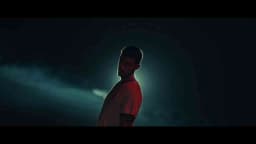
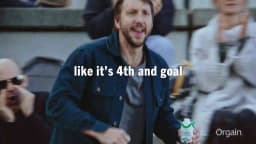
Maximal G's 'Back to the Energy' campaign, created by Serviceplan Germany in May 2019, uses mockumentary film to satirise wellness rituals and reposition the

Maximal G Goes Mockumentary to Challenge Germany's Energy Drink Rituals
Maximal G's 'Back to the Energy' is a single-film campaign created by Serviceplan Germany and published in May 2019, using mockumentary-style storytelling to satirise the elaborate wellness and self-improvement rituals that had come to surround energy drink consumption in the German market, according to Adsoftheworld.
Maximal G is a private-label energy drink belonging to the REWE Group, one of Germany's largest retail conglomerates. The brand launched in Germany in 2016 with the positioning line 'Sei maximal' — 'Be Maximal' — targeting Millennials across Germany and six additional REWE markets including Austria, Italy, and the Czech Republic, with Serviceplan Campaign winning the international launch account that same year. By 2019, the brand returned with a sharper creative instinct, according to Little Black Book. Rather than matching the bombastic spectacle that defines category leaders, Serviceplan chose irony as its primary register. The 'Back to the Energy' film holds a mirror to the rituals, jargon, and performative seriousness that consumers and culture had layered on top of what is, at its core, a straightforward energy shot format. In Germany, where supermarkets and hypermarkets represented the largest distribution channel for energy drinks in 2019, according to Research and Markets, the REWE Group's retail network gave Maximal G an inherent structural advantage in shelf placement and consumer reach. The film medium was the sole vehicle for this campaign, with one media asset submitted to the archive. The campaign sits at a Clapboard Score of 60 out of 100, reflecting a creative idea with clear strategic logic and tonal distinction, executed within the constraints of a retail private-label budget and a single-asset format.
Maximal G entered the 2019 media environment as a challenger brand inside a category defined by two dominant forces. Red Bull and Monster Energy were identified by Businesscoot as major marketing spenders in the global energy drinks category, with Monster Energy, Red Bull, and T.C. Pharmaceutical Industry together accounting for a substantial share of global energy drink sales in 2019, according to Businesscoot. In Germany specifically, that dominance translated into a saturated visual language: extreme sports, volume, spectacle, and aspirational physicality. Serviceplan's strategic response was to refuse that language entirely.
The insight driving 'Back to the Energy' is rooted in a cultural observation specific to the German market in 2019. Wellness culture had expanded aggressively, generating a class of consumer who had surrounded basic health and energy behaviours with elaborate ritual and self-justifying complexity. An energy shot — a simple, functional product — had become buried under the weight of category overcommunication. Serviceplan, working alongside creative partner Plan.Net Campaign, identified mockumentary as the format most capable of naming that contradiction without alienating the consumer it describes. The tone is participatory rather than condescending: the film laughs with the ritual-obsessed consumer rather than at them. This approach also gave Maximal G a point of difference from Red Bull's long-running association with extreme-sports content and Monster Energy's aggressive visual codes, allowing the REWE Group brand to occupy a more self-aware, culturally literate space within non-alcoholic drinks in Germany. The Bundestag's published discussions on energy drink regulation in Germany during this period further reflect how seriously the category was being scrutinised publicly, according to Bundestag records, making a tone of ironic deflation strategically well-timed.
The creative execution of 'Back to the Energy' is built entirely on the mockumentary format, a structure that demands disciplined performance, precise scriptwriting, and a production register pitched carefully between earnestness and absurdity. The campaign's single film asset deploys these conventions to satirise the rituals that consumers construct around energy, wellness, and self-improvement — treating its subjects with the straight-faced documentary seriousness that makes the comic deflation land.
The credited creative leadership reflects a dense collaborative structure within Serviceplan's Germany operation. Alexander Schill served as Global Chief Creative Officer. Christoph Everke and Alexander Nagel held Executive Creative Director responsibilities. Creative direction was shared between Marko Savic and Laura Müller-Rossbach, with Jonas Menze credited as Senior Art Director. The presence of both Serviceplan Campaign and Plan.Net Campaign in the production structure indicates a cross-functional agency model applied to what is, in format terms, a single-asset deliverable — a concentration of creative resource that suggests confidence in the idea's capacity to perform without media amplification. The mockumentary approach demands that the production aesthetic remain credible: lighting, camera movement, interview framing, and pacing must all signal documentary grammar convincingly enough that the satirical ruptures register as wit rather than confusion. For a non-alcoholic drinks brand competing in Germany's energy shot segment against category leaders with far greater media budgets, the choice of mockumentary is also a production efficiency — one well-executed film can travel further on the strength of its idea than a conventionally produced spot of equivalent length. Production credits beyond the named creative team are not publicly documented for this campaign.
No verified performance data for 'Back to the Energy' is publicly available. The campaign does not appear in the award records of Cannes Lions, the Effie Awards, The One Show, D&AD, the Clio Awards, or the Webby Awards, based on searches of those organisations' published databases, according to Marcommnews. Ads of the World archive records for the campaign do not include reported effectiveness metrics.
Structural analysis, however, offers a reasonable basis for assessing the campaign's likely effectiveness within its context. The mockumentary format is well-suited to earned attention: content that generates a genuine laugh at recognisable cultural behaviour tends to circulate beyond its paid media footprint. For a REWE Group private-label brand such as Maximal G, operating in Germany's competitive non-alcoholic drinks segment without the media investment available to Red Bull or Monster Energy, that earned dimension represents real strategic value. The campaign's single-asset structure concentrates creative investment and simplifies measurement, but also limits reach unless the film overperforms organically. The creative team's seniority — from Global Chief Creative Officer Alexander Schill down through named executive and creative directors — suggests the campaign was treated as a meaningful brand-building exercise rather than a functional retail communication. Whether it shifted brand consideration or category penetration for Maximal G in Germany cannot be established from available public sources. The Clapboard Score of 60 out of 100 reflects a campaign with a clear and differentiated creative idea, competently executed, that stops short of the exceptional execution or measurable cultural impact that would place it in the top tier of non-alcoholic drinks advertising from this period.
'Back to the Energy' is a mockumentary-style film created by Serviceplan Germany for Maximal G, a REWE Group energy shot brand, published in Germany in May 2019. The film satirises the elaborate wellness and self-improvement rituals consumers attach to energy products, positioning Maximal G as a direct and unpretentious alternative in the German non-alcoholic drinks market.
Serviceplan Germany created 'Back to the Energy', with Plan.Net Campaign as a creative partner. The senior creative team included Global Chief Creative Officer Alexander Schill, Executive Creative Directors Christoph Everke and Alexander Nagel, Creative Directors Marko Savic and Laura Müller-Rossbach, and Senior Art Director Jonas Menze, all working on the 2019 German campaign.
Serviceplan chose mockumentary to differentiate Maximal G from Red Bull and Monster Energy's dominant spectacle-led advertising in Germany. The format allowed the brand to satirise overcomplicated wellness culture with a self-aware tone, generating earned attention for a REWE Group private-label energy shot without requiring the media budgets available to category leaders.
Maximal G is a private-label energy drink and energy shot brand owned by the REWE Group, one of Germany's largest retail companies. The brand launched in Germany in 2016, initially targeting Millennials with the positioning line 'Sei maximal', and was distributed through REWE's supermarket and hypermarket network across Germany and six additional European markets.
No award wins or shortlist placements for 'Back to the Energy' are recorded at Cannes Lions, the Effie Awards, The One Show, D&AD, the Clio Awards, or the Webby Awards, based on those organisations' published records. The campaign holds a Clapboard Score of 60 out of 100, indicating a competent and strategically coherent creative execution within the non-alcoholic drinks category.
Serviceplan Campaign won the Maximal G international launch account from the REWE Group in June 2016, making 'Back to the Energy' part of a sustained agency-client relationship spanning at least three years. The 2019 campaign represents a creative evolution from the straightforward 'Sei maximal' launch positioning toward a more tonally sophisticated, culturally observant approach for the German energy shot market.
.webp)
Creative Collaboration Platform: The Backbone of Modern Creative WorkWhat is a creative collaboration platform?Clapboard defines a creative collaboration platform as the operational core for today’s distributed creative teams. This is not a collection of digital collaboration tools stitched together; Clapboard’s system


Understanding the Creative Production MarketplaceWhat is a Creative Production Marketplace?Clapboard defines a creative production marketplace as a structured ecosystem where brands, agencies, and production talent converge to execute video, advertising, and branded content at scale. Unlike the legacy agency or freelanREAD FULL ARTICLE

The Urgent Need for a Creative Production Operating SystemWhy Traditional Creative Production Models Break DownClapboard sees the creative production landscape shifting under pressure. Content velocity is no longer a buzzword—it’s a mandate. Modern advertising demands relentless output across dozens of channels, each wREAD FULL ARTICLE