 ARCHIVE
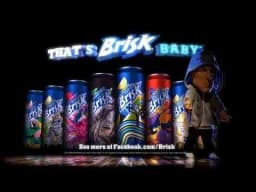
Eminem Sells Brisk by Refusing to Sell Anything
How Brisk Used Eminem's Anti-Endorsement to Win Super Bowl XLV Brisk's 2011 Super Bowl commercial...
Bavaria's Drop Turns a Water Droplet Into a Beer Brand Hero
Bavaria's 'Drop' is a 2009 film created by Amsterdam agency Selmore, published in the United States in November of that year, in which a single water droplet travels from one of the world's purest wells through hazardous terrain, extreme weather, and a near-fatal encounter with a spider before becoming part of a pint of Bavaria Beer.
The campaign distils its brand argument into a single, wordless protagonist. Bavaria, the Dutch brewery operating under Bavaria N.V., chose not to foreground the finished glass of beer or the social ritual of drinking but instead made the raw ingredient — water — carry the entire weight of the brand promise. That decision gives 'Drop' an unusual structural clarity: every scene of peril the droplet survives is a tacit claim about the lengths Bavaria goes to in sourcing pure water for its beer. The objective is persuasive without being declarative, which is precisely where the campaign earns its creative distinction.
Published in the United States in November 2009, the film entered a market where premium beer imports were competing on provenance and craft credentials rather than price. Bavaria, competing against heritage lager brands with far larger distribution footprints in the US market, needed a piece of content capable of communicating European brewing values quickly and memorably. A single film asset — classified by Clapboard Ad Archive as an 'Exemplary Story' format and awarded a Clapboard Score of 72 out of 100 — was the vehicle chosen to do that work. The production was directed by Matthijs van Heijningen, with visual effects handled by Eight VFX, and art direction, shoot supervision, and matte painting executed by Yann Mallard, according to Clapboard.com. The campaign stands as a representative example of how 2000s European beer advertising leveraged cinematic production craft to build brand equity in overseas markets.
Bavaria entered the United States market with a provenance argument at a moment when the domestic beer category was under structural pressure. Global beer-market growth in 2009 fell below one percent, according to research published via Scribd and cited in industry analyses of that period, reflecting post-financial-crisis consumer caution across virtually every discretionary category. In that environment, premium imports could not compete on volume alone; they had to compete on meaning.
Bavaria's strategic response was to anchor its identity in ingredient purity rather than lifestyle aspiration. Where competitors such as Heineken and Carlsberg — both of which, according to Pure Au Dk's academic research on the global brewing industry, produced well over one hundred million hectolitres annually by 2009 — were investing heavily in sponsorship and celebrity-driven campaigns, Bavaria pursued a more intimate, narrative-led approach. The 'Drop' film, produced by Selmore, made water the hero rather than the drinker, a choice that communicates craft and care without requiring the brand to make explicit comparative claims.
This strategy also responded to a broader shift in how United States consumers were evaluating imported beers. The early 2000s had seen a steady rise in craft beer interest across the US market, with drinkers increasingly attentive to origin stories and production methods. Bavaria's decision to foreground the journey of a single water droplet spoke directly to that emerging scrutiny. According to Campaignlive.co.uk, which published a work listing for the film on November 9, 2009, the water-drop execution was positioned around Bavaria's commitment to natural ingredients — hops and wheat are named explicitly in the film's narrative as the droplet's ultimate destination. Bavaria more than doubled its overall marketing budgets in 2008, according to Slideshare.net's documentation of the brand's growth strategy, suggesting that 'Drop' was not an isolated experiment but part of a sustained investment in brand-building across international markets.
Matthijs van Heijningen directed 'Drop' for Bavaria and Selmore. Van Heijningen, whose commercial work was consistently recognised for its visual ambition in the late 2000s, brought a feature-film sensibility to what is structurally a product demonstration: the argument that Bavaria's water is pure enough to survive any environment on its way to becoming beer.
The film's craft challenge was significant. Animating a single water droplet as a sentient, emotive protagonist — one capable of conveying fear during a spider encounter and relief upon arrival — required the kind of visual effects work that, in 2009, was still relatively uncommon in beer advertising. Eight VFX handled the effects pipeline, responsible for making the droplet's surface tension, refraction, and movement feel physically credible while simultaneously giving it personality. The combination of photorealistic environments with an anthropomorphised liquid protagonist placed 'Drop' at the intersection of natural-history filmmaking and brand storytelling, a visual register that had rarely been applied to the alcoholic drinks category in the United States at that time.
Yann Mallard's contribution extended across three distinct disciplines. As art director, he was responsible for the visual grammar of the film — the palette, scale relationships, and environmental design that made the droplet's world feel vast and threatening. As shoot supervisor, he managed the interface between live-action photography and the digital work that Eight VFX would later build upon. And as matte painter, he created the extended landscape environments that gave the droplet's journey its epic geographic scope, according to Clapboard.com. Selmore, the Amsterdam agency behind the campaign, is documented by Campaignlive.co.uk as the creative originator of the 'Drop' concept, and the finished film reflects a level of production discipline consistent with the agency's reputation for European craft-led advertising in the 2000s. Together, the director, art director, and VFX studio produced a film whose technical ambition served the brand argument rather than overshadowing it.
No verified performance data for the Bavaria 'Drop' campaign is publicly available. Sales uplift figures, US market reach numbers, and brand-tracking results from the November 2009 campaign period have not been disclosed by Bavaria, Selmore, or any third-party measurement body in publicly accessible records.
Structural analysis, however, supports a reading of the film as strategically effective. Clapboard Ad Archive rates 'Drop' at 72 out of 100 and classifies it as an 'Exemplary Story' format — a designation that reflects narrative completeness, tonal consistency, and creative differentiation within the Alcoholic Drinks category. The single-asset release strategy, documented by Clapboard.com, concentrated the campaign's entire communicative burden on one piece of film, a choice that only functions when the creative execution is strong enough to carry repeated viewing without diminishing returns.
The film's durability as a reference point in trade-press documentation — Campaignlive.co.uk published a formal work listing for it more than fifteen years after its release — suggests it retained sufficient creative distinction to remain worth cataloguing. In the context of the United States beer import market of 2009, where Bavaria was competing without the distribution scale of AB InBev or the sponsorship budgets of Heineken, a film capable of generating earned attention and trade recognition represented a proportionate return on the brand's production investment. The campaign's choice to foreground VFX craft and a director of Matthijs van Heijningen's calibre signals that Bavaria and Selmore understood 'Drop' as a long-term brand asset rather than a tactical promotional execution, a structural bet that the trade record broadly supports.
Bavaria's 'Drop' follows a single water droplet from a pure well through dangerous terrain and weather before it becomes part of Bavaria Beer. Created by Selmore and released in the United States in November 2009, the film uses the droplet's perilous journey to argue for the brand's commitment to natural, pure ingredients including hops and wheat.
Matthijs van Heijningen directed 'Drop' for Bavaria and Selmore in 2009. The film's visual effects were produced by Eight VFX, while Yann Mallard served as art director, shoot supervisor, and matte painter, according to Clapboard.com. Together they created a photorealistic world in which a water droplet functions as a fully emotive protagonist.
Bavaria's 'Drop' was published in the United States in November 2009, with a documented launch date of November 9, 2009, according to Campaignlive.co.uk. The campaign comprised a single film asset and was created by Amsterdam agency Selmore for Dutch brewery Bavaria N.V. as part of the brand's international marketing expansion.
Clapboard Ad Archive assigned Bavaria's 'Drop' a score of 72 out of 100 and classified it as an 'Exemplary Story' format. The score reflects the film's narrative completeness, tonal consistency, and creative differentiation within the Alcoholic Drinks category, according to Clapboard.com. No separate third-party awards data for the campaign is publicly documented.
Bavaria released 'Drop' in the United States during a period when global beer-market growth fell below one percent, according to industry research cited via Scribd. Competing against large-scale importers such as Heineken and Carlsberg, Bavaria used a provenance and purity narrative rather than lifestyle advertising to differentiate itself in the US market without matching rivals' sponsorship budgets.
Eight VFX created the photorealistic effects that gave Bavaria's water-droplet protagonist physical credibility and emotional expressiveness. In 2009, animating a sentient liquid character at feature-film quality was uncommon in alcoholic drinks advertising in the United States. Matte painting by Yann Mallard extended the droplet's environment into epic landscape sequences, reinforcing the purity and scale of the brand's water-sourcing claim.
.webp)
Creative Collaboration Platform: The Backbone of Modern Creative WorkWhat is a creative collaboration platform?Clapboard defines a creative collaboration platform as the operational core for today’s distributed creative teams. This is not a collection of digital collaboration tools stitched together; Clapboard’s system


Understanding the Creative Production MarketplaceWhat is a Creative Production Marketplace?Clapboard defines a creative production marketplace as a structured ecosystem where brands, agencies, and production talent converge to execute video, advertising, and branded content at scale. Unlike the legacy agency or freelanREAD FULL ARTICLE

The Urgent Need for a Creative Production Operating SystemWhy Traditional Creative Production Models Break DownClapboard sees the creative production landscape shifting under pressure. Content velocity is no longer a buzzword—it’s a mandate. Modern advertising demands relentless output across dozens of channels, each wREAD FULL ARTICLE