Bacardi's Scream Halloween activation, created by Dentsu in Japan in October 2012, turned participants' screams into currency — raising brand awareness from

Bacardi Scream Halloween Turns Noise Into a Brand Moment in Japan
Bacardi's Scream Halloween is a 2012 ambient activation created by Dentsu and launched in Japan in October 2012, in which participants earned admission or drinks by screaming loud enough to satisfy a custom-built volume-measuring device known as the BACARDI SCREAM MACHINE, operated by a costumed performer called the BACARDI SCREAM GIRL.
The campaign operates on a deceptively simple consumer insight: drinking naturally raises the voice, and raising the voice naturally releases tension. Bacardi's brand platform at the time centred on the idea of setting the heart free, and the Scream Halloween activation translates that philosophical commitment into a literal, physical demand. Japan — a market where social inhibition is a well-documented cultural norm — becomes the ideal stage for a brand that asks its audience to abandon restraint entirely. The country's Halloween celebration, still gaining mainstream momentum in 2012, provided the theatrical permission structure that the concept required.
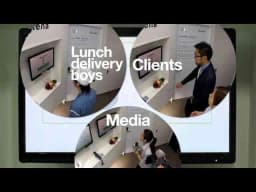
Dentsu structured the campaign across two distinct phases. The first sent a costumed performer into Japanese streets carrying the BACARDI SCREAM MACHINE, a purpose-built device that captured the volume of participants' screams and simultaneously recorded their faces. When a scream reached the required decibel threshold, the equipment reportedly triggered an illumination effect, turning a street-level interaction into a small public spectacle. The second phase scaled those collected screams into a live event, where the recorded vocal footage was incorporated into a performance featuring a guitar-shaped synthesizer, transforming the crowd's earlier screaming into a communal musical instrument. According to eventoplus.com, the collected screams and participant footage were woven directly into the live event experience, closing a loop between the street activation and the festival moment. The Clapboard Score for Scream Halloween is 63 out of 100, reflecting a campaign that executes its core mechanic with confidence while remaining a market-specific experiential execution rather than a globally scalable platform.

Dentsu identified a behavioural truth that sits at the intersection of alcohol consumption and Japanese social culture. In Japan, the cultural expectation of public composure makes uninhibited noise-making a genuinely transgressive act — and therefore a genuinely memorable one. By designing an activation that demanded volume as its price of entry, Dentsu gave Bacardi a mechanic that was simultaneously aligned with the brand's freedom-oriented positioning and culturally provocative in its specific Japanese context. The result is a piece of ambient advertising that earns attention not through media spend but through social friction.
The competitive landscape for rum in Japan in 2012 reflected the global rum market structure of the period. According to scribd.com, Bacardi, Captain Morgan, and Malibu together represented approximately 75% of the rum market around 2012, with Havana Club also identified as a significant competitor by market position. In that environment, brand salience — not just distribution — determined which label a consumer reached for. According to thedrinksbusiness.com, Bacardi sold approximately 19.6 million nine-litre cases in 2011 and approximately 19.8 million in 2012, a modest recovery following a reported 3.5% decline from 20.3 million cases in 2010. Japan's Halloween market was itself in a period of rapid expansion in the early 2010s, giving Bacardi and Dentsu a cultural window that competitors had not yet fully claimed.
The ambient format is the strategic choice that makes the campaign coherent. A television or digital execution of the same concept would flatten it into spectacle without participation. By placing the BACARDI SCREAM MACHINE on Japanese streets and requiring a physical act — screaming — as the condition of reward, Dentsu ensured that every participant became a live advertisement. As noted by Space-Media Jp, the two-phase structure allowed the brand to harvest authentic user behaviour during the street phase and then amplify it through a curated live event, compounding the earned media value of both moments.
The BACARDI SCREAM MACHINE is the physical centrepiece of the campaign's creative execution. The device is not incidental — it is the campaign. Its design had to communicate the brand's identity, measure decibel output with enough precision to create a credible threshold, illuminate on command to produce a visible public reward, and be portable enough for a single costumed performer to carry through Japanese streets. That combination of requirements means the object itself is a piece of creative production, not merely a prop.
The BACARDI SCREAM GIRL — the costumed performer who operated the machine during the street phase — functions as the human interface between the brand and the public. Her costume and character extend the Halloween theatrical frame while keeping the Bacardi brand visually present throughout every street-level interaction. According to space-media.jp, the performer's role included capturing both the volume of participants' screams and their facial expressions in real time, creating the raw material that would later be used in the live event phase. This dual-capture mechanic — sound and image simultaneously — required a level of technical coordination that elevates the execution beyond a simple street stunt.
The guitar-shaped synthesizer deployed at the live event phase represents the campaign's most distinctive production decision. Rather than simply playing back the recorded screams as audio, Dentsu transformed them into a playable instrument, allowing a performer to use the crowd's own vocal archive as a sound source. According to eventoplus.com, the synthesizer was constructed to accept the collected screams as its tonal input, making the live event a direct continuation of the street activation rather than a separate production. Production credits for the Scream Halloween campaign's technical fabrication and event production are not fully documented in publicly available sources, though Dentsu is named as the creating agency across archive records cited by adsoftheworld.com and clapboard.com.
Bacardi's Scream Halloween activation produced a measurable shift in brand awareness in the Japanese market. According to eventoplus.com, brand awareness increased from 52.3% to 66% following the activation — a gain of 13.7 percentage points. For a market-specific ambient campaign with a single media asset and no documented above-the-line support, that movement is a structurally significant outcome. It suggests that the earned media generated by the street phase, combined with the live event, produced a reach and recall effect that extended well beyond the participants who directly engaged with the BACARDI SCREAM MACHINE.
The campaign's mechanics explain the result. The two-phase structure, as documented by eventoplus.com and space-media.jp, created two distinct moments of public visibility: the street activation generated organic bystander attention and social sharing in real time, while the live event provided a concentrated brand experience for a self-selected audience already primed to associate Bacardi with uninhibited participation. Together, these phases multiplied the effective reach of a campaign that was, in production terms, a relatively contained experiential execution.
No verified data on sales lift, social media volume, or event attendance figures for Scream Halloween is publicly available beyond the brand awareness figures cited above. The campaign's Clapboard Score of 63 out of 100 reflects this profile: a sharply executed ambient idea with a documented awareness result, constrained by its single-market, single-asset scope and the absence of broader performance metrics in the public record. What the score captures is a campaign that solved a real strategic problem — building brand salience during a culturally charged seasonal moment in Japan — with a mechanic precise enough to generate evidence of effectiveness.
Bacardi's Scream Halloween was a 2012 ambient activation created by Dentsu in Japan. Participants earned drinks or admission by screaming loudly enough to satisfy a custom volume-measuring device called the BACARDI SCREAM MACHINE. The campaign ran in two phases: a street activation and a live event incorporating the collected screams, as documented by eventoplus.com.
Brand awareness increased from 52.3% to 66% following the Scream Halloween activation in Japan, according to eventoplus.com. That 13.7-percentage-point gain came from a single-market ambient campaign with one media asset, suggesting that the street phase and live event together generated substantial earned reach beyond direct participants.
Dentsu created the Scream Halloween campaign for Bacardi. The activation launched in Japan in October 2012. Dentsu is named as the creating agency across multiple archive records, including listings on adsoftheworld.com and clapboard.com, making it one of the agency's distinctive ambient executions for an alcoholic drinks brand in the Japanese market.
The BACARDI SCREAM MACHINE measured participants' vocal volume in real time, according to space-media.jp. When a scream reached the required decibel threshold, the device triggered an illumination effect. A costumed performer called the BACARDI SCREAM GIRL operated the equipment on Japanese streets and simultaneously captured participants' faces for use in the subsequent live event phase.
Bacardi's Scream Halloween earned a Clapboard Score of 63 out of 100. The score reflects a confidently executed ambient idea with a documented brand awareness result in Japan, balanced against the campaign's single-market, single-asset scope and the limited volume of performance data available in the public record beyond the eventoplus.com awareness figures.
Dentsu identified Halloween as a cultural window that was still gaining mainstream traction in Japan in 2012, giving Bacardi an uncrowded seasonal platform. The ambient format — requiring a physical scream as the price of participation — turned every street interaction into a live brand demonstration, generating earned attention without relying on paid media reach across the Japanese market.
.webp)
Creative Collaboration Platform: The Backbone of Modern Creative WorkWhat is a creative collaboration platform?Clapboard defines a creative collaboration platform as the operational core for today’s distributed creative teams. This is not a collection of digital collaboration tools stitched together; Clapboard’s system


Understanding the Creative Production MarketplaceWhat is a Creative Production Marketplace?Clapboard defines a creative production marketplace as a structured ecosystem where brands, agencies, and production talent converge to execute video, advertising, and branded content at scale. Unlike the legacy agency or freelanREAD FULL ARTICLE

The Urgent Need for a Creative Production Operating SystemWhy Traditional Creative Production Models Break DownClapboard sees the creative production landscape shifting under pressure. Content velocity is no longer a buzzword—it’s a mandate. Modern advertising demands relentless output across dozens of channels, each wREAD FULL ARTICLE