 ARCHIVE
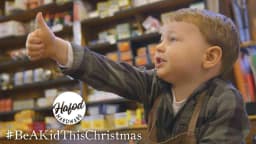
Hafod Hardware Turns a £100 Budget Into a Viral Christmas Moment
How Hafod Hardware's #BeAKidThisChristmas Became the United Kingdom's Most Talked-About Christmas...
Auchan GPS Quality Label Brings Food Provenance to the Shop Floor
Auchan's GPS Quality Label is a 2019 digital retail campaign created by Serviceplan France that allowed shoppers to scan a QR code on product packaging in-store and immediately access a Google Street View image of the exact farm or production site where that product originated, giving consumers in France a first-person verification of food provenance at the point of purchase.
The campaign launched in June 2019 inside a single Auchan hypermarket in Normandy, one of France's most recognised agricultural regions, making the test site both strategically and symbolically apt. Auchan positioned the initiative as a direct answer to growing consumer distrust of food labelling, responding with technology rather than rhetoric. The label itself was designed to sit on product packaging alongside existing quality marks, but unlike conventional certifications it required no act of faith: it invited shoppers to look for themselves. The mechanics were deliberately simple — a QR code resolved to a precise Google Street View location, collapsing the distance between a French hypermarket shelf and the field, dairy, or orchard where the product was grown or reared.
The campaign was promoted through French regional daily newspapers, anchoring its reach in the communities most closely connected to local agricultural production. Auchan, which operated 2,293 sales outlets across 12 countries in 2019 according to auchan-retail.com, focused this initiative tightly on the French domestic market, where food origin has long carried particular cultural and commercial weight. The GPS Quality Label was submitted to Clapboard as a digital medium campaign within the retail services category and is archived with one primary media asset. Clapboard assigns the campaign a score of 74 out of 100, reflecting strong strategic coherence and meaningful creative innovation within the constraints of a retail environment.
France experienced a sustained period of food-trust erosion in the years leading up to 2019. A sequence of European food scandals — including the horsemeat contamination affair of 2013 and successive pesticide residue alerts — had produced a French consumer base that was, by 2019, acutely sceptical of generic provenance claims. Auchan's strategic response was to make verification the product, rather than simply making a claim.
The retail landscape in France is intensely competitive. Carrefour, the country's largest hypermarket operator, and E.Leclerc, which positions itself aggressively on price and French sourcing, both invest heavily in origin-of-product messaging. Against these rivals, Auchan needed a differentiator that went beyond shelf labels or marketing copy. The GPS Quality Label offered something neither Carrefour nor E.Leclerc had deployed at the time: a mechanically verifiable, consumer-activated transparency tool embedded directly in the retail experience.
Auchan's own 2019 financial results, as reported by auchan-retail.com and presse-cie.com, showed group revenue of €45.8 billion, with France representing approximately 38 per cent of that total. The French domestic market was therefore the single most important geography for the brand, making a trust-building initiative in France commercially significant at the group level. Serviceplan France's insight was that local farmers represented not just a supply chain but a credibility asset — and that making those farmers literally visible to shoppers would transfer their credibility to the Auchan brand at scale. The campaign's decision to test in Normandy, a region whose agricultural identity is deeply embedded in French cultural consciousness, sharpened that credibility transfer considerably.
The GPS Quality Label executes a single creative idea with notable discipline. The label format borrows the visual language of established French quality certification marks — the kind of seal that French shoppers have been trained over decades to read as a guarantee — and subverts that convention by making the guarantee interactive and self-verifiable rather than declarative.
The technical architecture of the campaign rests on two widely available technologies: QR codes, which by 2019 had achieved meaningful consumer adoption in France, and Google Street View, whose photographic coverage of rural France was sufficiently granular to render specific farm locations recognisable and visitable. The decision to use Street View rather than a proprietary branded video or photography solution was strategically sound: Google's imagery carries an implicit neutrality that branded content cannot replicate, reinforcing the campaign's core promise of unmediated verification.
Production credits documented by lareclame.fr and adsoftheworld.com identify Serviceplan France as the creating agency, with the campaign developed under the leadership of the Serviceplan team in Paris. Specific creative director attribution within the published credits references Alexandre Poncin among the Serviceplan personnel involved in the work, as noted by lareclame.fr. The physical label was designed to integrate cleanly into existing Auchan product packaging hierarchies, requiring no structural change to packaging formats. Press executions in French regional daily newspapers extended the campaign's reach beyond the Normandy test store, translating the in-store mechanic into a print context by reproducing the label and its QR functionality for readers in agricultural communities who would recognise the farms being referenced.
The GPS Quality Label produced documented commercial results during its test period. According to agence-di.com, the Normandy Auchan test store recorded a 12 per cent increase in store traffic and a 25 per cent increase in sales of local products during the campaign period. These figures represent meaningful uplift for a single-store pilot operating within a competitive French retail environment and provide a credible foundation for broader rollout consideration.
The campaign's award record is extensive and independently verifiable. At Cannes Lions 2019, the GPS Quality Label was shortlisted as a Media Lions Finalist and won a Silver Lion in Brand Experience and Activation, as documented by adsoftheworld.com and llllitl.fr. At Eurobest 2019, the campaign received a Bronze in Brand Experience and Activation, specifically in the Customer Retail and In-Store Experience subcategory, as reported by lareclame.fr. The Grand Prix Data et Créativité 2019 awarded the campaign a mention in the Retail and E-commerce category, per informabtl.com. At the New York Festivals 2020, the campaign received Silver awards in Print Best Use and Interactive, in Activation and Engagement Best Use In-Store Experiences, and in a further Activation and Engagement product category, as recorded by adsoftheworld.com. The Club des AD awarded the campaign a Bronze in Presse Innovation in 2020, as noted by lareclame.fr.
Clapboard assigns the GPS Quality Label a score of 74 out of 100. The score reflects a campaign that achieves genuine strategic clarity and earns its awards through a demonstrably simple idea executed with precision, while remaining a contained pilot rather than a fully scaled retail programme.
Auchan's GPS Quality Label is a 2019 retail campaign by Serviceplan France. It placed QR codes on product packaging inside an Auchan store in Normandy, linking shoppers directly to a Google Street View image of the farm or production site where each product originated, making food provenance immediately and independently verifiable at the point of purchase.
Serviceplan France created the GPS Quality Label for Auchan. The Paris-based agency developed the campaign, which launched in June 2019. Creative personnel credited for the work include Alexandre Poncin, as documented by lareclame.fr. The campaign was promoted through French regional daily newspapers in addition to its in-store deployment in Normandy.
The GPS Quality Label won a Silver Lion in Brand Experience and Activation at Cannes Lions 2019, according to adsoftheworld.com and llllitl.fr. The campaign was also a Media Lions Finalist at the same festival. It subsequently won Bronze at Eurobest 2019 and multiple Silver awards at the New York Festivals 2020, as reported by lareclame.fr and adsoftheworld.com.
The GPS Quality Label responded to French consumer distrust of food labelling by making verification active rather than declarative. Shoppers scanned a QR code and accessed a real Google Street View location of the sourcing farm, requiring no act of faith in a brand claim. The campaign launched in Normandy, a region whose agricultural identity carries strong credibility among French consumers.
The GPS Quality Label generated a 12 per cent increase in store traffic and a 25 per cent rise in local-product sales at the Normandy test store during the campaign period, according to agence-di.com. Clapboard assigns the campaign a score of 74 out of 100, reflecting strong strategic coherence and precise creative execution within the constraints of a single-store retail pilot.
Auchan and Serviceplan selected a Normandy store because the region carries deep agricultural credibility in France, making its local farmers a particularly potent transparency asset. Testing in a geography where shoppers already associate the landscape with food production amplified the campaign's core promise of verifiable local provenance and strengthened the connection between Auchan's brand and French farming communities.
.webp)
Creative Collaboration Platform: The Backbone of Modern Creative WorkWhat is a creative collaboration platform?Clapboard defines a creative collaboration platform as the operational core for today’s distributed creative teams. This is not a collection of digital collaboration tools stitched together; Clapboard’s system


Understanding the Creative Production MarketplaceWhat is a Creative Production Marketplace?Clapboard defines a creative production marketplace as a structured ecosystem where brands, agencies, and production talent converge to execute video, advertising, and branded content at scale. Unlike the legacy agency or freelanREAD FULL ARTICLE

The Urgent Need for a Creative Production Operating SystemWhy Traditional Creative Production Models Break DownClapboard sees the creative production landscape shifting under pressure. Content velocity is no longer a buzzword—it’s a mandate. Modern advertising demands relentless output across dozens of channels, each wREAD FULL ARTICLE