ARCHIVE
Ad Council and AdoptUSKids Ask America to Parent a Teenager
Ad Council and AdoptUSKids launched "First Date, First Heartbreak" in October 2018, a public service film campaign created pro bono by Forsman & Bodenfors that reframes the foster care adoption conversation in the United States by centering on the ordinary emotional milestones of adolescent life rather than the institutional language of child welfare systems.
The campaign launched on October 25, 2018, with the participation of the United States Department of Health and Human Services, the Administration for Children and Families, AdoptUSKids, and the Ad Council, according to Forsman & Bodenfors. Its core creative premise follows a father who helps his adopted teenage son construct large decorated letters spelling "PROM?" as a promposal to a girl the boy likes, placing an adoptive parent at the centre of a quintessentially American teenage rite of passage. The television spot is titled "First Heartbreak," as documented by ispot.tv, and the campaign comprises two film assets in total.
The strategic objective is direct: to reduce the stigma prospective parents attach to adopting older children from foster care in the United States. The Ad Council and AdoptUSKids partnership on this platform dates to 2004, according to adsoftheworld.com, making "First Date, First Heartbreak" part of a long-running public interest effort to expand the pool of families willing to adopt teenagers. Forsman & Bodenfors executed this 2018 iteration from its New York office, and the agency's involvement did not continue into the 2021 campaign cycle, which passed to Barbarian, per adsoftheworld.com. The campaign sits within the Public Interest category and was distributed through the film medium, making broadcast television and digital video its primary channels of reach across the United States.
Forsman & Bodenfors identified a specific emotional barrier confronting the AdoptUSKids mission in the United States: prospective adoptive parents consistently expressed greater willingness to adopt infants or young children than teenagers, perceiving older foster youth as harder to bond with and further from the romanticised image of parenthood. The creative strategy, documented by Forsman & Bodenfors, directly countered this perception by highlighting the warmth and novelty of "firsts" that adoptive parents of teenagers still get to experience, including first romantic interests, first heartbreaks, and first milestone social events like prom.
The broader public service advertising landscape in the United States in 2018 was operating within a global advertising market that reached approximately $552 billion that year, up roughly 7.2 percent year over year across seventy countries, according to The New York Times. Digital advertising globally reached approximately $251 billion in 2018, growing at roughly 17 percent and representing the fastest-expanding distribution channel for public service campaigns, per The Drum. This environment meant that a pro bono film campaign needed strong narrative differentiation to earn organic reach and press attention alongside paid placements. "First Date, First Heartbreak" achieved that differentiation by avoiding the documentary realism common to child welfare public service advertising — an approach associated with campaigns by organisations such as the Dave Thomas Foundation for Adoption and the Children's Defense Fund — in favour of a scripted narrative built around a single emotionally resonant scene. The campaign's strategist Hudson Sullivan, credited on the project per adsoftheworld.com, anchored the brief in the insight that adoptive parenthood of a teenager is not a diminished form of parenting but a different, equally rich one, full of unrepeatable moments that biological parents of teenagers have long since passed.
Clay Weiner directed "First Date, First Heartbreak" for production company Biscuit Filmworks, with Ryley Brown serving as director of photography, as documented by adsoftheworld.com. Weiner's approach to the material is restrained and observational. The film does not announce itself as a foster care advertisement in its opening moments, instead building through the visual grammar of a familiar teenage courtship scene — a nervous boy, a supportive parent, oversized cardboard letters — before the relationship between the two characters is made explicit. This structural delay is the campaign's central creative mechanism.
Group Creative Directors Matt Creamer and Andreas Baumert oversaw the creative work at Forsman & Bodenfors, with copywriter Kristin Cubbison and art director Tim Austin developing the script, per adsoftheworld.com. Head of Production Madison Wharton and Director of Content Production Kim Jose managed production, with Agency Producer George Marks coordinating on set, as credited by adsoftheworld.com. The pro bono production arrangement, confirmed by Forsman & Bodenfors, reflects a longstanding model within Ad Council campaigns where agency creative work is donated and media placements are contributed by broadcasters and digital platforms across the United States.
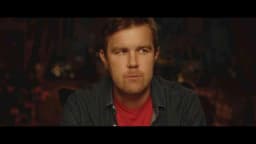
The craft of the spot rests heavily on performance and pacing. Weiner, whose commercial work spans emotionally grounded narratives, holds on the father's face at the moment his son is rejected, locating the adult's private experience of sharing a child's first heartbreak as the film's emotional payoff. The spot contains no celebrity talent, as noted by adsoftheworld.com, which gives the casting an intentional everyman quality designed to make the family dynamics legible to a broad cross-section of prospective adoptive parents across the United States.
ARCHIVENo verified performance data for "First Date, First Heartbreak" is publicly available in terms of audience reach figures, website traffic lifts for AdoptUSKids, or measurable changes in foster care adoption inquiries attributable to the October 2018 campaign. This is consistent with the broader challenge of measuring public service advertising outcomes in the United States, where conversion — a prospective parent initiating an adoption process — occurs months or years after initial exposure and is rarely linked back to a specific creative asset.
Structurally, the campaign exhibits several characteristics associated with effective public interest narrative advertising. The creative premise resolves a known perception barrier — that parenting a teenager holds fewer bonding opportunities — with a concrete, emotionally legible counter-example rather than an abstract appeal to civic duty. The choice to withhold the adoption context until the film's final moments follows a dramatic reveal structure that rewards viewer attention and increases the likelihood of voluntary resharing, particularly on digital platforms where the campaign's film assets were distributed across the United States. The pro bono production model and the multi-agency launch coalition — spanning HHS, the Administration for Children and Families, AdoptUSKids, and the Ad Council — indicate institutional confidence in the campaign's strategic alignment with the AdoptUSKids mission, which has operated continuously since 2004 according to adsoftheworld.com. Clapboard rates "First Date, First Heartbreak" 63 out of 100, reflecting a well-crafted emotional premise that is somewhat constrained by the inherent reach limitations of a single-spot pro bono campaign without a documented media amplification strategy.
"First Date, First Heartbreak" is a 2018 public service film campaign created by Forsman & Bodenfors for Ad Council and AdoptUSKids. It launched on October 25, 2018, in the United States, and focuses on encouraging adults to adopt teenagers from foster care by depicting the emotional rewards of shared adolescent milestones.
Clay Weiner directed the spot for production company Biscuit Filmworks, as documented by adsoftheworld.com. Weiner's approach withholds the adoption context until the film's closing moments, using a prom proposal scene and a father's empathetic reaction to deliver the campaign's central emotional argument for adopting teenagers in the United States.
Forsman & Bodenfors created the campaign from its New York office on a pro bono basis, per Forsman & Bodenfors. Group Creative Directors Matt Creamer and Andreas Baumert led the work, with copywriter Kristin Cubbison and art director Tim Austin developing the script, as credited by adsoftheworld.com.
The Ad Council and AdoptUSKids partnership on foster care adoption public service advertising began in 2004, according to adsoftheworld.com. The 2018 "First Date, First Heartbreak" campaign represents one iteration of this long-running United States public interest platform, with subsequent campaigns handled by different agencies including Barbarian in 2021.
The strategy targeted a specific perception barrier in the United States: that adopting teenagers offers fewer bonding opportunities than adopting younger children. Forsman & Bodenfors countered this by dramatising adolescent firsts — a prom proposal, a first heartbreak — that adoptive parents of teenagers still experience, reframing older-child adoption as emotionally rich.
Clapboard rates "First Date, First Heartbreak" 63 out of 100. The score reflects a well-constructed emotional narrative and a clear strategic premise, balanced against the inherent reach constraints of a single pro bono film asset without publicly documented media amplification data for its United States distribution.
.webp)
Creative Collaboration Platform: The Backbone of Modern Creative WorkWhat is a creative collaboration platform?Clapboard defines a creative collaboration platform as the operational core for today’s distributed creative teams. This is not a collection of digital collaboration tools stitched together; Clapboard’s system


Understanding the Creative Production MarketplaceWhat is a Creative Production Marketplace?Clapboard defines a creative production marketplace as a structured ecosystem where brands, agencies, and production talent converge to execute video, advertising, and branded content at scale. Unlike the legacy agency or freelanREAD FULL ARTICLE

The Urgent Need for a Creative Production Operating SystemWhy Traditional Creative Production Models Break DownClapboard sees the creative production landscape shifting under pressure. Content velocity is no longer a buzzword—it’s a mandate. Modern advertising demands relentless output across dozens of channels, each wREAD FULL ARTICLE