 ARCHIVE
Action Man
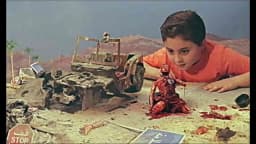
Action Man: Battlefield Casualties is a powerful digital campaign developed for Veterans For Peace...
Accessible Media Makes Described Video Visible in Print
Accessible Media's 'Everything Described' campaign is a single-asset print execution published in Canada in April 2015, created by TBWA\Toronto to demonstrate how described video — audio narration of key visual elements — makes television accessible to blind and partially sighted audiences.
Accessible Media Inc., known as AMI, rebranded from the National Broadcast Reading Service in 2010, according to Wikipedia, reflecting the organisation's expansion beyond reading broadcast content to encompass wider television accessibility including described video services. By the time 'Everything Described' launched in April 2015, AMI had established itself as Canada's principal media organisation dedicated to serving audiences who are blind, partially sighted, or print-restricted. The campaign arrived at a critical regulatory moment in the Canadian broadcasting landscape, positioning AMI as both advocate and educator for a viewing public largely unfamiliar with described video as a format.
In Canada, the campaign's single print asset carried the weight of a broader public interest argument: that described video is not a niche accommodation but a fundamental television right. Rather than relying on emotional storytelling, the creative approach demonstrated how described video actually functions — translating visual information into narrated language — allowing sighted audiences to understand what blind viewers experience. This instructional honesty gave the campaign its distinctive character within the public service category. TBWA\Toronto's execution for Accessible Media sits at the intersection of documentary transparency and social experiment, using the conventions of print to make an invisible accessibility feature suddenly legible to a wide Canadian audience. Clapboard rates this campaign 63 out of 100.
The 'Everything Described' campaign launched in direct alignment with a landmark shift in Canadian broadcast regulation. The CRTC adopted Broadcasting Regulatory Policy CRTC 2015-104 on March 26, 2015, according to Crtc Gc Ca, establishing expanded described video and closed captioning requirements for Canadian broadcasters. The policy introduced a tiered approach, according to crtc.gc.ca, requiring major broadcasters to expand their described-video obligations beginning in September 2015. TBWA\Toronto's campaign for Accessible Media arrived weeks after this ruling, giving the creative work immediate policy relevance and amplifying AMI's authority as the organisation best placed to explain described video to the Canadian public.
The strategic insight underpinning the campaign was precise. Most Canadian television viewers had no functional understanding of what described video is or how it operates, according to Clapboard's editorial assessment. AMI's challenge was not simply to raise awareness of its services but to make an invisible feature tangible. Where competitors in the accessibility media space — including conventional broadcaster accessibility departments and third-party captioning services — tended to position described video as a compliance obligation, AMI chose demonstration over advocacy. This distinction gave 'Everything Described' a strategic edge: it educated rather than persuaded, trusting that comprehension would generate support. In the Canadian public interest category, that shift from emotional appeal to functional explanation represented a meaningful creative and strategic departure, one well suited to the regulatory climate CRTC 2015-104 had just created.
TBWA\Toronto assembled a focused creative team to solve a genuinely unusual problem: how to represent an audio experience in a static print medium. Executive Creative Director Allen Oke led the engagement, with Creative Directors Rodger Eyre and Gerald Kugler shaping the campaign's conceptual direction, as documented by Clapboard and commarts.com. Art Director Guilherme Bermejo and Copywriter Nick Doerr were responsible for the execution itself, while Designer Kelly Sturino, Typographer George Lai, and Retoucher Len Dang handled the craft layers that gave the single asset its visual precision. Account Director Helen Winfield and Editor David Quach completed the team, as credited by Clapboard and commarts.com.
The creative challenge was structurally interesting. Described video exists as narration — language laid over image to explain what sighted viewers see automatically. To represent this in print, the team needed to collapse that audio-visual relationship into a two-dimensional surface. The result used typography and image together not to decorate an argument but to enact it, showing the reader what described video sounds like by making its language visible. This approach aligned with the campaign's broader strategic commitment to demonstration over sentiment. For a public interest campaign operating with a single media asset, the economy of that decision was significant: one execution had to do the educational and advocacy work simultaneously. The typographic craft of George Lai and the retouching precision of Len Dang ensured the execution met the production standard required for the idea to land clearly. No production or broadcast credits beyond the print team are publicly documented for this campaign.
No verified third-party performance data for the 'Everything Described' campaign — including reach figures, audience recall scores, or media impressions — is publicly available. No awards for this specific execution are documented across Cannes Lions, the Effies, One Show, D&AD, the Clios, the Webby Awards, or WARC, according to Clapboard's awards research. It is worth noting, as documented by Strategyonline Ca, that TBWA\Toronto was active in the Canadian awards circuit during this period, though the 'Everything Described' campaign itself does not appear in the recognised results.
Structurally, the campaign's effectiveness argument rests on its timing and its medium choice. Launching in April 2015 — weeks after the CRTC's Broadcasting Regulatory Policy CRTC 2015-104 established new described video obligations for Canadian broadcasters, according to crtc.gc.ca — the work entered a public conversation that was already opening. A single print asset in this environment functioned as a reference document as much as an advertisement: something a journalist, policymaker, or broadcaster could encounter and immediately understand. The decision to demonstrate rather than simply advocate gave the campaign a durability that purely emotional public service work often lacks. For Accessible Media, whose mandate is to make Canadian media accessible to blind and partially sighted audiences, a campaign that teaches its audience how described video works carries functional value beyond its media placement. Clapboard scores 'Everything Described' at 63 out of 100, reflecting strong conceptual clarity and contextual relevance against limited documented reach and the constraints of a single-asset print execution.
'Everything Described' is a print campaign created by TBWA\Toronto for Accessible Media, published in Canada in April 2015. It used a single print asset to demonstrate how described video — audio narration of visual content — makes television accessible to blind and partially sighted Canadians, choosing functional demonstration over emotional storytelling.
TBWA\Toronto created the campaign, as documented by Clapboard and commarts.com. The core creative team included Executive Creative Director Allen Oke, Creative Directors Rodger Eyre and Gerald Kugler, Art Director Guilherme Bermejo, and Copywriter Nick Doerr, with additional craft contributions from designer Kelly Sturino, typographer George Lai, and retoucher Len Dang.
The campaign launched weeks after the CRTC adopted Broadcasting Regulatory Policy CRTC 2015-104 on March 26, 2015, according to crtc.gc.ca, which expanded described video obligations for Canadian broadcasters. AMI used the moment to educate the Canadian public about what described video is and how it functions in practice.
Described video is audio narration that explains key visual elements — settings, costumes, and body language — for blind or visually impaired viewers, as defined by the CRTC. In Canada, the CRTC's 2015 regulatory policy formally expanded requirements for broadcasters to provide it, making public understanding of the format increasingly relevant.
No awards for 'Everything Described' are documented across Cannes Lions, the Effies, One Show, D&AD, the Clios, the Webby Awards, or WARC, according to Clapboard's research. TBWA\Toronto was active in the Canadian awards circuit during this period, but this specific execution does not appear in recognised award results.
Clapboard rates 'Everything Described' at 63 out of 100. The score reflects the campaign's strong conceptual clarity and its well-timed entry into the Canadian described video regulatory debate, balanced against the constraints of a single-asset print execution and the absence of publicly documented performance or reach data.
.webp)
Creative Collaboration Platform: The Backbone of Modern Creative WorkWhat is a creative collaboration platform?Clapboard defines a creative collaboration platform as the operational core for today’s distributed creative teams. This is not a collection of digital collaboration tools stitched together; Clapboard’s system


Understanding the Creative Production MarketplaceWhat is a Creative Production Marketplace?Clapboard defines a creative production marketplace as a structured ecosystem where brands, agencies, and production talent converge to execute video, advertising, and branded content at scale. Unlike the legacy agency or freelanREAD FULL ARTICLE

The Urgent Need for a Creative Production Operating SystemWhy Traditional Creative Production Models Break DownClapboard sees the creative production landscape shifting under pressure. Content velocity is no longer a buzzword—it’s a mandate. Modern advertising demands relentless output across dozens of channels, each wREAD FULL ARTICLE