 ARCHIVE
How ABTO Made Every Letter Count in Brazil's Organ Donation Crisis
The Organ Waiting Line is a 2022 integrated healthcare campaign created by Leo Burnett Tailor Made for ABTO, the Brazilian Association of Organ Transplantation, in which the stories of three real transplant candidates — José, Maria, and Wilson — are told through hand-drawn typographies shaped by each person's own body movements, distributed across specialised publications, mass media, and social networks in Brazil.
ABTO launched the campaign in June 2022 against a backdrop of acute crisis in the Brazilian organ donation system. Organ and tissue donations had dropped by twenty-six percent during the Covid-19 pandemic, and families refusing to donate had increased by nearly fifty percent, according to Clapboard's editorial documentation of the campaign. With fifty thousand people waiting for a transplant in Brazil and an average wait of as much as five years, the scale of human suffering was measurable and immediate. ABTO required a campaign capable of translating those statistics into something a general audience could feel rather than simply process.
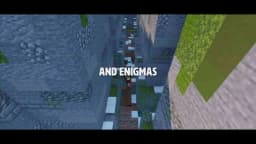
The campaign's central mechanism is the fusion of personal testimony and typographic craft. Each of the three protagonists inspired a bespoke alphabet, with individual letterforms drawn from that person's physical movements and arranged to evoke the visual experience of standing in a line that winds endlessly forward. The art direction makes the metaphor literal: the lines of text curl and loop, referencing the circularity and exhaustion of an interminable wait. The literary form of the storytelling — each person's account rendered as a sustained narrative rather than a slogan — positioned the campaign firmly within the tradition of empathy-led health communication rather than awareness-only public service advertising. In Brazil, where organ transplant waiting lists had reached their highest total in more than two decades by December 2022, according to data cited by bmj.com, the urgency of that positioning could not have been more pointed.
ARCHIVEABTO identified a specific behavioural gap at the heart of Brazil's organ donation shortfall. The problem was not a lack of public awareness of organ transplantation as a concept; it was the emotional distance between people who might consent to donate and the strangers whose lives depended on that decision. Leo Burnett Tailor Made's strategic response was to collapse that distance through individualised narrative, making José, Maria, and Wilson legible as specific people rather than representative data points.
The strategic context in Brazil was severe. Brazil recorded approximately fifteen point one deceased donors per million population in 2021, down from eighteen point one per million in 2019, according to bmj.com — a decline that predated the pandemic and was then sharply accelerated by it. Brazil performed seven thousand four hundred and seventy-three transplants in 2022 against a waiting population that a Ministry of Health count placed at thirty-four thousand eight hundred and thirty people on the national solid-organ waiting list at the end of that year, as reported by riotimesonline.com. A separate figure cited by bmj.com placed the total waiting for an organ from a deceased donor at fifty-two thousand nine hundred and eighty-nine by December 2022 — the highest figure in more than two decades. Kidney transplants recovered from four thousand seven hundred and seventy-seven in 2021 to five thousand three hundred and six in 2022, but remained below the pre-pandemic 2019 level of six thousand three hundred and two, according to bmj.com.
Within ABTO's own creative history, The Organ Waiting Line represents a deliberate shift. Earlier campaigns, including the widely discussed Chiquinho Scarpa stunt created by Leo Burnett and the 2017 Donor Emoji campaign produced with Talent Marcel — a direct competitor agency that partnered ABTO on hashtag-driven social advocacy using the handle SouDoador — had relied on provocation and social virality. The 2022 campaign moved instead toward sustained literary empathy, asking audiences to read and inhabit a life rather than react to a spectacle. That shift in register reflects a broader evolution in health industry communication, in which organisations increasingly seek durable emotional engagement over short-cycle attention spikes.
The creative execution of The Organ Waiting Line is built on a single irreducible act of craft: every letter in every typeface was drawn by hand. Art Director and Illustrator Marco Mattos led the typographic development, deriving the geometry of each letterform from the recorded body movements of one specific transplant candidate. José, Maria, and Wilson each generated a distinct alphabet, meaning the typeface used to tell a person's story is itself a physical trace of that person. The letters are not metaphors for their subjects — they are, in a direct material sense, made from them.
The literary dimension of the execution was shaped under Chief Creative Officer and Copywriter Marcelo Reis, with Creative Vice Presidents Pedro Utzeri and Vinicius Stanzione providing creative leadership, and Creative Director Alessandra Sadock overseeing the overall direction of the work, as documented by Little Black Book. Integrated Production Director Maria Fernanda Moura managed the production process, with RTV and Art Buyer Mauro Moura handling the material execution. The production credits for The Organ Waiting Line are documented across clapboard.com and lbbonline.com.
The art direction carries the campaign's central metaphor into its layout. Lines of text do not run in straight columns; they curve and double back, replicating the visual experience of a physical queue. As a reader moves through each story — from the first letters of a typeface shaped by early waiting, through to the characters approaching the front of the line — the typography itself changes register, encoding the emotional arc of a life in suspension. The campaign was distributed across specialised publications, mass media, and social networks in Brazil, a channel mix designed to reach both the healthcare-engaged audiences most likely to act on organ donation messaging and the broader public whose family consent decisions ultimately determine donation rates. The integration of typographic innovation with literary narrative and a clearly purposive media strategy gives the work a structural coherence that distinguishes it from single-format awareness campaigns common across the health industry.
No independently verified performance data for The Organ Waiting Line — including reach figures, engagement rates, or donation uplift attributable to the campaign — is publicly available at the time of writing. No confirmed awards entries or wins for the campaign have been located across major industry award bodies.
Clapboard assigns The Organ Waiting Line a score of 64 out of 100. That figure reflects a campaign with genuine creative distinction — the hand-lettered, movement-derived typography is an original mechanism with clear expressive logic — that is partially constrained by the limits of its documented distribution. A single media asset across a broad channel mix generates awareness without the repetition or interactive depth that typically drives measurable behaviour change in organ donation contexts. The campaign's literary format demands sustained attention from an audience that social and mass media platforms are not structurally designed to deliver.
What the campaign achieves with structural confidence is the hardest task in health industry communication: it makes the waiting list a specific human experience rather than an aggregate statistic. In a Brazilian market where fifty thousand people were waiting for transplants and family refusal rates had surged by nearly fifty percent during the pandemic, according to Clapboard's editorial record, converting one member of the public's abstract awareness into personal identification with José, Maria, or Wilson is a meaningful outcome — even where it cannot be quantified. The campaign's enduring value to ABTO lies in its contribution to a longer narrative about the human cost of organ donation shortfall in Brazil, a conversation that the organisation has sustained across more than a decade of creative work with Leo Burnett Tailor Made and partner agencies.
The Organ Waiting Line is a June 2022 integrated campaign created by Leo Burnett Tailor Made for ABTO in Brazil. It tells the stories of three transplant candidates — José, Maria, and Wilson — through bespoke hand-drawn typefaces built from each person's body movements, distributed across mass media, specialised publications, and social networks.
ABTO launched the campaign in response to a severe decline in organ donation during the Covid-19 pandemic. Donations had dropped by twenty-six percent and family refusal rates had risen by nearly fifty percent, according to Clapboard's editorial record, leaving fifty thousand people waiting for a transplant in Brazil with average waits of up to five years.
Art Director and Illustrator Marco Mattos created the hand-drawn typefaces, deriving each letterform from the body movements of a specific transplant candidate. The campaign's creative leadership included Chief Creative Officer Marcelo Reis, Creative Director Alessandra Sadock, and Creative Vice Presidents Pedro Utzeri and Vinicius Stanzione, as documented by lbbonline.com.
Brazil performed seven thousand four hundred and seventy-three transplants in 2022 against a waiting population bmj.com placed at nearly fifty-three thousand people awaiting an organ from a deceased donor by December of that year — the highest total in more than two decades. Deceased donor rates had also fallen sharply from pre-pandemic levels, according to bmj.com.
The Organ Waiting Line received a Clapboard Score of 64 out of 100. The score recognises the campaign's original typographic mechanism and literary approach to health storytelling while noting that a single media asset and broad but undocumented distribution limit the measurable depth of audience engagement across Brazil's organ donation conversation.
Earlier ABTO campaigns, including the Chiquinho Scarpa provocation stunt by Leo Burnett and the 2017 Donor Emoji campaign by Talent Marcel, relied on social virality and public reaction. The Organ Waiting Line shifted toward sustained literary empathy, asking Brazilian audiences to inhabit individual transplant candidates' experiences rather than react to a single attention-grabbing moment.
.webp)
Creative Collaboration Platform: The Backbone of Modern Creative WorkWhat is a creative collaboration platform?Clapboard defines a creative collaboration platform as the operational core for today’s distributed creative teams. This is not a collection of digital collaboration tools stitched together; Clapboard’s system


Understanding the Creative Production MarketplaceWhat is a Creative Production Marketplace?Clapboard defines a creative production marketplace as a structured ecosystem where brands, agencies, and production talent converge to execute video, advertising, and branded content at scale. Unlike the legacy agency or freelanREAD FULL ARTICLE

The Urgent Need for a Creative Production Operating SystemWhy Traditional Creative Production Models Break DownClapboard sees the creative production landscape shifting under pressure. Content velocity is no longer a buzzword—it’s a mandate. Modern advertising demands relentless output across dozens of channels, each wREAD FULL ARTICLE