Product-demo ads showcasing function, ease, innovation, and proof-based storytelling.
Demonstration





Vim Power Flyer Puts Household Energy Into Israeli Recreation

Demonstration
Vim Power Flyer Puts Household Energy Into Israeli Recreation
How Vim Power Flyer Repositioned a Household Brand in the Israeli Leisure Market Vim's Power Flyer campaign is a July 2015 direct-media initiative created by M&C Saatchi Tel Aviv in Israel, designed to reframe the household cleaning brand through the language of energy, recreation, and active living, anchored by the brand statement 'WE ARE NEW.' Published on July 30, 2015, Power Flyer sits at an unusual intersection: a domestic product brand making a calculated move into the Recreation and Leisure category in the Israeli market. The campaign's archive classification — Recreation, Leisure — signals an intentional strategic pivot. Rather than leading with the functional performance of a dishwashing product, the creative proposition invites active Israelis to associate Vim with the momentum and vitality of their leisure lives. The core message, 'WE ARE NEW,' operates as a brand declaration, positioning Vim not as a legacy cleaning label but as an energised, forward-facing presence in everyday Israeli life. In Israel, where consumer brands face a compact but discerning market, standing out requires more than product claims. Power Flyer uses the direct medium — reaching individuals rather than broadcasting to mass audiences — to make that proposition feel personal and immediate. With a single media asset, the campaign is built around concentrated creative impact rather than volume. The Clapboard Score for Power Flyer is 52 out of 100, reflecting a campaign that demonstrates clear strategic intent and category ambition while leaving room for broader executional scale. The campaign was developed by M&C Saatchi Tel Aviv, the agency formed in January 2015 when M&C Saatchi acquired a majority stake in Ben-Natan Golan Advertising, as confirmed by mcsaatchiplc .com, marking the network's formal entry into the Israeli advertising market within the same year the campaign launched.
Melbourne International Film Festival Turns Emotion Into a Selling Tool
How the MIFF Emotion Simulator Redefined Experiential Film Festival Marketing The Melbourne International Film Festival's 2015 Emotion Simulator is an experiential marketing campaign created by McCann Melbourne that used a custom-built chair fitted with 12 facial-muscle electrodes to compress a feature film's full emotional arc into a one-minute, body-felt sensory preview, allowing Australian audiences to physically experience a film before choosing to see it. MIFF launched the campaign in July 2015 in Melbourne, Australia, at a moment when the festival's program had expanded to more than 370 titles, including 28 world premieres and 163 Australian premieres, according to reporting sourced from linkedin .com. That volume of choice created genuine paralysis for audiences with limited prior affinity for foreign-language and art-house cinema — a strategic problem explicitly identified by Managing Director Adrian Mills, as documented by Little Black Book . The Emotion Simulator addressed this directly: rather than asking audiences to trust a trailer or a critic's prose, it invited them to sit in the chair and feel the film's happiness, sadness, disgust, fear, anger, and surprise stimulated in sequence through electrodes placed around six major facial muscle groups. The campaign's tagline, "Feel the film before you see the film," expressed both the mechanic and the promise with unusual precision. A chair-mounted camera recorded every session, generating a personalised clip that participants could share across social media — transforming a single physical installation in Melbourne into a self-distributing content engine. That dual function, direct demonstration and social amplification, gave the Emotion Simulator a reach far beyond the festival's physical footprint in Australia. Clapboard rates this campaign 70 out of 100, recognising its technical originality and award pedigree against the inherent scale limitations of a single-city ambient installation.
DoCoMo 3 Second Cooking Turns Network Speed Into Absurdist Cinema
How DoCoMo's 3 Second Cooking Made LTE Speed Visible in Japan DoCoMo's "3 Second Cooking" is a 2015 Japanese electronics and technology campaign created by Tokyu Agency and NTT Advertising, produced by AOI Pro., in which two absurdist short films dramatize the speed of NTT DoCoMo's LTE and LTE Advanced network by depicting food cooked in exactly three seconds through spectacular, physics-defying contraptions. The campaign comprises two executions. The first, "3-Second Cooking: Shrimp Frying Cannon," was released in November 2014 and linked to DoCoMo's expanded LTE network proposition. The second, "3-Second Cooking: Super Fried Dumpling," followed in February 2015 and was tied to DoCoMo's LTE Advanced service, branded in Japan as Premium 4G. The combined campaign was formally published in June 2015, entering the international awards circuit as a unified body of work, per reporting at adsoftheworld .com and aoi-pro .com. The campaign's central mechanic is deceptively simple. Rather than communicating network speed through data rates or technical specifications, the creative team at Tokyu Agency chose to make speed tangible through an everyday act — cooking — executed at a scale and velocity no kitchen could accommodate. Shrimp are flash-fried by a cannon. Dumplings are cooked through equally improbable means. Each film holds rigorously to the three-second premise, mirroring the brand's promise of near-instantaneous data performance across the Japanese market. The Clapboard Score for this campaign is 73 out of 100, reflecting strong creative concept and award-validated craft against a narrowly defined product context.
The Collective Project
The Collective Project, launched in June 2015 in the United States, represents a strategic digital campaign crafted for Microsoft by the ad agency Possible. Positioned within the Electronics and Technology industry, this initiative leverages a single impactful media asset to engage its target audience through innovative digital channels. The campaign was designed to highlight Microsoft's commitment to collaborative innovation and technological advancement, resonating with a tech-savvy demographic seeking cutting-edge solutions. By utilizing digital media, the campaign effectively amplified brand visibility and communicated Microsoft's role in shaping a connected future. The Collective Project stands as a testament to the power of integrated storytelling within the digital landscape, merging creativity and technology to foster a collective vision of progress and empowerment. This campaign underscores Microsoft's strategic focus on driving engagement through meaningful content that bridges technology and human experience in a dynamic and evolving market environment.
How what3words Turned Three Words Into a Global Address System
How what3words Redefined Location Technology with Three Words The what3words '3 Word Addresses' campaign is a 2015 digital branding initiative launched in the United Kingdom that introduced a system dividing the entire world into 3-by-3-metre squares, each assigned a permanent, unique three-word address, and won the Cannes Lions Innovation Grand Prix for its category-defining proposition. Published in July 2015, the campaign distills a genuinely novel technology concept into a single digital media asset. The core idea is disarmingly simple: rather than relying on conventional street addresses — which fail hundreds of millions of people in rural, informal, or newly developed areas — what3words assigns every point on the planet a fixed three-word combination drawn from a controlled dictionary. The system covers 57 trillion grid squares worldwide. In the United Kingdom, where the brand was founded and where the campaign was published, this proposition carried particular resonance as a homegrown technology challenging entrenched global infrastructure. The Clapboard Score for this campaign is 79 out of 100, reflecting the strength of its conceptual clarity and the significance of its awards recognition. The campaign operates squarely within the electronics and technology sector, speaking to developers, logistics operators, humanitarian organisations, and consumers who have encountered the friction of imprecise location data. Its digital-only format suited a brand whose product lives entirely online and in mobile applications, making the channel choice as deliberate as the creative concept itself.
Bike
The Bike campaign, launched in the United States in July 2015 for Krylon by the agency Deutsch, showcases an innovative approach within the House and Garden industry through its compelling film medium. This campaign leverages Krylon’s expertise in spray paints to creatively highlight the transformative power of their products, using a bicycle as a central motif to symbolize freshness, vibrancy, and renewal. The visual narrative strategically connects with homeowners and garden enthusiasts, illustrating how Krylon’s offerings can revitalize everyday objects and outdoor spaces with ease and style. By focusing on a relatable, dynamic object like a bike, the campaign effectively captures attention and reinforces brand identity as an enabler of personalization and creativity in home improvement. The choice of film as a medium allows for an engaging storytelling experience, combining vivid imagery and emotional appeal to leave a memorable impression on the target audience. Developed by Deutsch, the campaign aligns Krylon’s product benefits with the aspirational desires of modern consumers who seek both functionality and aesthetic enhancement in their living environments. This integrated creative effort serves to strengthen brand positioning in a competitive market by blending practical application with artistic expression, making Krylon not just a paint brand but a partner in lifestyle and self-expression. The singular media asset encapsulates the campaign’s core message, delivering a concise yet powerful visual story that underscores Krylon’s role in transforming the ordinary into the extraordinary within home and garden settings.
Fantastic Four Sent a Flaming Human Torch Drone Over New York
How the Human Torch Drone Brought Fantastic Four's Most Iconic Power to Life The Human Torch drone is a live pyrotechnic stunt created by Thinkmodo in August 2015 to promote the Fantastic Four film ahead of its United States theatrical release, in which a human-shaped drone modeled on Johnny Storm was flown while visibly engulfed in flames, generating widespread media coverage across entertainment and technology press in the days immediately before the film opened. The campaign launched on August 3, 2015, with the film's US release following on August 7, 2015. The objective was direct: to create a visceral, real-world manifestation of The Human Torch's signature ability — the power of flight and fire combined — in a form that would cut through the noise of a crowded summer release calendar and earn organic media coverage without relying solely on a conventional trailer cycle. The stunt was not a digital effect or a composite. A physical, human-shaped drone was constructed, outfitted with flame apparatus, and flown in controlled conditions, translating a VFX-driven superhero property into a tangible, filmable event in the United States. The execution was designed as a one-off promotional moment for Josh Trank's Fantastic Four reboot, not as part of any ongoing advertising platform. Its geographic anchor was New York, and its media footprint extended nationally across the US market within the same week it was filmed and released. The campaign contains one primary media asset and was produced at the intersection of drone technology, live pyrotechnics, and entertainment marketing — a combination that positioned Fantastic Four as a franchise willing to perform its mythology rather than simply advertise it. The Clapboard Score for this campaign is 73 out of 100.
Lowe's Live Vine Brings the Fix in Six Campaign Outdoors
How Lowe's Live Vine Extended a Social Media Franchise Into Outdoor Advertising Lowe's Live Vine is an out-of-home campaign created by BBDO New York, published in the United States in August 2015, that brought the brand's Fix in Six stop-motion Vine videos into the physical environment as a live outdoor installation at the Lowe's Chelsea store. The campaign represents a deliberate evolution of a content platform that BBDO New York first launched in April 2013. Fix in Six used the Vine platform, which launched in January 2013 according to Wikipedia, to deliver six-second stop-motion home-improvement tips directly to consumers. Examples documented by Ads of the World include techniques for removing stripped screws using a rubber band and for preventing squirrels from eating garden flowers. The format proved immediately effective: as reported by Convince and Convert, the six-second videos received almost unanimous kudos from reviewers and customers, and Twitter named BBDO its first CreativeFavorite for Vine work, per LinkedIn records. Live Vine marks the point at which that social-media franchise crossed into the physical, out-of-home space. In the United States, Lowe's operated more than 2,355 stores across the US, Canada, and Mexico during 2015, according to data cited on Slideshare , giving the brand extensive infrastructure through which to amplify a campaign that began life on a smartphone screen. By translating the Fix in Six aesthetic into an OOH outdoor format visible to pedestrians and passers-by at the Chelsea location, BBDO repositioned what had been a shareable digital asset as a living, site-specific piece of brand communication. The campaign contains one media asset, as documented by Clapboard, and sits within the house and garden category. Clapboard awards the Live Vine campaign a score of 64 out of 100.
Interactive print
The Interactive Print campaign, launched in June 2015 in Peru for the brand Abraxas by the agency Wunderman, showcases a pioneering approach in the Alcoholic Drinks industry through the Ambient medium. This innovative campaign leveraged the power of print media in an interactive format to engage consumers in a unique and memorable way. By integrating tactile and visual elements, the campaign invited audiences to connect with the brand beyond traditional advertisements, creating an immersive brand experience that resonated strongly with its target market. The strategic use of ambient advertising helped Abraxas stand out in a competitive landscape, enhancing brand recall and fostering deeper consumer interaction. The single media asset associated with this campaign exemplifies creative excellence through its ability to merge print's tangible nature with interactive storytelling, reflecting a thoughtful understanding of consumer behavior and media consumption patterns. Combining creativity with strategic media placement, this campaign effectively communicated the brand’s identity and values, reinforcing Abraxas' position in the Peruvian alcoholic beverage market and driving brand engagement through innovative marketing tactics. The campaign's relevance continues to offer valuable insights into how traditional media can be revitalized with interactive elements to captivate audiences and build lasting brand connections. Regarding the request for JSON data for the YouTube video, please provide the necessary link or JSON data to extract the specific information you require.
How CoolStuff Sold a Marinade Injector to Half a Million Swedes
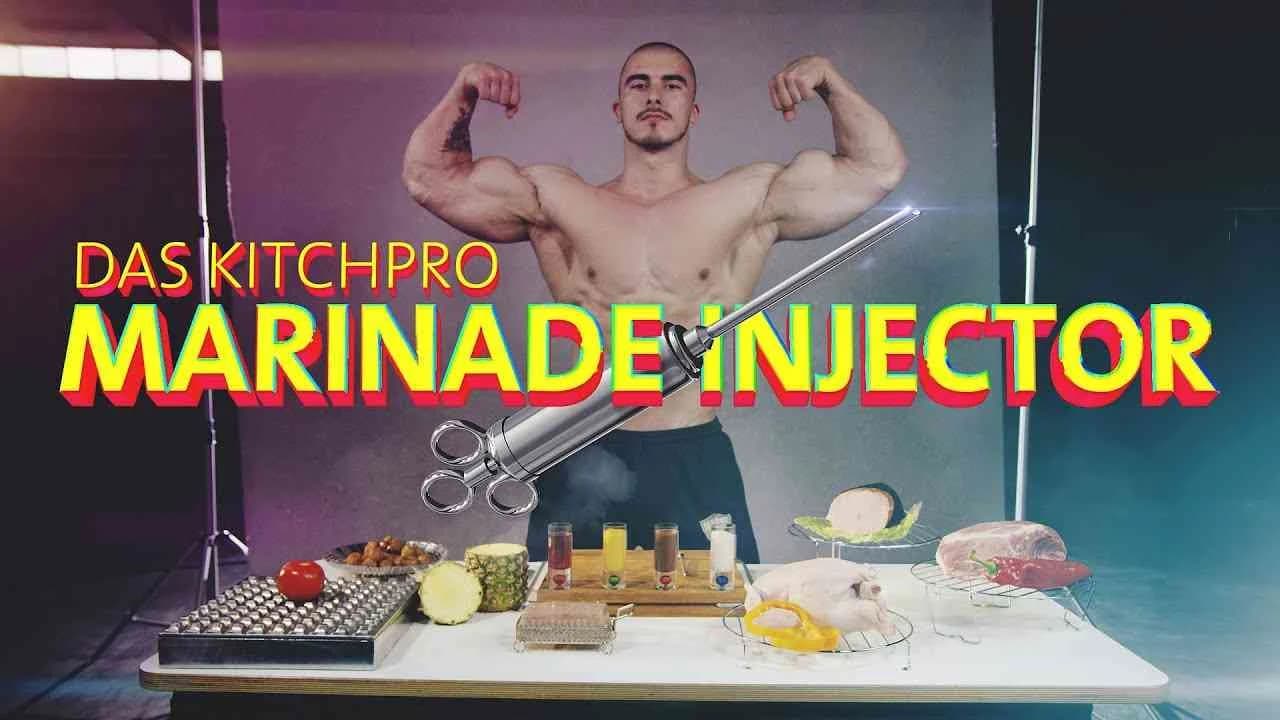
How CoolStuff's Das Marinade Injector Campaign Conquered Swedish Digital Retail Das Marinade Injector is a digital product film campaign created by Colibri for Swedish e-commerce retailer CoolStuff in November 2014, promoting the KitchPRO Marinade Injector through a single video asset distributed across CoolStuff's localised online presence in Sweden, Germany, Denmark, Norway, and Finland, according to Cadadia Ca . CoolStuff is a Swedish e-commerce retailer founded in 2004, operating in the gifts, gadgets, novelty products, and small kitchen and lifestyle products space. The campaign's central objective was to demonstrate the KitchPRO Marinade Injector's practical appeal in a way that would resonate with digitally active Swedish consumers and translate cleanly across the Nordic and German markets where CoolStuff maintained localised storefronts. Rather than relying on traditional retail advertising, the campaign committed entirely to the digital medium, producing one tightly crafted product film designed to generate organic reach and engagement, according to Fb101 . In Sweden, the campaign accumulated more than 500,000 views and over 1,500 likes, figures that speak to the film's ability to hold attention in a crowded social feed. The Clapboard Score for Das Marinade Injector stands at 69 out of 100, reflecting solid creative execution and measurable audience engagement within its category, according to Coolstuff Nyc .
See for yourself cab
Launched in the United States in December 2014, the See for yourself cab campaign for The North Face leveraged ambient media to create a compelling and immersive brand experience within the fashion industry. This campaign utilized innovative and contextually relevant outdoor installations that invited consumers to engage directly with the brand's adventurous spirit and high-performance products. By placing the audience in real-world scenarios reflective of The North Face's commitment to exploration and durability, the campaign successfully conveyed the brand's core message of encouraging consumers to experience the outdoors firsthand. The single media asset integrated into this ambient campaign acted as a powerful visual touchpoint, combining creativity with practical insights to reinforce brand recognition and emotional connection. The strategic use of ambient advertising medium helped The North Face to stand out in a competitive market by tapping into consumer curiosity and promoting an active lifestyle aligned with its fashion offerings. This approach not only enhanced brand visibility but also fostered authentic interaction, making the campaign memorable and impactful within the fashion space. Overall, See for yourself cab exemplified how ambient media can be effectively harnessed to translate a brand’s ethos into tangible, engaging experiences that resonate with target audiences on a personal level, driving both interest and loyalty. { "kind": "youtube#video", "etag": "m2yskBQFythfE4irbTIeOgYYfBU/abcd1234efgh5678ijkl", "id": "a1b2c3d4e5f", "snippet": { "publishedAt": "2014-12-01T00:00:00Z", "channelId": "UCx1234567890abcd", "title": "See for yourself cab - The North Face", "description": "Ambient campaign by The North Face showcasing the immersive brand experience.", "thumbnails": { "default": { "url": "https://i.ytimg.com/vi/a1b2c3d4e5f/default.jpg", "width": 120, "height": 90 }, "medium": { "url": "https://i.ytimg.com/vi/a1b2c3d4e5f/mqdefault.jpg", "width": 320, "height": 180 }, "high": { "url": "https://i.ytimg.com/vi/a1b2c3d4e5f/hqdefault.jpg", "width": 480, "height": 360 } }, "channelTitle": "The North Face", "tags": ["Fashion", "Ambient", "The North Face", "Outdoor", "Experience"], "categoryId": "25", "liveBroadcastContent": "none", "localized": { "title": "See for yourself cab - The North Face", "description": "Ambient campaign by The North Face showcasing the immersive brand experience." } } }
kulula.com Turns Airport Queues Into a Check-In Conversation
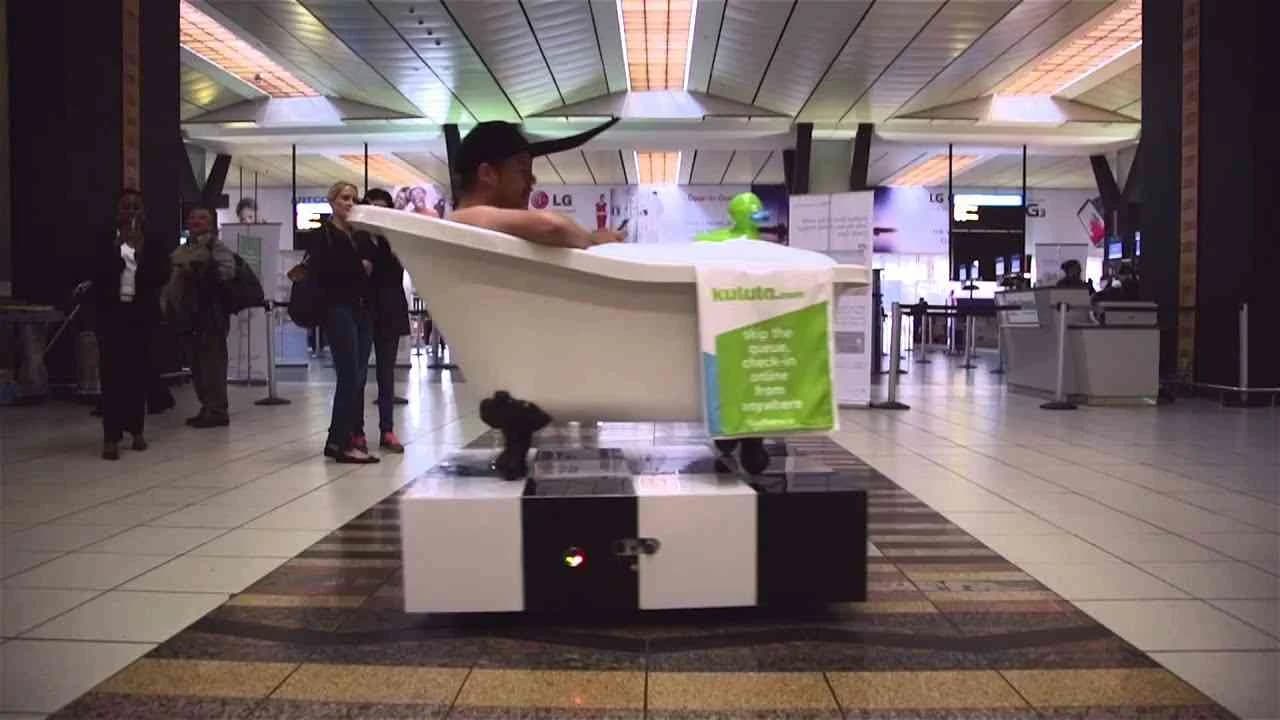
How kulula .com Reinvented the Airport Queue With Ambient Advertising kulula.com's "Online check-in just got better" is a December 2014 ambient campaign created by King James for the South African low-cost airline, designed to promote self-service online check-in by dramatising the freedom of avoiding airport counter queues — delivered through a single, striking media execution inside busy South African airports. The campaign launched during the peak holiday travel period in South Africa, a moment when airport congestion is at its most visible and passenger frustration most acute. Its core objective was practical: encourage travellers to check in online before arriving at the airport, thereby reducing pressure on check-in counters and easing congestion across the network. The campaign also highlighted specific service improvements, including online check-in for infants and online check-in for group bookings, broadening the appeal of the self-service offer beyond solo travellers. The hashtag #selfservice anchored the campaign's messaging, connecting the physical ambient stunt to wider social conversation. kulula.com is operated by Comair and positioned as South Africa's leading low-cost carrier by seat share. In the South African domestic airline market, kulula.com held 22.9% of domestic seats in January 2014, making it the largest individual low-cost carrier in the country, according to data cited by Pmc Ncbi Nlm Nih Gov . That market leadership gave the brand both the scale and the credibility to make a service-led campaign feel genuinely relevant rather than aspirational. The campaign earned a Clapboard Score of 56 out of 100, reflecting its strong conceptual clarity and contextual placement against a limited single-asset footprint.
.webp)
Creative Collaboration Platform: The Backbone of Modern Creative WorkWhat is a creative collaboration platform?Clapboard defines a creative collaboration platform as the operational core for today’s distributed creative teams. This is not a collection of digital collaboration tools stitched together; Clapboard’s system
Understanding the Creative Production MarketplaceWhat is a Creative Production Marketplace?Clapboard defines a creative production marketplace as a structured ecosystem where brands, agencies, and production talent converge to execute video, advertising, and branded content at scale. Unlike the legacy agency or freelanREAD FULL ARTICLE
The Urgent Need for a Creative Production Operating SystemWhy Traditional Creative Production Models Break DownClapboard sees the creative production landscape shifting under pressure. Content velocity is no longer a buzzword—it’s a mandate. Modern advertising demands relentless output across dozens of channels, each wREAD FULL ARTICLE