- HOME
- FOR CLIENTS
- FOR FREELANCERS
- LOGIN
BLOG
New user? Create account
New user? Create account


Varun Katyal is the Founder & CEO of Clapboard and a former Creative Director at Ogilvy, with 15+ years of experience across advertising, branded content, and film production. He built Clapboard after seeing firsthand that the industry’s traditional ways of sourcing talent, structuring teams, and delivering creative work were no longer built for the volume, velocity, and complexity of modern content. Clapboard is his answer — a video-first creative operating system that brings together a curated talent marketplace, managed production services, and an AI- and automation-powered layer into a single ecosystem for advertising, branded content, and film. It is designed for a market where brands need content at a scale, speed, and level of specialization that legacy agencies and generic freelance platforms were never built to deliver. The thinking, frameworks, and editorial perspective behind this blog are shaped by Varun’s experience across both the agency world and the emerging platform-led future of creative production. LinkedIn: https://www.linkedin.com/in/varun-katyal-clapboard/
In the landscape of influencer marketing trends 2024, authenticity is no longer a differentiator—it's the price of entry. Audiences have become expert at spotting contrived endorsements and manufactured personas. The days of high-gloss, low-substance content are numbered. Today, influencer authenticity is the metric that determines campaign viability and, ultimately, ROI.
Brands that ignore this shift risk irrelevance. Consumer trust in influencers is earned through visible transparency: unfiltered stories, genuine product use, and a willingness to show imperfection. The polished, transactional influencer has been replaced by creators who build trust over time, not overnight. The commercial impact is clear—authenticity drives engagement, and engagement drives conversion.
Credibility is now the primary filter for influencer partnerships. Red flags are easy to spot: inconsistent messaging, an obvious disconnect between the influencer’s lifestyle and the product, or a feed littered with undisclosed ads. These are signals of a mercenary approach, not a trusted voice.
Green lights, on the other hand, are found in creators who maintain a clear editorial line, show evidence of real product integration, and engage with their audience beyond surface-level comments. Brands looking to build influencer trust must scrutinize engagement quality, not just volume. It’s about the substance of conversations, not the scale of reach.
Vetting now requires more than a glance at follower counts or aesthetic cohesion. Brands are deploying deeper due diligence—reviewing historical content for alignment, monitoring sentiment in comment threads, and demanding transparency in paid partnerships. The goal: to partner only with those who can withstand scrutiny and contribute to authentic content creation.
The audience is calling the shots, and their preferences are clear. They want transparent influencer campaigns where the commercial relationship is disclosed, but not disguised. They want to see the influencer’s genuine opinion—even if it’s nuanced, or even critical.
Consumers are also demanding narrative consistency. An influencer who suddenly pivots to endorse an unrelated product loses credibility instantly. The expectation is for long-term, values-aligned partnerships, not one-off promotions. This is where brands must recalibrate: invest in relationships that allow for ongoing storytelling, not transactional blasts.
Ultimately, the influencer marketing trends 2024 point to a market where skepticism is healthy and discernment is high. The winners will be those who treat authenticity as a non-negotiable standard, not a campaign tactic. The brands and creators who understand this will build durable consumer trust and outperform those still chasing yesterday’s metrics.
Influencer marketing trends 2024 are not just another round of annual predictions—they are the new rules of engagement for brands, marketers, and creators navigating a digital landscape in flux. The stakes are higher, the cycles are faster, and the consequences of inertia are real. For those responsible for growth and relevance, tracking these trends is no longer optional; it’s a strategic imperative.
Unlike previous years, influencer marketing future is being shaped by more than platform updates or algorithm tweaks. Regulatory scrutiny, audience sophistication, and the collapse of old engagement metrics are forcing a reset. Authenticity is now table stakes, not a differentiator. Creators are no longer just distribution channels—they’re co-architects of brand narratives, demanding a new level of partnership and accountability.
The playbook is being rewritten in real time. Emerging formats—short-form video, live commerce, AI-driven content—are changing what it means to influence and be influenced. Brands that cling to last year’s tactics will find their budgets wasted and their messages ignored. The winners will be those who anticipate, not react.
Every digital marketing shift in 2024 compounds the risk of falling behind. If your influencer strategy is built on outdated assumptions, expect diminishing returns: lower reach, declining trust, and wasted spend. Early adopters of new social media trends, on the other hand, capture attention before the market saturates. They secure better creator partnerships, negotiate from a position of strength, and build campaigns that actually move the needle.
Campaign performance today is less about raw follower counts and more about contextual relevance and speed to market. The brands that invest in understanding and leveraging influencer marketing trends 2024 will see measurable lifts in engagement, conversion, and long-term brand equity. Those who don’t will be outpaced—often by competitors with leaner teams but sharper instincts.
Three forces are shaping the influencer marketing future this year. First, consumer cynicism is at an all-time high; only campaigns rooted in genuine creator-brand alignment cut through. Second, platforms are fragmenting, with niche communities delivering outsized impact compared to broad, unfocused reach. Third, data privacy and regulation are squeezing the margins on traditional targeting, making creative collaboration and first-party influence more valuable than ever.
Brands and creators must adapt to this reality—faster cycles, higher scrutiny, and the need for smarter collaboration. The cost of missing these signals is not just wasted spend, but lost brand relevance and eroded consumer trust. For those serious about performance, the only defensible position is to be ahead of the curve.
For a deeper dive into executing these shifts, see our influencer strategy guide and explore the broader digital marketing trends shaping 2024.
Social commerce influencer marketing is no longer a side experiment. In 2024, it’s the main event. The frictionless integration of shopping features within social platforms is redefining not just how products are discovered, but how they’re sold—and measured. The lines between content, influence, and commerce have blurred into a single, high-velocity transaction funnel. For performance-driven marketers, the implications are immediate: creative, conversion, and attribution now live in the same ecosystem.
Platforms like Instagram, TikTok, and Snapchat have made in-app shopping trends impossible to ignore. Product links embedded directly in influencer stories and live streams turn passive viewing into active buying. The result? Shoppable content is now the default, not the exception. Marketers are leveraging these built-in commerce tools to shorten the path from inspiration to purchase, capturing impulse intent before it cools (Boksi, 2024).
Influencers are no longer just storytellers or brand advocates; they’re frontline sales drivers. Their role extends from awareness to direct conversion, collapsing the funnel and making attribution more precise. The most effective influencer conversion strategies in 2024 are those that treat content as both brand-building and point-of-sale—no more waiting for a click-through or a separate landing page.
Effective shoppable content is built on seamless integration. The creative must feel native to the platform and authentic to the influencer’s voice, while the commerce element must be immediate and unobtrusive. Stories, reels, and live formats outperform static posts because they blend entertainment and utility. Live shopping events, especially on TikTok Shop, are now central to high-performing campaigns, offering real-time engagement and driving immediate purchase decisions—often at higher conversion rates than traditional e-commerce touchpoints (Social Native, 2024).
Performance marketers should prioritise influencers who understand both their audience and the mechanics of shoppable formats. Micro-influencers, in particular, often deliver outsized results due to higher trust and engagement. But scale matters too; multi-influencer activations can generate a critical mass of user-generated content and reach, amplifying both discovery and conversion.
The integration of commerce into social platforms has transformed campaign measurement. With every step of the consumer journey—from discovery to checkout—happening in-platform, attribution is clearer and more granular. Marketers can now track not just engagement, but actual sales, basket size, and repeat purchase directly from influencer activity. This level of visibility enables smarter budget allocation and rapid optimisation, closing the loop between creative investment and commercial outcome.
Data-driven marketers are using advanced attribution models to connect influencer touchpoints with downstream revenue. The days of “brand lift” as a proxy for success are numbered; in-app shopping trends demand real numbers. For those looking to refine their social commerce strategies, the focus should be on platforms and partners that offer robust analytics, transparent reporting, and the flexibility to iterate quickly. For deeper insights, see our guide on measuring influencer ROI.
In summary, the convergence of shoppable content, influencer conversion strategies, and in-app shopping is the defining force in social commerce influencer marketing this year. The winners will be those who master the mechanics—creative, commercial, and analytical—without getting distracted by the noise. The future isn’t just about influence; it’s about influence that converts.
Micro influencer marketing trends in 2024 are defined by a decisive shift away from raw follower counts and toward the metrics that actually move the needle: engagement, trust, and conversion. While macro-influencers still draw headlines, the real value is being unlocked by creators with smaller, more focused audiences. Micro-influencers typically operate in the 10,000–100,000 follower range; nano-influencers often have fewer than 10,000. The difference isn’t just scale—it’s substance. These creators build communities, not just audiences. Their content is less filtered, more credible, and their recommendations carry actual weight. In a landscape where authenticity is currency, brands are no longer paying a premium for mass reach that doesn’t convert.
The engagement trade-off is no longer theoretical. Micro-influencers in niche markets average engagement rates of 7.2%, while macro-influencers languish at just 1.4% (Research and Metric, 2024). Nano-influencers outperform even further, hitting double digits on platforms like TikTok—10.3% engagement, to be precise (eMarketer, 2024). These numbers aren’t vanity metrics. They translate to more meaningful interactions, higher conversion rates, and, ultimately, a stronger ROI. When a nano-influencer posts, their audience actually responds—comments, shares, and acts. That’s the difference between being seen and being believed. The data is clear: if your goal is boosting engagement rates, smaller is smarter.
Effectiveness in this space is about fit, not fame. The best-performing campaigns aren’t built on follower volume—they’re engineered for relevance. Start by mapping your target audience and identifying niche influencer communities that overlap with your brand’s values and category. Look for creators whose content consistently drives interaction, not just impressions. Scrutinize their comment sections. Are followers asking questions, tagging friends, or sharing personal stories? That’s the signal you want. Avoid the trap of over-indexing on surface-level metrics like reach or likes. Instead, prioritise influencers who demonstrate genuine advocacy and foster real dialogue within their community.
Collaboration with high-value micro and nano-influencers demands a different approach than macro partnerships. Skip the one-size-fits-all brief. Instead, co-create content that leverages the influencer’s unique voice and audience insights. Tighten your call-to-action: smaller communities are more responsive, but also more discerning. Incentivise quality over quantity—an exclusive offer, early access, or a tailored experience will outperform generic brand messaging every time. For brands running niche influencer campaigns, the upside is clear: you gain access to a self-selecting audience primed for action, not just passive consumption.
Engagement isn’t just a nice-to-have—it’s the lever that drives actual business outcomes. With influencer engagement rates climbing as audience size shrinks, brands can do more with less. The economics are compelling: micro-influencer campaigns deliver a 35% higher ROI compared to macro-influencer partnerships (Research and Metric, 2024). Nano-influencers, meanwhile, deliver outsized returns on modest investments. This isn’t about chasing the latest trend. It’s about recognising where influence is actually wielded: in communities built on trust, not in the echo chambers of mass-market celebrity.
The market is moving fast, but the fundamentals remain unchanged. Brands that prioritise relevance, community, and
Long-term influencer partnerships are reshaping the influencer marketing landscape in 2024. The era of transactional, campaign-based influencer work is fading. Brands now recognise that sustained influencer collaboration strategies deliver more than a fleeting spike in reach—they build equity, trust, and measurable business outcomes over time. Senior marketers who see influencer relationships as assets, not line items, are setting the pace.
The commercial logic is simple: consistent exposure drives conversion and loyalty. When audiences see an influencer repeatedly advocate for a brand, the endorsement evolves from paid placement to perceived genuine preference. This repetition compounds brand recall and credibility, lowering acquisition costs and increasing customer lifetime value. For the influencer, a retainer or multi-campaign agreement means income stability, creative freedom, and a stronger stake in the brand’s success. The result is content that feels less transactional and more authentic—because it is.
Effective long-term influencer partnerships start with alignment. Both parties must agree on values, creative boundaries, and commercial expectations. This means more than a signed contract; it’s about shared ambition. The most successful brand-influencer relationships are built on transparent communication, regular feedback loops, and co-created roadmaps that flex with business needs. Campaign sustainability depends on this foundation. It’s not about locking in a creator for a year and expecting magic. It’s about designing a relationship that evolves, adapts, and delivers mutual value—month after month.
The promise of long-term influencer partnerships doesn’t guarantee sustained results. Fatigue is real—both for creators and their audiences. Brands that treat influencers as mouthpieces quickly see diminishing returns. Content becomes stale, performance plateaus, and the relationship erodes. The antidote is proactive management. Rotate formats, encourage honest feedback, and be prepared to adjust scope or creative direction as market conditions change. Avoid the trap of over-prescription; the more you dictate, the less authentic the output. The best influencer collaboration strategies recognise that creative autonomy is a growth driver, not a risk.
Ultimately, the shift to long-term influencer partnerships is about more than operational efficiency or campaign sustainability. It’s about aligning values and ambitions. When brands and creators invest in understanding each other’s goals—and are willing to adapt as those goals evolve—they unlock a compounding advantage. The result: influencer relationships that outlast trends, drive business impact, and keep content fresh for the long haul.
Diversity in influencer marketing is no longer a progressive talking point—it’s a boardroom imperative. Brands that treat DEI as a seasonal campaign or a checkbox exercise are already losing ground. In 2024, the market punishes performative gestures and rewards those who embed DEI into the DNA of their influencer strategies. The stakes are commercial as much as ethical: diverse campaigns consistently outperform homogenous ones on reach, relevance, and trust. The reputational upside is real, but so is the risk of getting it wrong.
Effective inclusive influencer campaigns start with who’s at the table. Representation must be visible in both talent selection and creative development. Go beyond the obvious demographics—think intersectionality, lived experience, and cultural nuance. This means collaborating with creators who have genuine ties to the audiences you want to reach, not just ticking off identity boxes. Briefs should invite influencers to shape narratives, not recite scripts. Authentic representation isn’t just about optics; it’s about giving voice and agency to underrepresented communities.
Tokenism is the enemy of effectiveness. Avoid it by investing in long-term relationships, not transactional one-offs. If your influencer roster looks the same every quarter, you’re not moving the needle. Diversify your creative teams and decision-makers as aggressively as your creator pool. This is how you surface blind spots before they become brand liabilities.
Traditional engagement metrics are a blunt instrument for DEI. Reach and impressions matter, but they don’t capture resonance or impact. Set benchmarks for authentic representation—track not just who appears in your content, but how their stories are told and received. Sentiment analysis, audience feedback, and qualitative reviews from community stakeholders are non-negotiable. Use these insights to refine your approach in real time, not just in post-campaign wrap reports.
Business leaders should demand reporting that goes deeper: Has the campaign shifted perception among target segments? Has it built credibility in communities you’ve historically overlooked? These are the questions that define DEI marketing best practices in 2024.
The biggest misstep is treating DEI as a campaign layer, not a strategic foundation. Brands still get caught using the same handful of diverse faces, or worse, relying on stereotypes to shortcut cultural nuance. This isn’t just lazy—it’s commercially reckless. The backlash is swift, and the trust deficit is hard to recover from.
Mitigate risk by embedding DEI advisors in your influencer selection and creative sign-off processes. Encourage open dialogue with creators—let them flag what feels inauthentic or off-brand. The goal is to build campaigns that stand up to scrutiny, internally and externally, year-round.
Diversity in influencer marketing is a growth lever, not a compliance task. The brands that win in 2024 will be those that treat inclusive marketing strategies as core to their business model, not an annual PR push. Authentic representation drives relevance, loyalty, and long-term equity. Anything less is just noise.
The landscape of influencer marketing platforms in 2024 is not uniform. Each major channel—Instagram, TikTok, YouTube, and emerging players—demands a tailored approach. Brands that treat platforms as interchangeable miss the commercial upside of leveraging their unique mechanics. Audience behaviors, content formats, and algorithmic signals have diverged further this year, forcing marketers to think in platform-specific playbooks, not generic influencer briefs.
Instagram remains a powerhouse for influencer marketing, but its maturity has bred new audience expectations. Static posts and Stories still have a role, but Instagram influencer trends now favor Reels for their reach and algorithmic boost. TikTok, by contrast, is engineered for discovery and rapid trend cycling. Its audience expects raw, unpolished creativity, and rewards brands that let creators take the lead. The decision isn’t binary—Instagram delivers depth and credibility, TikTok delivers scale and velocity. The right mix depends on your objectives, product category, and appetite for creative risk.
On Instagram, Reels are the engagement engine—short, visually arresting, and favored by the platform’s algorithm. Carousel posts drive education and product storytelling, while Stories excel at direct response and limited-time offers. TikTok’s winning formats are native to its culture: ultra-short video, trending audio, and participatory challenges. Brands that attempt to port Instagram polish to TikTok will be ignored. Instead, lean into lo-fi production, narrative hooks in the first two seconds, and creator-led scripting. YouTube Shorts is gaining traction for quick hits, but long-form remains the domain for in-depth reviews and tutorials. Emerging platforms like BeReal and Lemon8 are still experimental territory—test, but don’t bet the farm.
The influencer archetype must match the platform’s DNA. On Instagram, authority and aesthetic curation matter; macro-influencers and niche experts still move the needle for brand equity. TikTok’s power lies with creators who embody cultural fluency—micro-influencers and “everyday” voices outperform celebrities. Engagement tactics must flex accordingly. On Instagram, structured briefs and brand guidelines can work if they leave room for personal storytelling. On TikTok, over-scripting is fatal; the best results come from co-creation and trust in the creator’s instincts. For both, transparency about paid partnerships is table stakes, but how it’s signaled (subtle on Instagram, overt on TikTok) affects audience response.
Algorithm volatility is the new normal. Instagram’s 2024 updates have tightened the window for organic reach, prioritizing Reels and penalizing overtly branded content. TikTok’s For You Page remains a black box, but engagement velocity and native participation (duets, stitches) are clear signals. Effective brands monitor platform updates obsessively, adjust creative formats monthly, and run controlled tests before scaling. Relying on a static playbook is a fast track to irrelevance. Instead, treat each platform as a living system—learn, adapt, and double down where the data proves impact.
Influencer marketing platforms in 2024 demand commercial discipline and creative agility. The winners will be those who respect the rules of each channel, invest in platform-specific content, and empower creators to move at the speed of culture. Don’t chase every trend—master the platforms where your audience actually pays attention.
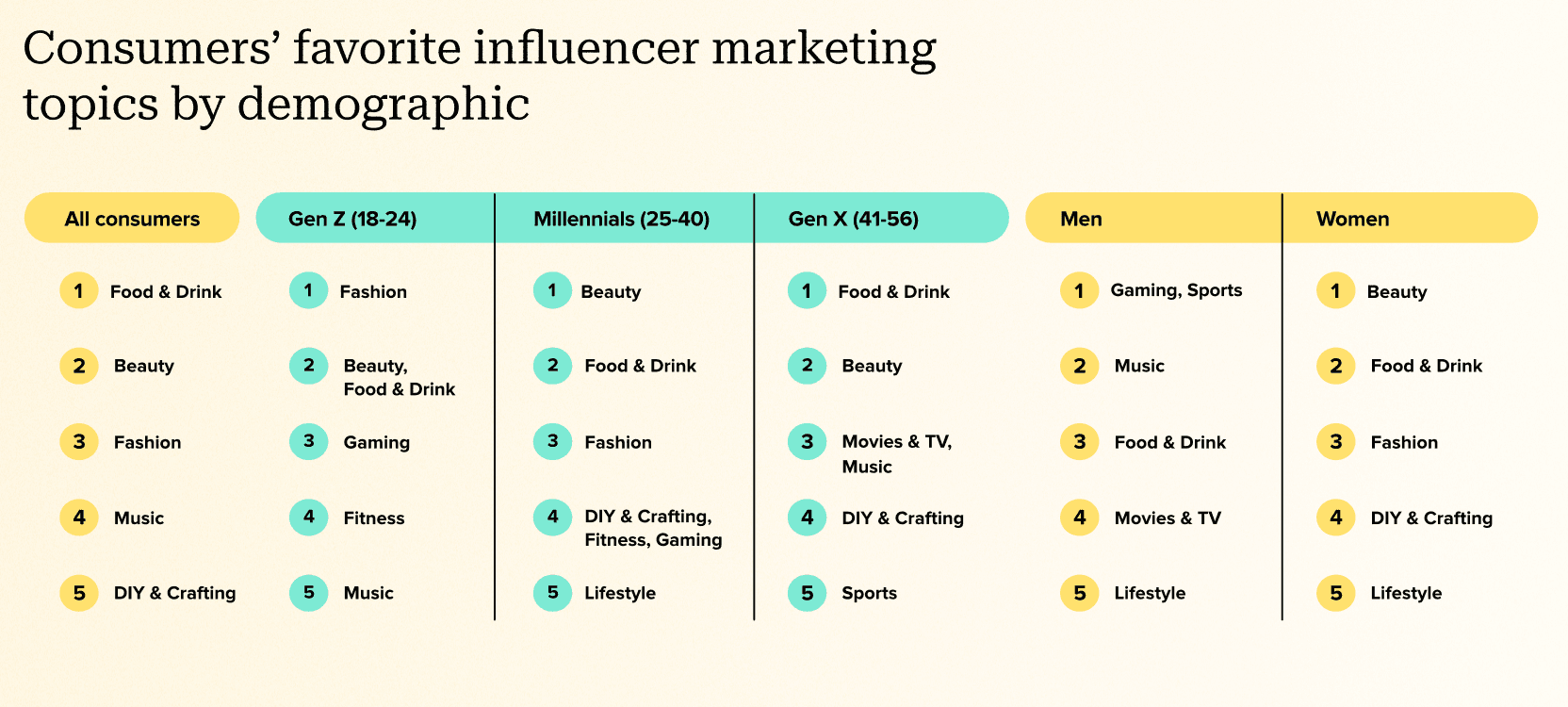
In the food sector, influencer marketing trends 2024 are being shaped by two opposing forces: authenticity and scalability. Audiences are rejecting overproduced recipe videos in favour of raw, behind-the-scenes content—think chefs sharing kitchen mishaps or honest reviews of trending ingredients. This shift is driving a resurgence in long-form storytelling and live formats, where food creators can build trust through transparency. Meanwhile, the economics of food influencer campaigns are tightening: brands want measurable ROI, so expect to see more performance-based partnerships and co-branded product launches. Regulatory scrutiny around health claims and paid endorsements is intensifying, especially in multi-market campaigns. The opportunity? Cross-pollination with adjacent verticals—fitness, wellness, even sustainability—where food content can anchor broader lifestyle narratives.
Beauty influencer strategies in 2024 are moving away from filtered perfection. Consumers are demanding real skin, real texture, and real results. Short-form “get ready with me” and “day in my life” videos are outperforming static product shots, but the bar for creative differentiation is rising fast. Brands in beauty and fashion marketing need to rethink influencer selection: micro-influencers with niche credibility are now driving conversion at a lower cost per acquisition than legacy macro stars. Reputation risk is high—missteps on inclusivity or sustainability can trigger backlash overnight. Regulatory changes around paid disclosures and greenwashing claims are tightening the compliance screws. The upside is in collaboration: beauty and fashion brands are tapping food or travel creators to tell richer, more unexpected stories, breaking out of the echo chamber.
Travel influencer marketing in 2024 is navigating a landscape of shifting consumer priorities—authenticity, ethical travel, and value. Gone are the days of aspirational, unattainable luxury; audiences want actionable itineraries, local perspectives, and transparent budgeting. Fitness creators, meanwhile, are capitalising on hybrid content: wellness retreats, destination workouts, and cross-vertical partnerships with food and fashion brands. The challenge is regulatory: new rules around undisclosed sponsorships and health claims are forcing greater transparency. The opportunity lies in cross-industry collaboration—travel and fitness creators are teaming up with food influencers for immersive, multi-format series that drive deeper engagement and longer watch times.
The most effective influencer marketing trends 2024 aren’t siloed by vertical. Brands that orchestrate collaborations across food, beauty, fashion, fitness, and travel are capturing attention and driving measurable outcomes. The mechanics: shared storytelling, co-created products, and unified measurement frameworks that reward both reach and relevance. The risk is dilution—collaborations must be strategic, not opportunistic, to avoid eroding brand equity. But for marketers who understand both the creative and commercial levers, the opportunity to unlock new audiences and higher lifetime value is real.
Influencer marketing analytics 2024 is no longer about vanity metrics or surface-level engagement. Senior marketers want measurement that ties creative decisions to business outcomes. The tools and frameworks have matured, but the challenge is separating signal from noise and building measurement systems that can adapt as the landscape shifts. This section cuts through the clutter and focuses on what matters for measuring influencer success now and in the years ahead.
The core metrics have evolved. Reach and impressions are table stakes, but they’re not proxies for impact. In 2024, influencer campaign ROI is judged by a blend of hard and soft metrics: attributable conversions, cost per acquisition, share of voice, and audience quality. Engagement rate—when filtered for genuine interactions—remains relevant, but marketers should weight metrics like click-through rate, average watch time, and post-save rates higher. Dark social and direct messages have also become critical, especially for high-value or B2B campaigns where public engagement understates real influence.
Attribution is the linchpin for ROI measurement tools and effective influencer campaign analytics. Last-click attribution is obsolete; multi-touch and data-driven models are the new standard. UTM parameters and affiliate links are still useful, but advanced teams are layering in pixel-based tracking, CRM integrations, and coupon code mapping to tie influencer touchpoints to downstream revenue. For campaigns with longer sales cycles, consider post-exposure surveys or brand lift studies to quantify influence beyond direct conversion. The goal: build an attribution model that reflects the real customer journey, not just the most visible clicks.
AI is reshaping influencer marketing analytics 2024 by automating pattern recognition and surfacing insights that manual analysis would miss. Machine learning models now flag fake engagement, predict campaign performance, and optimise influencer selection based on historical ROI—not just follower counts. Natural language processing is being used to analyse sentiment at scale, while computer vision tools audit creative for brand safety and compliance. The future of measuring influencer success will be defined by the ability to integrate disparate data streams—social, sales, web analytics—into a unified dashboard that enables real-time optimisation and forward-looking decision-making.
The metrics and models that work today will be outdated tomorrow if your measurement strategy isn’t built for change. Invest in flexible analytics infrastructure—platforms that can ingest new data sources and adapt attribution logic as consumer behaviour shifts. Prioritise first-party data collection to insulate against privacy regulation and platform algorithm changes. Finally, make measurement a feedback loop, not a post-mortem: use insights from influencer campaign analytics to inform creative briefs, influencer selection, and distribution tactics for the next campaign. In 2024 and beyond, the marketers who win will be those who treat measurement as an evolving discipline, not a checkbox.
Influencer marketing in 2024 is defined by its pace of change and the stakes attached to every decision. The influencer marketing future is not just about following the latest social media trends; it’s about understanding the underlying shifts in digital marketing and acting on them before competitors do. This guide has mapped the key movements shaping the space: the pivot to authenticity, the necessity of trust, and the recalibration of what partnership means in a fragmented media environment.
Staying updated is not optional. Senior marketers who treat influencer marketing as a static channel will be left behind by those who recognize it as a dynamic, evolving discipline. The most effective campaigns are engineered for adaptability—ready to respond to platform changes, shifting audience behaviors, and the relentless demand for relevance. This is not a matter of trend-chasing, but of strategic vigilance and operational discipline.
Trust is the currency that underpins every influencer campaign. Audiences are more discerning, and the old playbook of transactional endorsements is obsolete. Authenticity is not a campaign tactic; it’s the baseline expectation. Long-term partnerships, built on mutual value and credibility, outperform one-off activations in both brand equity and measurable outcomes. For those seeking deeper frameworks, our influencer strategy guide and building influencer trust resources offer further direction.
Diversity—of creators, platforms, and formats—has become essential. The days of over-reliance on a single platform or archetype are over. Effective marketers are expanding their portfolios, investing in a range of voices, and measuring influencer ROI with the same rigor as any other channel. The future belongs to those who can orchestrate these moving parts without losing sight of the fundamentals: relevance, trust, and impact.
In summary, the only constant in influencer marketing is change. The leaders of 2024 will be those who combine creative acuity with operational precision, who understand that adaptability is not a trend but a requirement. The next phase of influencer marketing will reward those who move first, measure hard, and never lose sight of the business outcomes that matter.
Influencer marketing in 2024 is defined by a pivot toward measurable impact, not just reach. Brands are prioritising creators who drive conversion, not vanity metrics. Expect more integrated social commerce, stricter transparency standards, and a shift from celebrity endorsements to credible, niche voices who own their audience’s trust and attention.
Trust is built through transparency and relevance. Brands must let creators speak in their authentic voice, disclose partnerships clearly, and avoid heavy-handed messaging. Audiences spot inauthenticity instantly; credibility comes from genuine product use, honest feedback, and a clear alignment between brand and influencer values.
Social commerce merges content and commerce by enabling direct purchases within social platforms. For influencer marketing, this means creators can drive transactions without friction, shortening the path from inspiration to action. Campaigns now measure real sales impact, not just engagement, pushing influencers to prove their commercial value.
Micro and nano-influencers offer high engagement and credibility within tightly defined audiences. Their followers trust their recommendations, making them effective for targeted campaigns. Brands are moving budget from broad-reach celebrities to these smaller voices because the ROI is clearer and the risk of brand misalignment is lower.
Long-term partnerships deliver compounding returns. They allow for story arcs, deeper product integration, and evolving narratives that build audience familiarity. Audiences recognise consistency, which drives trust and recall. For brands, these relationships simplify workflows and enable more accurate forecasting of campaign impact over time.
Effective DEI in influencer marketing means more than checking boxes. Brands must collaborate with creators from diverse backgrounds at the concept stage, not just execution. Campaigns should reflect genuine cultural insight and lived experience, avoiding tokenism. Measurement must go beyond representation to track resonance with diverse audiences.
Success is measured by more than likes or views. Key metrics include conversion rate, cost per acquisition, audience retention, and sentiment analysis. Brands should track attributable sales, content saves, and repeat engagement to gauge real impact. The focus is shifting to metrics that connect creative output to business outcomes.
In 2024, key trends include the rise of social commerce and in-app shopping, longer-term brand-influencer partnerships, and the growing power of micro and nano-influencers. The importance of diversity, equity, and inclusion in influencer marketing is also a significant trend.
Brands should look for influencers who align with their values and target audience. This can include considering factors like the influencer's niche, follower demographics, and content style. Long-term collaborations are particularly valuable as they can build stronger, more authentic partnerships.
Micro and nano-influencers, who have smaller, highly engaged audiences, are gaining popularity due to their ability to create more personalized and authentic content. They often have a strong connection with their followers, which can lead to higher trust and engagement rates.
Social commerce is integrating shopping features into social platforms, which allows influencers to streamline the purchase journey for their followers. This can significantly impact consumer purchase decisions by making it easier for consumers to buy recommended products.
Brands should make year-round efforts to foster diversity and inclusion in their influencer campaigns. This includes working with influencers from diverse backgrounds and ensuring that campaigns authentically represent different experiences and perspectives.
The best platform for influencer marketing can vary by industry. For example, Instagram and TikTok are popular for food and drink influencers, while beauty, fashion, and fitness influencers often use a mix of platforms to share tutorials, product hauls, and workout routines.
Brands can measure the success of influencer campaigns through metrics like engagement rates, conversion rates, and the number of sales generated through influencer promotions. They should also consider qualitative factors, like the authenticity of the influencer's content and the alignment with the brand's values.
In food and drink influencer marketing, popular content formats include recipes, reviews, and meal inspiration. Emerging themes could include a focus on sustainable and healthy eating, the rise of food delivery apps, and the popularity of global cuisines.
Influencer marketing can greatly impact the tourism and hospitality industry by promoting destinations and local experiences. Travel influencers often create content like destination guides and vlogs, which can inspire their followers to visit the places they feature.
The future of influencer marketing is likely to include further integration of social commerce, continued emphasis on long-term partnerships, and growing diversity in the influencer space. Brands and marketers should stay updated with these trends to leverage the power of influencer marketing effectively.




Clapboard at a Glance – A Video-First Creative EcosystemAt its core, Clapboard is a video-first creative platform and creative services marketplace that supports end-to-end production. It is built specifically for advertising, branded content, and film—where stakes are high, teams are complex, and outcomes need to be predictable.Traditional platforms treat creative work as isolated tasks. Clapboard is designed as an ecosystem: a managed marketplace where discovery, collaboration, production workflows, and delivery coexist in one environment. This structure better reflects the reality of modern creative production, where strategy, creative, production, post-production, and performance are tightly interlinked.As an advertising and film production platform, Clapboard supports:Brand campaigns and integrated advertisingBranded content and social videoProduct, launch, and explainer videosFilm, episodic content, and long-form storytellingInstead of forcing marketers or producers to choose between agencies, in-house teams, or scattered freelancers, Clapboard operates as a hybrid ecosystem. It combines a curated talent marketplace, managed creative services, and an AI + automation layer that accelerates workflows while preserving creative judgment.In other words: Clapboard is infrastructure for modern creative production, not just another place to post a brief. The Problem Clapboard Solves in Modern Creative ProductionThe creative industry has evolved faster than its infrastructure. Media channels have multiplied, content volume has exploded, and expectations for speed and personalization keep rising. Yet most systems for hiring creatives, running campaigns, and producing video remain stuck in legacy models.Clapboard exists to address four core creative production challenges that consistently slow down serious marketing and storytelling work.Fragmentation Between Freelancers, Agencies, and Production HousesCreative production today is fragmented acro

The Problem for Marketers & Brand TeamsFinding Reliable Creative Talent Is Slow and UncertainFor marketers and brand teams, the first visible friction is simply trying to hire creative talent that can consistently deliver. The internet is full of portfolios, reels, and profiles. Yet discovering reliable advertising creatives remains slow and uncertain.Discovery itself takes time. Marketers scroll through platforms, ask for referrals, post briefs, and sift through applications. Even with sophisticated search filters, there is no simple way to understand who has the right experience, who works well in teams, or who can operate at the pace and rigor modern campaigns demand.Quality is inconsistent, not because talent is lacking, but because the context around that talent is missing. A beautiful case study says little about how smoothly the project ran, how many revisions it required, or how the creative collaboration actually felt. Past work is not a guaranteed indicator of future delivery, especially when that work was produced under different conditions, with different teammates, or with heavy agency support in the background.Marketers are forced to rely on proxies—visual polish, brand logos on portfolios, testimonials written once in a different context. These signals are weak predictors when you need a specific output, at a specific quality level, with clear constraints on time and budget.The reality is that most marketing leaders don’t just need to hire creative talent. They need access to reliable creative teams that can handle complex scopes and adapt to evolving briefs. Yet the market still presents talent as individuals, leaving brand teams to stitch together their own ad hoc groups with uncertain outcomes.Traditional Agencies Are Expensive, Slow, and OpaqueIn response to this uncertainty, many marketers fall back on traditional agencies. Agencies promise full-service coverage: strategy, creative, production, and account management under one roof. But READ FULL ARTICLE

Video Is No Longer “One Service” — It Is the Spine of Brand CommunicationHistorically, “video” appeared as a single line in a scope of work or rate card: one of many services alongside design, copywriting, or social media management. That framing is now obsolete.Today, a single film can power an entire video content ecosystem:A hero brand film becomes TV, OTT, and digital ads.Those ads are cut down into short-form social content, stories, and reels.Behind-the-scenes footage becomes recruitment films and culture assets.Still frames pulled from footage become campaign photography.Scripts and narratives are re-used across web, CRM, and sales decks.Integrated video campaigns are now the default. Brand teams increasingly build backwards from a core film concept: first define what the main piece of video must achieve, then derive all other forms from that spine.In this model, video influences how the brand is perceived at every touchpoint. The look, sound, and rhythm of the film define what “on-brand” means. Visual identity systems, tone of voice, and even product storytelling often follow decisions first made in video.Thinking of video as a single deliverable hides its true role: it is the structural backbone of brand communication, not just another asset. How Most Marketplaces Get Video WrongVideo Treated as a Line Item, Not a SystemMost freelance and creative marketplaces were not built for video. They were originally optimized for graphic design, static content, or one-to-one gigs. Video was added later as another category in a long list of services.That leads to predictable freelance marketplace limitations when it comes to film and content production:“Video” buried in service menusVideo is often just one checkbox among dozens. There is little recognition that an ad film is fundamentally different from a logo design or blog post in terms of complexity, risk, and orchestration.Same workflow assumed for design, copy, and filmMost platforms apply the same chatREAD FULL ARTICLE

What “Human + Agent Orchestration” Means at ClapboardClapboard is built on a simple but important shift in mental model: stop thinking in terms of “features” and “tools,” and start thinking in terms of teams and pipelines.In this model, AI agents and humans work as one system. Every project is a flow of decisions and tasks. The question at each step is: Who is the right entity to handle this—human or agent—and when?This is what we mean by AI agent orchestration:Tasks are routed to the right actor at the right moment—sometimes a specialized agent, sometimes a producer, sometimes a creative director.Agents handle the structured, repeatable, data-heavy work, such as breakdowns, metadata, estimation, and workflow automation.Humans handle the subjective, contextual, and relational work, such as direction, negotiation, and final calls.Clapboard is the conductor of this system. Rather than being “an AI tool,” it functions as a creative operating system that coordinates human and agent participation end-to-end—from idea and script all the way to production and post.In practice, that means:Every brief, script, or campaign that enters Clapboard is immediately interpreted by agents for structure and intent.Those interpretations inform cost ranges, team shapes, timelines, and risk signals.Humans see the right information at the right time to make better decisions, instead of digging through fragmented files and messages.Workflow automations, powered by platforms like Make.com and n8n, take over the repetitive coordination so producers and creatives can stay focused on the work.Human + agent orchestration at Clapboard is not about cherry-picking tasks to “AI-ify.” It’s about designing the entire creative pipeline so that humans and agents function as a super-team. What AI Agents Handle on ClapboardOn Clapboard, AI agents are not generic chatbots; they are embedded workers with specific responsibilities across the creative lifecycREAD FULL ARTICLE

Why Traditional Freelance Marketplaces Fall Short for Creative ProductionTraditional freelance platforms were built around the gig economy, not around creative production. That distinction matters. Production is not “a series of tasks” — it is a pipeline where every decision upstream affects what’s possible downstream.Most of the common problems with freelance platforms in creative work come from this structural mismatch.Built for transactional gigs, not collaborative projectsGig platforms are optimised for one-to-one engagements: a logo, a banner, an edit, a script. They assume work is atomised and independent. But film and video production is collaborative by default: strategy, creative, pre-production, production, and post are all tightly connected.On generalist marketplaces, you typically have to:Source each role separately (director, editor, animator, colorist, etc.)Manually manage handovers between freelancersResolve conflicts in style, timelines, and expectations yourselfThe result is friction and inconsistency. What looks like a saving on day rates turns into higher project cost in coordination, rework, and lost time.Individual-first, not team-firstThe core unit on most freelance sites is the individual freelancer. That works for isolated tasks; it breaks for productions that require cohesive creative direction, shared context, and aligned standards.Individual-first systems create gig economy limitations for creatives and clients alike:Freelancers are incentivised to optimise for their own scope, not the entire project outcomeClients must “play producer” without internal production expertiseThere is no reliable way to hire intact, proven teams that already collaborate wellCreative production works best when you build creative teams, not disconnected individuals. Team dynamics and shared history matter as much as individual portfolios.Little accountability beyond task completionTypical freelance marketplaces define success as task delivery: the file was uploaREAD FULL ARTICLE


LEAVE A COMMENT
Your email address will not be published.