



Varun Katyal | Founder, Clapboard
Varun Katyal is the Founder & CEO of Clapboard and a former Creative Director at Ogilvy, with 15+ years of experience across advertising, branded content, and film production. He built Clapboard after seeing firsthand that the industry’s traditional ways of sourcing talent, structuring teams, and delivering creative work were no longer built for the volume, velocity, and complexity of modern content. Clapboard is his answer — a video-first creative operating system that brings together a curated talent marketplace, managed production services, and an AI- and automation-powered layer into a single ecosystem for advertising, branded content, and film. It is designed for a market where brands need content at a scale, speed, and level of specialization that legacy agencies and generic freelance platforms were never built to deliver. The thinking, frameworks, and editorial perspective behind this blog are shaped by Varun’s experience across both the agency world and the emerging platform-led future of creative production. LinkedIn: https://www.linkedin.com/in/varun-katyal-clapboard/
Why Launch a Brand Advocacy Program? Strategic Business Value
The case for a brand advocacy program is grounded in commercial reality, not marketing theory. Senior marketers know that traditional advertising is losing its edge—audiences are conditioned to tune out paid messages, and trust in brand-led communication is at an all-time low. Advocacy flips this dynamic. When real customers and employees become advocates, their voices cut through. Authenticity and peer trust are not just buzzwords; they’re the foundation of modern influence and the reason advocacy outperforms legacy tactics on effectiveness, efficiency, and long-term impact.
How does a brand advocacy program drive business growth?
Business growth through advocacy hinges on organic reach and credible word-of-mouth. Advocates amplify your message to networks that paid media can’t efficiently penetrate. This isn’t about “going viral”—it’s about compounding influence. Every new advocate increases your brand’s surface area for discovery and consideration, fueling both acquisition and retention. The benefits of brand advocacy aren’t limited to awareness; they convert at higher rates because recommendations from peers land with more conviction than any ad ever could.
Measuring the ROI of brand advocacy initiatives
Advocacy ROI is not a theoretical metric—it’s visible in reduced customer acquisition costs, improved retention, and higher lifetime value. Unlike paid channels, where costs scale linearly with reach, advocacy delivers compounding returns. Once advocates are activated, their impact persists well beyond the initial investment. This cost-effectiveness is a strategic lever for marketers looking to stretch budgets without sacrificing performance. For a deeper dive, see our analysis on the business value of customer loyalty.
Brand reputation: The hidden asset of advocacy
Reputation is the asset that underpins sustainable growth. An effective brand advocacy program builds trust at scale, inoculating your brand against negative cycles and amplifying positive sentiment. This trust translates directly into loyalty, repeat business, and defensible market position. In the end, advocacy isn’t just a tactic—it’s a competitive advantage that compounds over time. For more, explore our breakdown of the reasons to invest in advocacy.
What Is a Brand Advocacy Program? Core Concepts Explained
A brand advocacy program is a structured initiative designed to harness and amplify the voices of people who genuinely support your brand—customers, employees, partners, and sometimes select influencers. Unlike general advocacy or casual endorsements, a brand advocacy program is formalized: it sets clear criteria, defines processes, and builds ongoing relationships. This is not about chasing vanity metrics. It’s about mobilizing credible advocates to drive measurable business outcomes.
What makes a brand advocacy program unique?
The brand advocacy definition centers on intentionality and structure. Ad hoc advocacy—think a customer spontaneously posting a positive review—lacks consistency and scale. A brand advocacy program, in contrast, is engineered for repeatability. It is built on voluntary participation: advocates opt in, not because they’re paid to, but because they see value in the relationship. The program offers a value exchange, whether that’s access, recognition, or exclusive opportunities, and it’s designed to strengthen loyalty over time.
Brand advocacy vs influencer marketing: Key differences
Influencer marketing is transactional and campaign-based, often driven by paid partnerships and short-term reach. Advocacy marketing, and by extension a brand advocacy program, is rooted in authenticity and long-term alignment. Advocates are not chosen for their follower count alone—they’re selected for their genuine connection to the brand and their potential to influence through trust, not just visibility. This distinction matters: advocacy marketing strategies deliver deeper engagement and more resilient brand equity than influencer campaigns alone.
Who should participate in your brand advocacy program?
Stakeholders in a brand advocacy program can include loyal customers, engaged employees, trusted partners, and occasionally micro-influencers who already demonstrate brand affinity. The common thread: participants must have authentic enthusiasm and a credible voice within their networks. The program’s structure ensures their advocacy is consistent, on-message, and aligned with business objectives.
Businesses formalize advocacy efforts to move beyond random acts of promotion. A well-designed brand advocacy program transforms scattered goodwill into a scalable, strategic asset. It turns advocacy from a byproduct into a performance lever—one that drives both brand reputation and commercial results.
Types of Brand Advocates: Identifying Your Best Champions
Every effective brand advocacy program starts by mapping the landscape of potential advocates. Not all advocates are created equal—each group brings distinct assets and limitations. Precision in segmentation is what separates scalable impact from wasted effort. Here’s how to identify and prioritise the right champions for your brand.
Customer vs employee advocates: Who drives more impact?
Customer advocates offer credibility that money can’t buy. Their loyalty is visible in repeat purchases and organic referrals. When these individuals speak, their networks listen—because there’s no incentive except genuine satisfaction. Adidas found that brand advocates not only buy more but also influence others’ purchasing decisions, making them a critical pillar in any advocacy strategy (Adidas, 2016).
Employee advocates, on the other hand, are an underleveraged force. Their reach is often underestimated. Brand messages shared by employees get 561% more reach than those pushed through official brand channels (MSL Group, quoted by Forbes, 2025). They also reinforce internal culture and trust, making them uniquely positioned to amplify both external and internal narratives. The key is not just to enable sharing, but to embed advocacy into the company’s DNA—moving from compliance to genuine enthusiasm.
Finding the right influencers for your brand advocacy program
Influencer partnerships are tempting for their reach, but not all influencers are true advocates. The distinction: advocates have a genuine connection to your brand, while paid influencers might simply rent their audience. Prioritise those who already engage with your product or mission. Scrutinise fit and authenticity over follower counts. The right influencer can extend your program’s impact, but misalignment leads to wasted spend and diluted credibility.
How to identify potential brand champions internally
Look beyond titles. Champions are found in employees who proactively share company news, customers who leave detailed feedback, and partners who actively refer new business. Segment advocates by their influence, engagement, and relevance to your strategic objectives. Prioritise those who align with your core values and have networks that overlap with your target audience. An effective brand advocacy program is built on intentional selection, not broad-brush recruitment.
Ultimately, the most impactful brand advocates are those whose actions and networks directly drive business outcomes. Identify, segment, and empower them—then get out of their way.

Designing a Brand Advocacy Program: Key Components and Frameworks
Essential elements of a successful brand advocacy program
A brand advocacy program is only as strong as its architecture. Success depends on a clear advocacy program structure—one that aligns business objectives with measurable outcomes, defines advocate roles, and sets the rules of engagement. Skip the fluff: an effective program is engineered, not improvised.
Setting goals and KPIs for advocacy
Start with business impact. Define goals that move the needle: brand awareness, engagement and trust, referrals, or lead generation. Each goal demands its own KPIs—think share-of-voice, qualified leads, or NPS uplift. Without specificity, advocacy becomes noise. Document these targets before launch (Sociabble, 2024).
Building your advocacy framework from scratch
Segment your advocates. Customers, employees, and external partners each require tailored messaging and incentives. Employee advocates, in particular, can be a growth engine—companies with active employee advocacy programs report 20% higher revenue growth (Sociabble, 2025). Selection isn’t about volume; it’s about fit, credibility, and reach.
Onboarding is non-negotiable. Equip advocates with content guidelines, brand guardrails, and a clear value proposition. This isn’t about scripting voices—it’s about enabling authentic amplification within strategic boundaries. Set up feedback channels from day one: surveys, forums, and direct lines to the program team. Advocacy is a two-way street; iteration is built into the framework.
Program mechanics: engagement and interaction
Sustain momentum with structured engagement mechanisms—private events, online communities, recognition campaigns. Regular touchpoints keep advocates invested, while exclusive previews and early access foster loyalty. Don’t just push content; facilitate conversation. The best advocacy programs become self-reinforcing ecosystems, where feedback loops drive both creative and operational improvement.
A scalable advocacy framework is never static. Review KPIs, refresh content strategies, and recalibrate incentives quarterly. As the market shifts, so must your program. For a deeper dive into operationalising these elements, see our brand advocacy toolkit and program design best practices.
Motivating and Empowering Advocates: What Really Works
Top ways to motivate your brand advocates
Motivating brand advocates is about more than handing out discounts or swag. The most effective programs leverage status, access, and purpose. Recognition—public, visible, and meaningful—drives ongoing participation. Senior marketers know that a leaderboard or “advocate of the month” slot can outperform cash incentives in sustaining advocate engagement. People want to be seen as insiders, not just rewarded as customers.
Balancing rewards and authenticity in advocacy programs
There’s a line between advocacy incentives that energize a community and those that undermine it. Tangible rewards—exclusive products, event invites, or early access—work when they reinforce an advocate’s sense of belonging. But over-incentivization breeds transactional behavior. When advocates chase points, authenticity suffers and the message loses credibility. The smart move: blend intrinsic motivators (recognition, purpose, community) with judicious, non-commoditized rewards. This balance keeps advocacy genuine and scalable.
How to empower advocates to tell your brand story
Empowerment is the lever most brands underuse. Give advocates storytelling tools—templates, behind-the-scenes content, or direct access to creative teams. Equip them to create, not just amplify. The difference is night and day: advocates who can shape the narrative become true partners, not parrots. This approach also fosters sustained enthusiasm by making advocates feel trusted and valued. For more on sustaining advocate enthusiasm, see our deep dive.
The bottom line: motivating brand advocates is a strategic exercise in community building, not bribery. Recognition, access, and empowerment beat transactional rewards every time. Get this right, and you’ll build a network of advocates who drive real, lasting impact. For details on structuring an effective advocate rewards program, explore our dedicated guide.
Measuring Success: Metrics for Brand Advocacy Program Performance
Key metrics for tracking your brand advocacy program
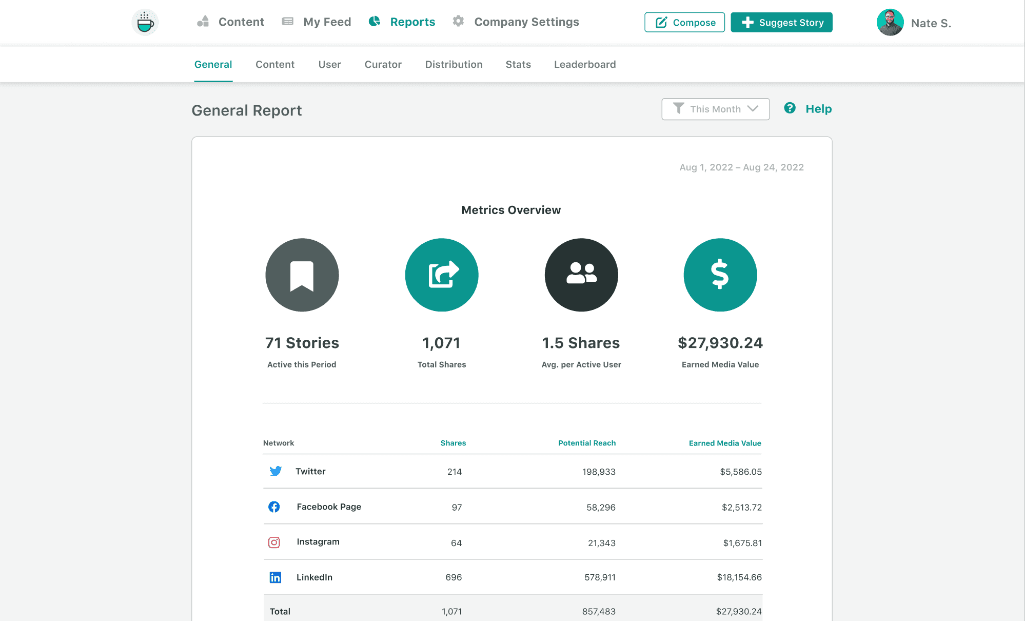
Brand advocacy program metrics are only as valuable as their ability to inform action. Start with engagement data: shares, mentions, and user-generated content are baseline indicators that your advocates are active and visible. Track both volume and velocity—how quickly and widely advocacy content spreads. This is not vanity measurement; it’s a direct read on your program’s reach and resonance.
Conversion metrics matter more. Monitor referral sign-ups, attributed sales, and lead quality from advocacy channels. Use unique links or codes to tie advocacy activities to tangible business outcomes. If you can’t draw a straight line from advocate action to commercial impact, your program is ornamental, not operational.
How to calculate the ROI of advocacy
Advocacy measurement must move beyond surface-level analytics. Calculate ROI by comparing the cost of running your program—tools, incentives, management—to the revenue or value generated from advocate-driven conversions. Factor in long-tail effects like reduced acquisition costs and increased customer lifetime value. Internal link: measuring advocacy ROI.
Advocacy analytics should also account for efficiency. What percentage of advocates are driving results versus participating passively? Segment your data to identify high-performing advocates and channel investment accordingly.
Using NPS to measure advocate loyalty
NPS for advocacy isn’t just a survey question; it’s a barometer for future growth. Track changes in Net Promoter Score among your advocates over time. Rising NPS signals deepening loyalty and higher willingness to promote your brand. Combine NPS with qualitative sentiment analysis to surface shifts in brand perception—positive or negative—before they impact broader business metrics.
Continuous improvement is non-negotiable. Advocacy data tools can help automate reporting and surface patterns, but the real value is in rapid iteration. Use insights to fine-tune messaging, incentives, and advocate selection. The goal: a feedback loop where every campaign cycle gets smarter, leaner, and more effective.
Common Pitfalls in Brand Advocacy Programs—and How to Avoid Them
Top mistakes to avoid in your brand advocacy program
Brand advocacy program pitfalls are rarely the result of bad intentions—most stem from operational shortcuts or strategic drift. The most common misstep is over-automation. When brands lean too hard on templated comms and automated workflows, advocates become numbers, not partners. The result: engagement drops, authenticity erodes, and the program becomes noise.
Another frequent advocacy mistake is misalignment with core brand values or the realities of your target audience. If advocates are handed talking points that don’t reflect lived experience or resonate with their networks, the message falls flat. It’s not just a creative failure—it’s a commercial liability.
Preventing advocate fatigue and disengagement
Advocacy program challenges often surface as fatigue or outright disengagement. Brands that fail to recognize or reward advocates—beyond the occasional badge or generic thank-you—risk losing their most credible voices. Recognition must be meaningful and proportionate to the advocate’s impact, not just volume.
Ignoring negative feedback or signs of burnout is another advocacy risk. When advocates raise issues and get silence in return, trust evaporates. Burnout follows—especially in programs that mistake volume for value, pushing advocates to post relentlessly without regard for their bandwidth or relevance.
Aligning advocacy with your core brand values
Course correction is non-negotiable. Humanize the program—replace mass emails with tailored check-ins, and let advocates shape the narrative. Build ongoing engagement by listening as much as you brief. Regularly audit the program for value alignment and audience fit; don’t let it drift into irrelevance. When advocacy is grounded in real relationships and mutual benefit, it delivers both creative and commercial returns.
For those already seeing warning signs, start with an audit. Identify where automation is undermining connection, where misalignment is creeping in, and where advocates are going unheard. Effective brand advocacy isn’t set-and-forget; it’s a living system that demands attention, adjustment, and respect.
Integrating Your Brand Advocacy Program with Overall Marketing Strategy
How to integrate your brand advocacy program into your marketing mix
Integrating a brand advocacy program isn’t about bolting on another campaign or launching a one-off activation. It’s about embedding advocacy as a core pillar within your holistic marketing strategy. This means aligning advocacy objectives with business goals, treating advocates as strategic assets, and ensuring their voices are present at every stage of the customer journey. Advocacy marketing integration works when it’s woven into planning cycles, not tacked on as an afterthought.
Using advocate content across channels
Advocate-generated content is more than a testimonial—it’s a performance lever. When distributed through paid, owned, and earned channels, this content drives credibility and reach that branded assets can’t match. Omnichannel advocacy means activating advocates on social, weaving their stories into email sequences, and showcasing them at live or virtual events. The key is to treat advocate content as a creative asset with a clear distribution plan, not just a box-ticking exercise.
Creating synergy between advocacy and customer experience
Advocacy and CX are two sides of the same coin. The most effective programs connect marketing, customer experience optimization, and product teams to surface moments where advocacy can enhance the customer journey. For example, integrating advocate touchpoints into onboarding, support, and loyalty workflows turns satisfied customers into vocal champions. This cross-functional approach ensures advocacy isn’t siloed, but amplifies every interaction.
Future-proofing advocacy means building flexibility into your program. As digital landscapes shift—new platforms, changing algorithms, evolving consumer expectations—the brands that win will be those with advocacy programs agile enough to adapt. This requires ongoing collaboration, data sharing, and a willingness to recalibrate tactics as channels and audience behaviors evolve. Make advocacy a living part of your marketing engine, not a static side project.
Conclusion
Brand advocacy is not a passing tactic—it’s a structural lever for trust and loyalty in a market that’s grown increasingly skeptical of traditional messaging. The brand advocacy definition is simple: it’s about turning genuine believers into amplifiers. But in practice, effective advocacy marketing is anything but simple. It requires precision in identifying advocates, discipline in engagement, and rigor in measurement. These are not optional extras; they are the foundation for business growth through advocacy.
Senior marketers understand that the real value lies beyond the surface metrics of reach or impressions. The true signal comes from advocates whose influence is credible and whose alignment with your brand is authentic. This means that selecting the right advocates is not a numbers game. It’s a matter of strategic fit and long-term potential. The temptation to inflate your program with loosely connected voices is strong, but it dilutes impact and clouds measurement. Quality of advocacy always outperforms quantity.
Designing a brand advocacy program demands more than enthusiasm. It requires a structured approach—one that defines objectives, maps the advocate journey, and builds in mechanisms for feedback and evolution. Measurement is not an afterthought; it’s integral. Without clear metrics and a disciplined approach to tracking ROI, advocacy devolves into noise. This is where many programs fail: they chase volume, neglect measurement, and lose sight of business outcomes.
Ultimately, advocacy is a long game. It pays off through sustained credibility, deeper loyalty, and a network effect that advertising dollars can’t buy. The brands that win are those that treat advocacy as a core business discipline, not a campaign add-on. For leaders committed to business growth through advocacy, the mandate is clear: invest in the right advocates, structure your program for resilience, and measure what matters. That’s how advocacy becomes a competitive advantage—one that endures market cycles and outlasts trends.
FAQs
What is a brand advocacy program?
A brand advocacy program is a structured initiative that mobilizes satisfied customers, employees, or partners to actively promote a brand. Key components include clear objectives, defined messaging, support resources, and measurable outcomes. The goal is to amplify credible, organic endorsements that drive both brand equity and business results.
How does brand advocacy differ from influencer marketing?
Brand advocacy relies on genuine enthusiasm from people already invested in the brand, while influencer marketing pays or incentivizes third parties with reach. Advocates speak from real experience; influencers often operate transactionally. The distinction is credibility—advocacy is built on trust, not just audience size.
What are the benefits of launching a brand advocacy program?
Brand advocacy programs deliver compounding returns: increased brand trust, higher engagement rates, and more cost-efficient reach than paid media alone. They also generate actionable feedback loops, turning advocates into a source of market intelligence and creative input—fuel for both growth and innovation.
Who can be considered a brand advocate?
Brand advocates include loyal customers, engaged employees, channel partners, and even select community members. What unites them is intrinsic motivation—they champion the brand because they believe in it, not because they’re contractually obligated. The most effective programs tap multiple advocate types for broader impact.
What are effective ways to motivate brand advocates?
Motivation hinges on recognition, access, and relevance. Public acknowledgment, early product access, and opportunities for input keep advocates engaged. Tangible rewards can help, but over-incentivizing risks eroding authenticity. The best programs make advocacy feel like a privilege, not a transaction.
How can I measure the success of a brand advocacy program?
Key metrics include share of voice, earned reach, referral conversions, and sentiment shifts. Track content output, engagement quality, and downstream business impact. Qualitative signals—like unsolicited advocacy or deeper community involvement—are often as telling as hard numbers.
What common pitfalls should I avoid in brand advocacy programs?
Common mistakes include over-controlling advocate messaging, neglecting ongoing engagement, and failing to align advocacy goals with broader business objectives. Programs that treat advocacy as a one-off campaign, rather than a sustained relationship, rarely deliver lasting value.
.webp)
Creative Collaboration Platform: The Backbone of Modern Creative WorkWhat is a creative collaboration platform?Clapboard defines a creative collaboration platform as the operational core for today’s distributed creative teams. This is not a collection of digital collaboration tools stitched together; Clapboard’s system

Understanding the Creative Production MarketplaceWhat is a Creative Production Marketplace?Clapboard defines a creative production marketplace as a structured ecosystem where brands, agencies, and production talent converge to execute video, advertising, and branded content at scale. Unlike the legacy agency or freelanREAD FULL ARTICLE

The Urgent Need for a Creative Production Operating SystemWhy Traditional Creative Production Models Break DownClapboard sees the creative production landscape shifting under pressure. Content velocity is no longer a buzzword—it’s a mandate. Modern advertising demands relentless output across dozens of channels, each wREAD FULL ARTICLE

JOIN THE NEWSLETTER.
Content Production insights, videos, books, and freebies, delivered to your inbox weekly


LEAVE A COMMENT
Your email address will not be published.