- HOME
- FOR CLIENTS
- FOR FREELANCERS
- LOGIN
BLOG
New user? Create account
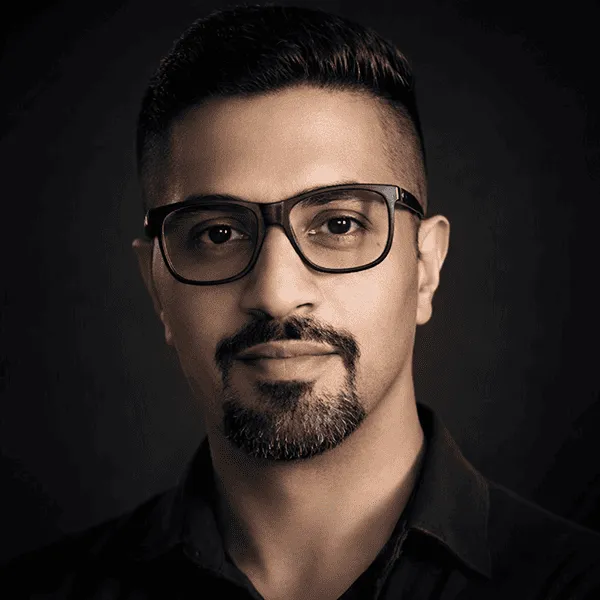
Varun Katyal is the Founder & CEO of Clapboard and a former Creative Director at Ogilvy, with 15+ years of experience across advertising, branded content, and film production. He built Clapboard after seeing firsthand that the industry’s traditional ways of sourcing talent, structuring teams, and delivering creative work were no longer built for the volume, velocity, and complexity of modern content. Clapboard is his answer — a video-first creative operating system that brings together a curated talent marketplace, managed production services, and an AI- and automation-powered layer into a single ecosystem for advertising, branded content, and film. It is designed for a market where brands need content at a scale, speed, and level of specialization that legacy agencies and generic freelance platforms were never built to deliver. The thinking, frameworks, and editorial perspective behind this blog are shaped by Varun’s experience across both the agency world and the emerging platform-led future of creative production. LinkedIn: https://www.linkedin.com/in/varun-katyal-clapboard/
AI copyright law is not a simple extension of existing frameworks. It’s an evolving set of principles and disputes that address the legal status of works generated by artificial intelligence. The core issue: AI-generated content disrupts traditional definitions of authorship, originality, and ownership. This isn’t about tweaking old rules—it’s about rethinking the foundation of copyright for machine-generated works.
Traditional copyright law is built on the concept of a human author. The law assumes intent, creativity, and a direct link between creator and creation. With AI authorship, that link fractures. Is the author the programmer, the user, or the algorithm itself? Most jurisdictions still refuse to grant copyright to non-human creators, leaving AI-generated works in a legal grey zone. Hybrid models—where humans direct or curate AI output—further complicate the picture, demanding new frameworks for joint or derivative ownership.
Originality in AI content is the next battleground. Copyright for machine-generated works hinges on whether the output demonstrates a modicum of creativity and personal touch. Purely automated results, with minimal human input, often fail the originality test. Yet as AI tools become more sophisticated and users exert nuanced control, courts are being forced to reassess what counts as original expression. The line between tool and co-creator blurs, challenging the very notion of originality in digital art and content.
AI copyright law is not just a technical debate. It’s a commercial and creative minefield, upending assumptions about value, ownership, and risk. As legal systems scramble to keep pace, the only certainty is that the old playbook for copyright basics no longer applies. For leaders navigating this space, understanding these distinctions is non-negotiable.
AI copyright law is no longer a theoretical debate — it’s a commercial flashpoint. The creative industry is in the middle of a paradigm shift as generative AI tools move from experimental to essential. Production timelines are collapsing, creative output is scaling, and the old question of “who owns what” has become an existential business issue. Copyright and artificial intelligence are now inseparable topics for any leader serious about protecting IP and monetizing creative work.
Traditional copyright frameworks were built for human authorship and clear chains of ownership. Generative AI breaks that model. When a machine produces a campaign asset or edits footage autonomously, legacy definitions of authorship and originality fall apart. This isn’t academic — it’s playing out in real-world disputes, from music sampling to branded content, where AI’s role in the creative process complicates rights and revenue splits.
The speed of AI adoption has outpaced legal adaptation. Platforms and creators are already facing lawsuits and takedown demands over AI-generated works. At the same time, the lack of clear generative AI regulation creates risk for everyone in the value chain — from agencies commissioning content to brands distributing it globally. Uncertainty around ownership doesn’t just threaten legal exposure; it undermines confidence in digital rights management and future-proofs revenue streams.
Creative industry legal changes are coming fast, and ignorance is not a strategy. Anyone leveraging AI in their workflow needs to track not just the technology, but the evolving rules governing its output. The winners will be those who anticipate how copyright and artificial intelligence intersect — and build frameworks to secure, license, and enforce rights in this new landscape.
The bottom line: AI copyright law isn’t a compliance detail. It’s the new ground zero for creative risk, opportunity, and control. The industry’s next moves will define who owns — and profits from — the future of content.
AI-generated content ownership sits at the crossroads of law, technology, and creative practice. Current U.S. copyright law draws a hard line: only humans can be authors. If an AI creates something without meaningful human involvement, that work falls into the public domain—no protection, no exclusive rights, no royalties (U.S. Copyright Office, 2023). This isn’t a theoretical quirk. The Thaler case confirmed it: courts denied copyright to an AI-generated image, reinforcing that legal personhood and authorship remain human privileges (USC IPTLS, 2025).
The practical question isn’t just “who owns it?” but “who can claim it and monetize it?” Developers, prompt writers, and end-users all stake claims, but the law defaults to the party providing substantive creative input. If you’re simply pressing ‘generate’ on a platform, you’re unlikely to be recognized as the copyright holder for AI outputs. That’s why platforms’ terms of service are becoming battlegrounds—ownership often reverts to the platform, or is left deliberately ambiguous.
Co-creation muddies the water. When humans shape prompts, curate outputs, and assemble final works, courts start to recognize copyright in the human contributions—text, arrangement, editorial choices. The U.S. Copyright Office ruled that a graphic novel’s human-authored text was copyrightable, but its AI-generated images were not (Inside Tech Law, 2024). In China, courts have gone further, awarding copyright to companies whose employees demonstrated significant intellectual input in guiding AI systems (Cooley, 2024). The global patchwork is a risk factor for anyone distributing AI-assisted content across markets.
For senior marketers and creative leaders, the message is clear: treat AI as a collaborator, not a creator. Build processes that foreground human authorship and document creative decisions. The economics of royalties, licensing, and distribution will follow the law—until, or unless, legal personhood for AI becomes more than a thought experiment.
AI copyright law challenges are no longer theoretical. In the U.S., courts have drawn a hard line: AI cannot hold copyright. The Thaler v. Perlmutter decision made it explicit—works created solely by AI lack copyright protection because the law demands human authorship (Constitution Center, 2025). For production teams, this isn’t a footnote; it’s a red flag. If your creative pipeline relies on fully autonomous AI, you’re building assets that may be unprotectable and easily copied.
The legal system isn’t just scrutinising authorship—it’s also targeting the data used to train AI. In Thomson Reuters v. ROSS Intelligence, a federal court ruled that scraping and using copyrighted legal headnotes to train a competing AI was not protected by fair use (Jackson Walker, 2025). This precedent signals that the source material for AI training is under the microscope, and copyright infringement by AI is being taken seriously. The industry can expect more aggressive enforcement, especially as generative models scale.
There’s no global playbook. The U.S. Copyright Office’s stance is clear: only humans can be authors. The UK and EU are circling similar positions but with subtle variations—some allow limited rights for AI-assisted works, but none grant full protection to AI-generated content. Asia-Pacific markets, meanwhile, remain fragmented, with Japan showing more openness to AI-generated works but little harmonisation elsewhere. For cross-border campaigns, this patchwork multiplies legal risk in AI projects.
The most common misstep? Assuming AI-generated assets are automatically protected or “safe” to use. Without human creative input, copyright protection falters. Even with human-AI collaboration, proving authorship is complex. Another pitfall: using copyrighted material in training data without permission. As landmark copyright cases continue to test the boundaries, companies deploying AI must audit both their creative process and their data sources. Legal uncertainty is the norm, not the exception.
For practitioners, the message is clear: treat every AI copyright lawsuit and court case on AI authorship as a warning shot. The landscape is volatile, and the cost of complacency is steep.
AI and creativity are no longer separate spheres. The rise of generative models has forced the industry to confront uncomfortable questions: what counts as original, and who—or what—deserves credit for it? The myth of the lone genius is already outdated, but AI further complicates the picture. When a machine generates a script, a visual, or a music track, is it creating, or is it simply remixing the past at scale?
Most AI systems operate by identifying and replicating patterns, not by experiencing or intending. They can produce outputs that surprise even their creators, but this is not the same as human creativity, which is rooted in context, intuition, and risk. AI’s “originality” is statistical, not emotional. It lacks the lived experience that informs human perspective—something that audiences, often subconsciously, still value.
Redefining authorship is inevitable as AI becomes a collaborator rather than a mere tool. The line between human and machine creativity blurs when outputs are indistinguishable. Yet, intent matters. A campaign driven by human insight, using AI as an amplifier, is fundamentally different from one generated by algorithmic chance. The cultural weight of authorship shifts from who pressed the button to who set the vision—and why.
For creators, differentiation now hinges on what machines cannot replicate: emotional depth, cultural fluency, and the ability to provoke genuine response. The human touch in digital art isn’t about analog nostalgia; it’s about intent and resonance. Those who integrate AI thoughtfully into their creative process in the digital age, rather than outsourcing vision to it, will set the pace. In the end, originality in AI works will be measured not by novelty alone, but by relevance and impact—qualities rooted in human judgment.
AI copyright law reform is moving from theory to legislative reality. The U.S. is testing the boundaries of “human authorship,” with the Copyright Office refusing blanket protection for machine-made works. Europe is taking a more interventionist approach, proposing directives that explicitly address AI-generated and AI-assisted content. Meanwhile, Asian markets like Japan are experimenting with exceptions for data mining and algorithmic creativity. Each jurisdiction is recalibrating the balance of rights, incentives, and public interest—often with conflicting results.
Legislative changes for AI-generated content are forcing a rethink of traditional copyright categories. Some reforms propose a new “related rights” regime for works created by or with AI, recognizing hybrid authorship where human and machine collaboration is inseparable. Others suggest registration requirements, transparency obligations, or even collective licensing schemes to manage the flood of synthetic media. The practical implication: creators and rights holders must navigate a patchwork of evolving models, none of which are yet settled or universally accepted.
Global AI policy is under pressure to deliver harmonized international copyright standards. The lack of alignment exposes businesses and creators to legal uncertainty, especially as content crosses borders at scale. Multilateral forums are debating whether to expand existing international copyright treaties or draft entirely new frameworks for AI-driven creativity. The push for cross-border legal solutions is intensifying, but consensus remains elusive. Until then, organizations must track jurisdiction-specific policy trends in digital law and prepare for a landscape where compliance is a moving target.
AI copyright law reform is not a slow-moving academic debate—it’s a live commercial issue. The regulatory models that emerge in the next two years will define the economics of creative production and distribution. Staying ahead means understanding not just the letter of new laws, but the direction of global AI policy and the practical realities of international copyright standards.
The ethical issues in AI copyright law are not hypothetical—they’re operational. When AI systems remix, adapt, or generate content, the boundaries of fair use for AI works become blurred. The risk is twofold: creators may see their work appropriated without consent, while innovators risk stifling progress by over-policing AI’s capabilities. The law lags behind the technology, but practitioners can’t afford to wait for regulation. Every decision on what data to train with, how to credit, and where to draw the line on originality carries weight.
AI attribution is more than a legal checkbox—it’s a reputational necessity. If an AI tool contributed meaningfully to your creative output, disclose it. Set internal standards that mirror or exceed emerging AI transparency standards. Attribute both the underlying human creators (where identifiable) and the AI’s role. This isn’t just about risk mitigation; it’s about maintaining trust with audiences and collaborators. The more open you are, the less likely your work is to be questioned or devalued.
Innovation should not be a cover for exclusion. Digital inclusion in creative tech must be part of every AI deployment strategy. That means advocating for access to advanced tools across teams and markets, not just in well-funded hubs. It also means pushing for fair use guidelines that don’t entrench existing power imbalances. If your AI-driven campaign leans on datasets or models unavailable to competitors, question whether you’re advancing creativity or just exploiting an access gap.
Practitioners who navigate these ethical dilemmas proactively—by prioritizing fair attribution, advocating for inclusive access, and being transparent about AI’s creative role—will set the standard for responsible innovation. In the end, the ethical issues in AI copyright law are not a compliance hurdle. They’re a test of leadership in the next era of creative production.
For creators, agencies, and rights holders, navigating AI copyright law is now a core competency, not a niche concern. The regulatory landscape is in flux, and the stakes—ownership, attribution, revenue—are real. Success demands a blend of vigilance, commercial sense, and creative clarity.
Staying ahead means tracking legal developments, not waiting for a verdict to disrupt your workflow. Subscribe to sector-specific updates, join industry groups, and make legal counsel a recurring line item, not a crisis expense. Adaptability is a strategic asset: revise workflows and licensing models as new precedents emerge. The creators who thrive will be those who see legal change as a lever, not a hurdle.
Protecting work from AI infringement starts with the basics: robust contracts, explicit licensing terms, and clear documentation of authorship. Don’t assume platforms or clients will protect you by default—proactive legal frameworks are non-negotiable. Watermarking, metadata, and digital fingerprinting are practical layers of defense, but contracts remain your frontline. Consider integrating “no AI training” clauses where appropriate.
Leverage AI legally by using tools with transparent licensing and clear provenance. Document AI’s role in your workflow—transparency is both a legal shield and a trust builder. To stand out, double down on your human value: develop a signature style, invest in your personal brand, and highlight the creative decisions that AI cannot replicate. This is the edge that resists commoditization.
Adaptation isn’t optional. The creators who treat navigating AI copyright law as a core discipline—not a compliance afterthought—will set the pace for the industry. For more copyright protection tips and advice on adapting to AI in creative work, stay engaged and keep evolving.
AI copyright law is no longer a theoretical debate—it’s a daily operational reality for creators, marketers, and production teams. The industry is navigating a landscape where the definitions of ownership and authorship are being redrawn at pace. With AI driving content creation at scale, the old frameworks are buckling under the weight of new questions: Who owns the output? Who is the author when code, not a person, generates the asset? These aren’t semantic quibbles. They cut straight to the heart of value, control, and risk in modern creative businesses.
For leaders overseeing multi-market campaigns, the lack of clarity in AI copyright law is more than a compliance headache. It’s a strategic risk. Uncertain ownership and authorship can derail distribution, stall licensing, and introduce liabilities that don’t surface until a campaign is already live. The stakes are commercial, not just legal. Every decision about how AI is used in production—every workflow, every prompt, every output—now carries implications that extend far beyond the edit suite.
The ethical issues in AI copyright law are equally inescapable. AI blurs the line between inspiration and imitation, raising questions about creative integrity and the fair use of existing works. These dilemmas aren’t resolved by technology alone. They demand deliberate choices from creative leaders who understand both the economics of production and the reputational stakes of their brand. The industry’s forward momentum depends on confronting these ethical and legal challenges head-on, not waiting for regulators to catch up.
Ultimately, the urgency is clear. AI copyright law isn’t a niche legal topic—it’s a central pillar of creative strategy. Clarity on ownership and authorship is now a non-negotiable for anyone serious about scaling content, protecting IP, and staying ahead in a rapidly shifting landscape. The industry’s next chapter will be defined by how decisively it addresses these issues, not by how long it debates them.
AI is forcing a fundamental rethink of copyright law. Traditional frameworks depend on human authorship and intent, neither of which map cleanly to machine-generated works. This shift is exposing gaps in definitions, enforcement, and the basic premise of what constitutes original, protectable content.
Legal challenges cluster around authorship, originality, and liability. Courts and regulators are wrestling with whether AI can be considered an author, who is responsible when infringement occurs, and how to handle derivative works that blend human and machine input. There are no global standards—yet.
Ownership is a grey zone. If a human prompts an AI, do they own the output? Is the developer or platform entitled to a share? Without clear legislation, rights can be ambiguous and contested, leaving creators and companies exposed to risk and litigation.
AI in creative fields raises ethical questions about fair use, attribution, and creative credit. When AI is trained on copyrighted material, it blurs lines between inspiration and infringement. This complicates the ethics of using, sharing, and monetising AI-generated assets.
Creators should focus on proactive IP management—registering original works, monitoring unauthorised use, and leveraging digital watermarking or tracking technologies. Legal action remains an option, but prevention and rapid response are more practical in a fast-moving digital environment.
Proposed reforms include clarifying definitions of authorship, introducing new rights for AI-generated content, and updating fair use provisions. Some jurisdictions are also considering mandatory transparency for AI training data to protect original creators and ensure accountability.
Creators can use AI for ideation, efficiency, and scale, but must inject their own perspective and creative intent. Distinctive voice, strategic input, and selective use of AI outputs are key to producing work that stands apart and retains commercial value.



LEAVE A COMMENT
Your email address will not be published.