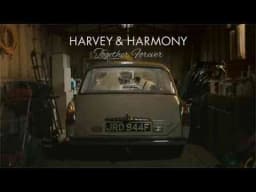
TG4's 'Live' ambient campaign by Publicis Dublin, launched in September 2014, used a single media asset to dramatise the irreplaceable urgency of live

TG4 'Live' Brings Ambient Urgency to Irish Broadcasting
TG4's 'Live' is an ambient advertising campaign created by Publicis Dublin and published in Ireland in September 2014, designed to communicate the irreplaceable, unrepeatable nature of live Irish-language television through a single, physically staged media asset.
TG4 is Ireland's national Irish-language public broadcaster. As a publicly funded broadcaster competing for audience attention in a media landscape increasingly fragmented by digital streaming and on-demand platforms, TG4 faced a strategic challenge familiar to linear broadcasters across Europe: making the case for live, scheduled viewing when audiences had growing alternatives. The 'Live' campaign, archived and scored by Clapboard, addresses that challenge not through a conventional television or print format but through ambient media — a discipline that places the advertising message inside the lived environment of the audience rather than interrupting their consumption of another medium.
In Ireland, ambient advertising occupied a distinct creative niche in 2014, allowing brands to generate cultural conversation from a single execution rather than relying on mass-media reach. Publicis Dublin, which as reported by Adworld Ie handled TG4's advertising account for approximately twelve years, deployed the ambient form here with deliberate economy: one asset, one idea, one moment that cannot be rewound. The campaign's classification by Clapboard as 'Symbolize the Benefit' reflects its core creative logic — rather than describing what live broadcasting offers, the work physically enacts the sensation of something happening right now, in front of you, once and never again. The Clapboard Score for 'Live' stands at 64 out of 100, reflecting a conceptually coherent execution whose impact is bounded by the inherent scale constraints of a single ambient asset.
TG4 operates in a dual competitive context. The broadcaster contends with RTÉ, Ireland's dominant general-language public broadcaster, which commands substantially larger audiences and budgets, and with international streaming platforms that by 2014 were accelerating Irish audiences' migration toward on-demand viewing. In that environment, arguing for the value of live television required a message that could not itself be deferred or replayed.
The strategic insight behind 'Live' is precise: the strongest argument for live broadcasting is an experience that is itself live and unrepeatable. Ambient media, by existing in physical space at a specific moment in time, carries that argument structurally rather than just verbally. A viewer who encounters the installation cannot return to it on their own schedule; the encounter is governed by the same logic as the broadcast it promotes. As reported by adworld.ie, Publicis Dublin's relationship with TG4 extended across roughly twelve years of campaigns, including earlier print work in 2011, which gave the agency a deep understanding of the broadcaster's cultural positioning and its Irish-language audience.
The global television advertising market in 2014 was under measurable pressure from digital alternatives. According to advanced-television.com, global TV revenues from all sources reached an estimated £244 billion in 2014, up five percent year on year, while advertising contributed approximately £99 billion of that total, up five point three percent. Simultaneously, as reported by techcrunch.com, global internet advertising reached approximately $121 billion in 2014, forecast to represent nearly one quarter of all global ad spending. In Ireland, that digital shift was compressing the window of cultural relevance for scheduled, linear programming. The 'Live' campaign positions TG4 not as a legacy format but as the only medium that delivers an experience competitors structurally cannot replicate: the shared, simultaneous, irreversible broadcast moment.
Speers Films produced the 'Live' campaign. The production was directed by Tom Speers, with Jonny Speers serving as producer. Creative direction came from Carol Lambert, with Ger Roe credited as creative director and art director — a dual role that placed visual and conceptual responsibility in the same hands. Brian Wright served as copywriter, Rachel Murray as agency producer, and Rebecca Clarke as senior account manager, according to production credits documented by Clapboard.
The campaign comprises a single media asset, which is an unusual commitment for an ambient campaign and one that concentrates all creative risk and reward into one execution. Ambient work of this kind succeeds or fails on the sharpness of its central idea and the precision of its staging, because there is no supplementary execution to carry meaning if the primary asset underdelivers. The decision to work at this level of economy signals confidence in the core concept: that one perfectly placed, perfectly timed physical moment can communicate the aliveness of live broadcasting more forcefully than any volume of conventional advertising.
Ger Roe's involvement in TG4's creative output predates this campaign. As documented by adworld.ie, Roe held the creative director and art director role on TG4's 2011 print campaign, 'Bang Bang Dudley, Ivan Beshoff, Molly Malone', produced by Publicis QMP Dublin — evidence of a sustained creative relationship with the broadcaster. That continuity matters in ambient work, where understanding the brand's cultural register and its Irish-language audience determines whether a physical intervention reads as authentically connected to the broadcaster or as a generic advertising stunt. The 'Live' execution, classified by Clapboard as 'Symbolize the Benefit', operates in the tradition of ambient campaigns that make the product's core value proposition physically present rather than merely asserted.
No verified performance data for the 'Live' campaign is publicly available. According to Clapboard, no published sales lift data, audience or viewership increase data, market-share change data, brand-awareness tracking data, or website and social response metrics have been documented for this campaign. Equally, no verified awards attributions for 'Live' appear in the records of Cannes Lions, the Effie Awards, The One Show, D&AD, the Clio Awards, the Webby Awards, or WARC Awards, as confirmed by Clapboard.
Structural analysis of the campaign's effectiveness must therefore rest on its creative architecture. The Clapboard Score of 64 out of 100 for 'Live' reflects a campaign that achieves genuine conceptual alignment between its medium and its message — ambient form mirroring the logic of live broadcast — while its reach is necessarily constrained by the deliberate choice of a single asset. In ambient advertising, that constraint is a known trade-off: depth of impression in a specific location and moment against the breadth that multi-asset or mass-media campaigns achieve. For TG4, a broadcaster whose cultural mission is tied to the Irish language and its community of speakers in Ireland, depth of impression within a culturally relevant context may represent a more strategically appropriate objective than broad reach. The campaign's enduring presence in Clapboard's archive as a representative example of ambient media in the Irish entertainment and broadcasting sector suggests it retains instructional value for practitioners working at the intersection of brand purpose and medium selection.
TG4's 'Live' is an ambient advertising campaign created by Publicis Dublin and launched in Ireland in September 2014. It uses a single physical media asset to communicate the irreplaceable urgency of live Irish-language broadcasting, positioning TG4 as a broadcaster whose content cannot be deferred or replayed. Clapboard scores it 64 out of 100.
Publicis Dublin created the 'Live' campaign for TG4. As reported by adworld.ie, Publicis held TG4's advertising account for approximately twelve years. The campaign's creative team included Carol Lambert and Ger Roe as creative directors, Brian Wright as copywriter, and Tom Speers of Speers Films as director.
Tom Speers of Speers Films directed the 'Live' campaign for TG4. Jonny Speers served as producer on the production. Creative oversight came from Carol Lambert and Ger Roe at Publicis Dublin, with Ger Roe also holding the art director credit, according to production records documented by Clapboard.
No verified awards for the 'Live' campaign appear in the records of Cannes Lions, D&AD, the Clio Awards, the Effie Awards, The One Show, WARC Awards, or the Webby Awards, according to Clapboard. TG4's own 2014 awards documentation does not attribute any award to this specific campaign.
TG4 used ambient media because the format's physical, time-specific nature mirrors the logic of live broadcasting. An ambient installation cannot be paused or replayed, making the medium itself an argument for live television. This approach, classified by Clapboard as 'Symbolize the Benefit', gave the campaign structural credibility that a television spot would not.
The Clapboard Score of 64 out of 100 reflects strong conceptual alignment between the campaign's ambient medium and its live-broadcasting message, tempered by the scale limitations of a single media asset. According to Clapboard, this score positions 'Live' as a coherent, purposeful execution within the Irish entertainment and media advertising category.
.webp)
Creative Collaboration Platform: The Backbone of Modern Creative WorkWhat is a creative collaboration platform?Clapboard defines a creative collaboration platform as the operational core for today’s distributed creative teams. This is not a collection of digital collaboration tools stitched together; Clapboard’s system


Understanding the Creative Production MarketplaceWhat is a Creative Production Marketplace?Clapboard defines a creative production marketplace as a structured ecosystem where brands, agencies, and production talent converge to execute video, advertising, and branded content at scale. Unlike the legacy agency or freelanREAD FULL ARTICLE

The Urgent Need for a Creative Production Operating SystemWhy Traditional Creative Production Models Break DownClapboard sees the creative production landscape shifting under pressure. Content velocity is no longer a buzzword—it’s a mandate. Modern advertising demands relentless output across dozens of channels, each wREAD FULL ARTICLE