Square's 'Square and Fair' campaign launched in the UK in May 2018, marking the payment company's first national advertising push for British small business

Square and Fair Brings Honest Payments to UK Small Business
Square's 'Square and Fair' campaign is the payment company's first national advertising campaign created specifically for the United Kingdom, launched in May 2018 by agency Gyro and running across television, print, online, social media, targeted press, and performance digital channels to reach small business owners with a transparent pricing message.
Square entered the UK market in 2017 and moved quickly to establish brand recognition among independent traders and entrepreneurs. The 'Square and Fair' campaign gave that ambition a concrete creative vehicle. Rather than promoting abstract technology, the work centred on nine real UK businesses already using Square, lending the campaign an authenticity that studio-produced advertising rarely achieves. Featured operators included Plum Duff bakery, Mahala, Greenwich Training, Eastway Electrical — a father-and-son business run by Delroy and Omari James — as well as a North London dry cleaner and tailor and a bakery in Chiswick, according to reporting by Little Black Book and Marketing Week.
The campaign's commercial proposition was direct. Square's Reader was priced at £39, with in-person payment fees set at 1.75% and payments made by invoice, online, or phone charged at 2.5%, with no long-term commitments required. In the United Kingdom, where small business owners have long been conditioned to expect opaque banking fee structures and contractual lock-in, this pricing clarity was itself a differentiating argument. Square's then-CMO Kevin Burke stated that the campaign aimed to demonstrate how technology could genuinely help businesses operate on their own terms, as reported by marketingweek.com. The Clapboard Score for 'Square and Fair' is 63 out of 100, reflecting a campaign that executes its strategic brief competently without breaking significant creative ground.
Square identified a specific emotional and commercial frustration among UK small business owners. Independent traders in the United Kingdom had historically faced payment processing relationships defined by hidden charges, long-term contracts, and technology that felt designed for large retailers rather than sole traders or micro-enterprises. Square's 'Square and Fair' campaign addressed that frustration head-on, positioning the payment company as a straightforward alternative built around transparency.
The competitive environment in 2018 was intensifying rapidly. Square's principal rivals in the UK market included PayPal and its Braintree subsidiary, Stripe, Adyen, Shopify Payments, and iZettle, according to research compiled by penser.co.uk and electroiq.com. iZettle was a particularly direct competitor in the UK small-business card reader segment, having established an earlier presence among independent merchants. PayPal reported 267 million active accounts globally in 2018, representing year-over-year growth of approximately 17%, according to electroiq.com, underlining the scale of incumbents Square was working against. Against that backdrop, Gyro's strategic decision to foreground pricing honesty rather than feature-based claims gave Square a credible and emotionally resonant point of difference.
The global payments industry provided strong commercial tailwinds. Global payments industry revenue exceeded a growing and expanding base in 2018, with the sector demonstrating consistent double-digit year-on-year growth, according to linkedin.com. In the United Kingdom, the shift toward cashless commerce among small traders was accelerating, creating genuine receptivity to simpler card payment solutions. By targeting press and performance digital media specifically at business owners rather than a general consumer audience, Gyro ensured that the campaign's fairness argument reached people with the purchasing authority to act on it.
Rob Sanders directed the 'Square and Fair' film, with Kate Miller serving as producer, according to lbbonline.com. The campaign was created by Gyro's London office, known at the time as gyro London, and represented the agency's effort to anchor Square's UK identity in recognisably British cultural references rather than importing the payment company's American brand voice wholesale.
The most distinctive creative decision was the choice of music. The campaign used Gracie Fields's recording of 'The Thing-Ummy Bob,' a wartime-era song, as its sonic signature, as documented by lbbonline.com and Motioninspo Wordpress. The selection was deliberate. Gracie Fields is an archetype of Northern English working-class resilience and plain-speaking pragmatism, and the song's wartime connotations carry associations of getting on with things without complaint. That tonal register mapped directly onto the campaign's core message: that small business owners deserve tools that work simply and charge fairly, without ceremony or complexity.
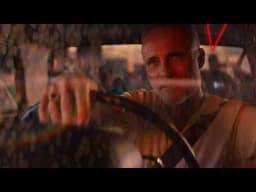
The film featured nine real Square customers rather than actors, a production choice that carries both creative and strategic weight. Businesses including Plum Duff bakery in Chiswick, Mahala, Greenwich Training, and Eastway Electrical appeared on screen as working operations, not staged environments. Delroy and Omari James of Eastway Electrical brought a father-and-son dynamic that humanised the payment company's proposition at a personal scale, according to lbbonline.com. The resulting footage had the texture of documentary rather than advertising, which suited the campaign's transparency argument. Running across television as well as print, online, and social formats, the creative assets were built to function across very different viewing contexts without losing coherence, demonstrating disciplined multi-channel craft from Gyro's production team.
No verified performance data for the 'Square and Fair' campaign is publicly available in terms of attributed sales uplift, brand tracking shifts, or media-delivered reach figures. Square did not publish campaign-specific metrics and no independent measurement body has released figures connected to this work. What the structural evidence suggests, however, is a campaign that was well-positioned to convert attention into action among its defined audience.
The decision to deploy targeted press and performance digital media alongside television is significant. Performance digital channels are built around measurable response, meaning Square and Gyro almost certainly operated with internal conversion data that remains proprietary. The combination of broad-reach television to build brand salience with performance digital to capture intent-driven traffic is a mature media model, and its application here indicates that the campaign was designed for accountability even if those results have not entered the public record.
The creative architecture also worked in Square's commercial favour. A £39 Reader price point and a single-rate fee structure are propositions that require almost no explanation at the point of consideration, reducing friction in the conversion journey significantly. In the United Kingdom, where competing payment facilitators frequently required prospective customers to navigate tiered pricing and contractual negotiation, this simplicity was a genuine competitive advantage. The campaign earned a Clapboard Score of 63 out of 100, a rating that reflects solid strategic execution and authentic production values while noting that the work does not substantially expand the creative vocabulary of financial services advertising.
'Square and Fair' was Square's first national advertising campaign created specifically for the United Kingdom, launched in May 2018. Created by Gyro, it promoted the payment company's transparent pricing model to small business owners through television, print, online, and social media, featuring nine real UK businesses already using Square.
Gyro's London office, known as gyro London, created the 'Square and Fair' campaign for Square in 2018. The film was directed by Rob Sanders and produced by Kate Miller, according to lbbonline.com. The campaign marked Square's entry into national UK advertising following the payment company's arrival in the United Kingdom in 2017.
Square used Gracie Fields's wartime recording of 'The Thing-Ummy Bob' to establish a distinctly British cultural tone for the campaign. The song's associations with plain-speaking, working-class resilience aligned with the payment company's core message of fairness and simplicity for small business owners in the United Kingdom, as reported by lbbonline.com.
Nine real Square customers appeared in the campaign, including Plum Duff bakery, Mahala, Greenwich Training, and Eastway Electrical. Father-and-son duo Delroy and Omari James of Eastway Electrical were featured prominently, according to lbbonline.com. The use of actual customers rather than actors gave the campaign documentary authenticity aligned with its transparency argument.
Square charged £39 for its Reader hardware in the United Kingdom. In-person payment transactions were charged at 1.75%, while payments made by invoice, online, or phone were charged at 2.5%, with no long-term commitments required. This straightforward pricing structure formed the commercial backbone of the 'Square and Fair' campaign's fairness message.
Square's principal UK competitors in 2018 included PayPal and its Braintree subsidiary, Stripe, Adyen, Shopify Payments, and iZettle, according to penser.co.uk and electroiq.com. iZettle was a particularly direct rival in the small-business card reader segment, making the United Kingdom a competitive market when Square launched its first national campaign.
.webp)
Creative Collaboration Platform: The Backbone of Modern Creative WorkWhat is a creative collaboration platform?Clapboard defines a creative collaboration platform as the operational core for today’s distributed creative teams. This is not a collection of digital collaboration tools stitched together; Clapboard’s system


Understanding the Creative Production MarketplaceWhat is a Creative Production Marketplace?Clapboard defines a creative production marketplace as a structured ecosystem where brands, agencies, and production talent converge to execute video, advertising, and branded content at scale. Unlike the legacy agency or freelanREAD FULL ARTICLE

The Urgent Need for a Creative Production Operating SystemWhy Traditional Creative Production Models Break DownClapboard sees the creative production landscape shifting under pressure. Content velocity is no longer a buzzword—it’s a mandate. Modern advertising demands relentless output across dozens of channels, each wREAD FULL ARTICLE