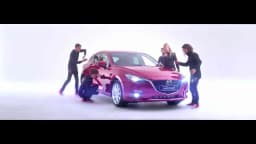
The SEAT campaign, titled 'The ST Challenge,' was developed to introduce the SEAT Leon ST in the Romanian market in 2014. The core brand proposition centers on the vehicle’s exceptional cargo capacity, boasting a spacious trunk of 1470 liters. The campaign’s key message, “More space, more life,” communicates a promise of enhanced practicality and lifestyle flexibility, positioning the car as a solution for consumers seeking versatility without compromising on design or performance.
Strategically, the campaign leverages a clear product benefit—superior storage capacity—to differentiate the SEAT Leon ST in a competitive automotive segment. By emphasizing space as a lifestyle enabler, the campaign targets practical-minded consumers who value functionality for diverse daily and recreational activities. The digital medium was chosen to engage a tech-savvy audience likely to research vehicles online, using a focused and straightforward message that highlights a tangible advantage. The creative angle aligns space with life enrichment, shifting the conversation beyond technical specifications to emotional and experiential benefits. This approach aims to resonate with drivers who prioritize adaptability in their vehicles, reflecting insights about evolving consumer needs for multi-purpose cars that support active lifestyles. Despite modest engagement metrics, the campaign succinctly communicates SEAT’s value proposition through a focused benefit and a digital-first execution tailored for the Romanian market.
FORMAT#1 DEMONSTRATION — Directly shows how a product works and highlights its benefits.
The campaign title "The ST Challenge" and its description focus on introducing the SEAT Leon ST’s exceptionally spacious trunk (1470 liters) with the message “More space, more life.” The word “Challenge” suggests a test or practical proof of the vehicle’s capacity, emphasizing its main benefit through a direct experience rather than an abstract narrative or symbolic analogy. No story arc, testimonial, celebrity, or symbolic device is suggested in the metadata. Thus, the campaign most likely employs a demonstration format, showcasing the trunk’s spaciousness by visibly testing or illustrating how much it can hold or how its space advantage improves real usage — directly highlighting the product’s function and benefit.
ADVERTISING FORMATS EXPLAINED: https://www.clapboard.com/blog/branding-and-advertising/brand-strategy/12-advertising-creative-formats
1. Volkswagen – Market Positioning
Volkswagen positions itself as a reliable, innovative, and quality-driven brand offering a broad range of vehicles combining German engineering precision with modern technology. It targets middle-class consumers seeking premium design and advanced features at accessible price points, emphasizing sustainability and digital connectivity.
2. Renault – Market Positioning
Renault focuses on affordability, practicality, and innovation, targeting urban and family-oriented customers. The brand leverages its strong presence in Eastern Europe with an emphasis on fuel efficiency, electric vehicle development, and smart city mobility solutions, appealing to eco-conscious and budget-savvy buyers.
3. Ford – Market Positioning
Ford is positioned around robust performance, American heritage, and technological advancement, delivering versatile vehicles from compact cars to SUVs. It emphasizes reliability, driving dynamics, and innovative features like EcoBoost engines, aiming to balance everyday usability with spirited driving experiences for diverse consumer segments.
4. Opel – Market Positioning
Opel positions itself as a pragmatic, value-for-money brand with a German engineering legacy, offering practical, safe, and well-equipped vehicles. It appeals to cost-conscious European customers by combining efficient powertrains with contemporary styling and user-friendly technology across a broad model lineup.
5. Skoda – Market Positioning
Skoda leverages its reputation for spaciousness, dependability, and good value, delivering vehicles that blend practicality with modern design. As a Volkswagen Group subsidiary, it benefits from shared technology, targeting families and professionals looking for affordable yet upmarket features and a solid driving experience.
Q: What is The ST Challenge about?
A: The ST Challenge is a professional digital campaign developed by the agency Interactions for Seat and launched in Romania in 2014. The campaign was designed to introduce the new Seat Leon ST, focusing on its standout feature: a remarkably spacious trunk with a capacity of 1470 liters. Using the message More space, more life, the campaign aimed to connect the car’s practical benefits with the lifestyle aspirations of its target audience. By leveraging a single media asset, the campaign succinctly demonstrated how the vehicle’s superior storage capacity could enhance everyday living, positioning the Seat Leon ST as a versatile solution for modern consumers.
Q: What creative device does The ST Challenge use?
A: The ST Challenge employs the Demonstration format, as classified by Clapboard’s 12-format taxonomy. This approach directly showcases the product’s key benefit—in this case, the Seat Leon ST’s exceptionally spacious 1470-liter trunk—by visibly illustrating its capacity and practical utility. Rather than relying on narrative, testimonial, or symbolic devices, the campaign uses a straightforward demonstration to prove the car’s functional advantage. This creative technique is designed to deliver a clear and tangible message to the audience, highlighting the product’s real-world value through direct experience.
Q: What is the campaign proposition for The ST Challenge?
A: The campaign proposition for The ST Challenge centers on positioning the Seat Leon ST as the ideal choice for consumers who prioritize versatility and practicality in their vehicles. By emphasizing the car’s exceptional cargo capacity and the promise of More space, more life, Seat appeals to individuals seeking a vehicle that supports active, flexible lifestyles without sacrificing design or performance. The campaign targets practical-minded, tech-savvy consumers in the Romanian automotive market, using a digital-first approach to highlight a tangible product benefit and connect it to broader lifestyle aspirations.
Q: How does The ST Challenge rank in Clapboard's archive?
A: The ST Challenge holds a Clapboard Campaign Score of 52/100 in Clapboard’s global ad archive. This score reflects the campaign’s creative ambition, execution quality, and cultural relevance as assessed by Clapboard’s curatorial standards.
Q: Who are the competitors in Seat's category?
A: In the automotive category, Seat faces competition from several key brands. Volkswagen is known for its reliable engineering and modern technology, appealing to consumers seeking premium features at accessible prices. Renault targets urban and family-oriented buyers with a focus on affordability, innovation, and eco-friendly mobility. Ford emphasizes robust performance and technological advancement, offering versatile vehicles for a wide range of drivers. Opel is positioned as a pragmatic, value-for-money brand with a legacy of German engineering, while Skoda leverages its reputation for spaciousness and dependability, targeting families and professionals seeking practical yet well-designed vehicles.


 ARCHIVE
.webp)