Orange's 2014 Poland digital campaign by Publicis turned everyday cues into a playful invitation to Orange Warsaw Festival, blending technology and social

How Orange Warsaw Festival Turned Everyday Signals Into a Digital Invitation
Orange's 2014 digital campaign for Orange Warsaw Festival, created by Publicis in Poland, uses a single comedic premise — that every ordinary signal in daily life is pointing the viewer toward attending the festival — to convert passive audiences into ticket-motivated fans through a single media asset published in May 2014.
The campaign carries the full title "Everything tells me I should go to Orange Warsaw Festival" and operates squarely within the Electronics and Technology category, the natural home for a telecommunications brand using digital storytelling to extend the cultural reach of a sponsored live event. Orange Warsaw Festival is one of Poland's most prominent annual music gatherings, and Orange — as title sponsor — has consistently used it as a vehicle to demonstrate that its brand occupies cultural space beyond connectivity. The 2014 edition of this sponsorship communication arrived at a moment when the Polish digital advertising landscape was maturing rapidly, and when social and video content were becoming the primary mechanisms through which event anticipation was manufactured and shared.
Publicis, the agency behind the campaign, brought in production company Grandessa to realise the execution, with creative direction by Michał Kisielewski and a core team that included Senior Copywriter Łukasz Ciuchnicki, Art Director Michał Oleksów, Head of Social Media Łukasz Chomyn, and Group Account Manager Anna Rabczuk, according to Clapboard's editorial records. The campaign's objective is unambiguous: generate awareness and desire for Orange Warsaw Festival attendance among a digitally active Polish audience, while reinforcing Orange's identity as a brand woven into the texture of Polish cultural life. The strategic simplicity of the premise — the universe is conspiring to send you to this festival — gives the campaign a shareability architecture that suits its digital medium without requiring a complex media buy to function.
Orange Polska held a significant but pressured position in the Polish market in 2014. According to Orange-Ir Pl, Orange Polska recorded revenue of PLN 12.212 billion in 2014, a decline of 4.5 percent from 2013, reflecting intensifying competition across the Polish telecommunications sector. In that context, brand differentiation through cultural sponsorship rather than price-led messaging was a deliberate strategic posture, not an incidental creative choice.
The Polish mobile market in 2014 was contested aggressively by T-Mobile Poland and Play, both investing in brand visibility and subscriber acquisition. Against competitors focused on tariff communication, Orange's decision to anchor its identity to Orange Warsaw Festival gave it a cultural dimension that price-driven rivals could not easily replicate. Globally, as reported by Techblog Comsoc, mobile service revenue reached approximately $385.5 billion in the first half of 2014, growing only marginally year over year, confirming that the sector was shifting from growth-led to retention-and-differentiation-led strategy across all major markets, including Poland.
The consumer insight driving the campaign is rooted in a universal festivalgoer psychology: the internal negotiation between wanting to attend an event and finding reasons to justify the decision. By externalising that negotiation and framing every ambient signal — a song, a notification, a coincidence — as the universe's endorsement, Publicis gave the audience a comedic mirror in which their own desire for the festival was validated. In Poland, where Orange Warsaw Festival had already built meaningful cultural equity, this insight required no explanation. The brand was leveraging existing audience affinity rather than constructing it from scratch. Publicis's long-standing relationship with Orange in Poland, which according to En Wikipedia dates to its work on the predecessor brand Telekomunikacja Polska from around 2009, gave the agency the institutional confidence to pursue a tone-led, narrative-light execution over a features-and-benefits approach.
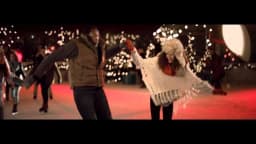
The creative execution of "Everything tells me I should go to Orange Warsaw Festival" rests entirely on tonal precision. The campaign was directed by Jakub Wróblewski and Przemek Chudkiewicz, with production handled by Grandessa, according to Clapboard's production records. The single media asset — a digital video — deploys the comedic escalation structure in which a character accumulates evidence that some external force is directing them toward a predetermined conclusion, in this case festival attendance.
Creative Director Michał Kisielewski and Senior Copywriter Łukasz Ciuchnicki constructed a script in which the absurdity compounds without breaking the internal logic of the premise. Art Director Michał Oleksów's visual approach keeps the production grounded in recognisable everyday environments, ensuring that Polish audiences see their own world reflected back at them before the comic distortion arrives. This grounding is deliberate: a campaign asking viewers to identify with a relatable neurosis — the compulsive search for signs — must first establish credibility in the ordinary before it can earn the extraordinary.
Head of Social Media Łukasz Chomyn's involvement at the production stage rather than merely at distribution signals that the campaign was architected for social sharing from the outset. The digital medium designation is not simply a channel description; it reflects a creative strategy in which the content is designed to travel through social networks under its own momentum. The comedic premise functions as a sharing mechanism: viewers who have experienced the internal monologue of festival justification are primed to tag friends who share the same psychology. Grandessa's production craft supports this by keeping the execution clean and efficient, delivering the comedic payoff without overproducing the asset into something that feels like broadcast advertising mistakenly placed online. The result is a piece of digital content that understands its environment.
No verified performance data for "Everything tells me I should go to Orange Warsaw Festival" is publicly available. No confirmed entries or wins are recorded for this specific execution at Cannes Lions, the Effie Awards, The One Show, D&AD, the Clio Awards, the Webby Awards, or WARC Awards, according to Clapboard's research. An IAB Poland Mixx Award for Best Social Campaign in 2014 has been referenced in connection with Orange's social activity during this period, though attribution of that recognition to this exact execution remains unverified.
Structurally, the campaign's effectiveness argument rests on the alignment between creative format and distribution environment. A single digital asset built around a universally legible comedic premise, produced for a digitally active Polish audience during the peak awareness window ahead of a major festival, is a formally efficient construct. It requires no media saturation to function and places its bet on earned amplification. The Clapboard Score of 66 out of 100 reflects a campaign that executes its defined scope competently and with creative coherence, without the evidence of measurable cultural impact or award recognition that would push the score toward the top tier. Orange Polska's broader 2014 performance, including a post-paid subscriber base increase of more than six percent as reported by orange-ir.pl, suggests the brand was gaining ground in retention metrics during the period, though no causal link between this campaign and those figures is established or implied.
Orange's 2014 campaign is a single digital video created by Publicis in Poland. It uses a comedic premise — that everyday signals are directing the viewer to attend Orange Warsaw Festival — to build event awareness among a digitally active Polish audience. Production was handled by Grandessa, with creative direction by Michał Kisielewski.
Publicis created the campaign for Orange in Poland, with production by Grandessa. The creative team included Creative Director Michał Kisielewski, Senior Copywriter Łukasz Ciuchnicki, Art Director Michał Oleksów, and directors Jakub Wróblewski and Przemek Chudkiewicz. Head of Social Media Łukasz Chomyn and Group Account Manager Anna Rabczuk also contributed.
No verified award wins for this specific execution are confirmed at Cannes Lions, Effie Awards, D&AD, Clio Awards, or the Webby Awards. An IAB Poland Mixx Award for Best Social Campaign in 2014 has been referenced in connection with Orange's social activity, but attribution to this exact campaign remains unverified according to Clapboard's research.
Orange Polska recorded PLN 12.212 billion in revenue in 2014, a decline of 4.5 percent from 2013, according to orange-ir.pl. The Polish market was contested by T-Mobile Poland and Play. Orange used festival sponsorship and cultural branding as a differentiation strategy rather than competing primarily on tariff pricing.
A Clapboard Score of 66 out of 100 indicates a competent and creatively coherent campaign that fulfils its defined brief without evidence of exceptional measurable impact or major award recognition. The score reflects strong tonal alignment between the comedic premise and the digital medium, alongside an absence of publicly verified performance data.
.webp)
Creative Collaboration Platform: The Backbone of Modern Creative WorkWhat is a creative collaboration platform?Clapboard defines a creative collaboration platform as the operational core for today’s distributed creative teams. This is not a collection of digital collaboration tools stitched together; Clapboard’s system


Understanding the Creative Production MarketplaceWhat is a Creative Production Marketplace?Clapboard defines a creative production marketplace as a structured ecosystem where brands, agencies, and production talent converge to execute video, advertising, and branded content at scale. Unlike the legacy agency or freelanREAD FULL ARTICLE

The Urgent Need for a Creative Production Operating SystemWhy Traditional Creative Production Models Break DownClapboard sees the creative production landscape shifting under pressure. Content velocity is no longer a buzzword—it’s a mandate. Modern advertising demands relentless output across dozens of channels, each wREAD FULL ARTICLE