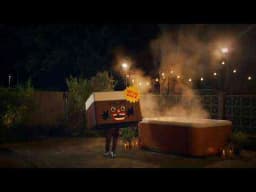
Nike's New Fairies campaign, created by Wieden+Kennedy São Paulo in 2021, centres Rayssa Leal to redefine empowerment and skateboarding culture across Brazil.

Nike New Fairies Redefines Brazilian Skateboarding Culture
Nike's New Fairies campaign is a 2021 Brazilian film by Wieden+Kennedy São Paulo that reimagines the fairy tale archetype through the lens of skateboarding, positioning real skill and determination as the only magic that matters, with Olympian Rayssa Leal as its central figure.
Released in Brazil in August 2021, the campaign — known locally as "Novas Fadas" — arrives in the immediate wake of the Tokyo Olympics, where 13-year-old Rayssa Leal won a silver medal in women's street skateboarding. Nike and Wieden+Kennedy São Paulo seize that cultural moment with precision, recasting Leal not as a conventional athlete endorser but as the "fada madrinha do skate" — the fairy godmother of skateboarding. The creative premise is direct: real fairies do not carry wands or wear wings. They skate, and they shine through manoeuvres. As the campaign's own Portuguese-language description states, Leal "saiu de Imperatriz e ganhou o mundo" — she left the city of Imperatriz and won the world.
The campaign operates across the fashion and retail services category, speaking to a lifestyle-focused demographic in Brazil for whom skateboarding is not a recreational activity but a form of identity and self-expression. Nike's strategic decision to ground the narrative in a distinctly Brazilian story — a teenage girl from a provincial city in Maranhão state ascending to global prominence — gives the work both local cultural resonance and universal emotional weight. The single film asset, produced by Stink Films and directed by The Fridman Sisters, functions as a brand statement rather than a product advertisement, consistent with Nike's longstanding approach to purpose-driven storytelling in major markets. The campaign earned a Clapboard Score of 66 out of 100.
Nike identifies a generational shift in Brazilian youth culture and moves to own it. Skateboarding's inclusion in the Tokyo 2020 Olympics — the first time the sport appeared at the Games — created a singular platform for Nike to connect an underrepresented demographic, young Brazilian girls, to a sport that had historically skewed male and urban-elite.
As reported by Exame on July 26, 2021, the campaign was presented explicitly as an effort to make skateboarding more inclusive for girls in Brazil, with Leal's Olympic silver and her widely recognised "Fadinha do skate" identity serving as the cultural anchor. The timing is not incidental. According to Branding News, Nike product searches increased by a significant margin at the end of July 2021 compared with the first three weeks of that month, directly correlating with Leal's Olympic performance — evidence that the brand's creative response to her visibility was both reactive and strategically prepared.
In Brazil, skateboarding carries specific subcultural weight that distinguishes it from its reception in markets such as the United States. It is associated with street-level creativity, resilience, and community in a country where urban public space is both contested and democratically occupied by young people. Wieden+Kennedy São Paulo understands this and frames Nike not as a sponsor of elite athletic achievement but as a brand that recognises and elevates talent that already exists in those streets. Adidas, Nike's primary competitor in the Brazilian sportswear market, has pursued similar athlete-centred storytelling with campaigns such as its relaunched "Impossible Is Nothing" platform, making the category intensely competitive at the creative and cultural level. By anchoring New Fairies to an indigenous Brazilian narrative rather than a globalised athletic archetype, Nike differentiates its positioning in a crowded market.
The Fridman Sisters direct New Fairies with a visual language that mirrors the campaign's central argument: that grace, power, and wonder exist in physical skill rather than fantasy imagery. Their approach treats the skate footage as spectacle in its own right, resisting the temptation to layer in conventional cinematic signifiers of heroism or aspiration.
Production company Stink Films, a globally recognised production house with a track record in premium commercial filmmaking, oversees the physical production, while post-production is handled by Malaia Inc. Colour grading is credited to Osmar Jr., whose work gives the film a warmth and vibrancy that aligns with both Brazilian visual culture and the youthful, sunlit world Rayssa Leal inhabits. These credits are confirmed by latinspots.com and branding.news.
The creative team at Wieden+Kennedy São Paulo structures the film around a simple but durable inversion: everything the audience expects from a fairy — the wings, the wand, the supernatural — is stripped away and replaced with a skateboard, a street, and a girl who is extraordinarily good at what she does. Executive creative directors Eduardo Lima and Renato Simões oversee the work, with creative directors Mariana Borga and Fabiano Higashi shaping the campaign's specific voice. Copywriter André Pallu and art directors Renan Molin and Cacá Barabás complete the core creative team, per branding.news. The Portuguese-language script leans into the lyrical, reflecting Brazil's rich oral storytelling traditions while remaining accessible to the youth audience the campaign targets. As B9 reported on July 26, 2021, the film updates the fairy-tale genre by locating its magic in dedication to sport rather than supernatural power — a creative decision that is both simple and culturally resonant in the Brazilian context.

New Fairies earns verifiable industry recognition. D&AD awarded the campaign a Pencil in Art Direction in 2022, credited to Wieden+Kennedy São Paulo for Nike, according to dandad.org. The specific Pencil level — Graphite, Wood, or Yellow — is not specified in available sources. A university study referenced by Lume Ufrgs Br describes the film as having won recognition at Cannes, though no verifiable category, award level, or confirmed year is documented in publicly available records; the study's reference to "Cannes66" is inconsistent with the campaign's 2021 release date and should be treated with caution.
On the commercial side, the broader context is instructive. According to branding.news, Nike product searches increased substantially at the end of July 2021 relative to the first three weeks of that month, a spike directly attributable to Rayssa Leal's silver medal performance at the Tokyo Olympics. While this data point does not isolate the contribution of the New Fairies film specifically, it establishes the degree to which Leal's cultural moment — the very moment the campaign is built around — translated into measurable consumer behaviour in Brazil.
Structurally, the campaign demonstrates strong alignment between cultural timing, creative concept, and brand positioning. Nike's decision to release the film in August 2021, immediately after the Olympic moment, capitalises on an existing wave of public attention rather than generating one from scratch. The D&AD Pencil recognition confirms that the creative community regards the work as having genuine craft merit. The Clapboard Score of 66 out of 100 reflects a campaign with clear strategic intelligence and cultural specificity, offset by limited documented performance data in the public domain.
Nike's New Fairies campaign, released in Brazil in August 2021, reframes the fairy tale archetype around skateboarding. It centres on Rayssa Leal, a 13-year-old Brazilian Olympian, arguing that real fairies do not carry wands — they skate. The campaign was created by Wieden+Kennedy São Paulo and produced by Stink Films.
Rayssa Leal is a Brazilian street skateboarder who won a silver medal at the Tokyo Olympics in 2021. Nike features her in New Fairies because her story — a teenage girl from Imperatriz, Maranhão, reaching global prominence — embodies the campaign's core argument that authentic talent and determination are the only real magic.
Wieden+Kennedy São Paulo created New Fairies for Nike in 2021. The agency's team included executive creative directors Eduardo Lima and Renato Simões, creative directors Mariana Borga and Fabiano Higashi, copywriter André Pallu, and art directors Renan Molin and Cacá Barabás, as confirmed by branding.news.
New Fairies won a D&AD Pencil in Art Direction in 2022, credited to Wieden+Kennedy São Paulo for Nike, according to dandad.org. A university study also references recognition at Cannes, though no verifiable category or confirmed award level is publicly documented for that honour.
The Fridman Sisters directed New Fairies for Nike in Brazil in 2021. The film was produced by Stink Films, with post-production handled by Malaia Inc. and colour grading by Osmar Jr., according to credits confirmed by latinspots.com and branding.news.
Nike's New Fairies campaign holds a Clapboard Score of 66 out of 100. The score reflects the campaign's strong cultural timing and creative concept, anchored to Rayssa Leal's 2021 Tokyo Olympic moment in Brazil, alongside limited publicly available performance data to fully substantiate its commercial effectiveness.
.webp)
Creative Collaboration Platform: The Backbone of Modern Creative WorkWhat is a creative collaboration platform?Clapboard defines a creative collaboration platform as the operational core for today’s distributed creative teams. This is not a collection of digital collaboration tools stitched together; Clapboard’s system


Understanding the Creative Production MarketplaceWhat is a Creative Production Marketplace?Clapboard defines a creative production marketplace as a structured ecosystem where brands, agencies, and production talent converge to execute video, advertising, and branded content at scale. Unlike the legacy agency or freelanREAD FULL ARTICLE

The Urgent Need for a Creative Production Operating SystemWhy Traditional Creative Production Models Break DownClapboard sees the creative production landscape shifting under pressure. Content velocity is no longer a buzzword—it’s a mandate. Modern advertising demands relentless output across dozens of channels, each wREAD FULL ARTICLE